
Chavadzimu Rock Art
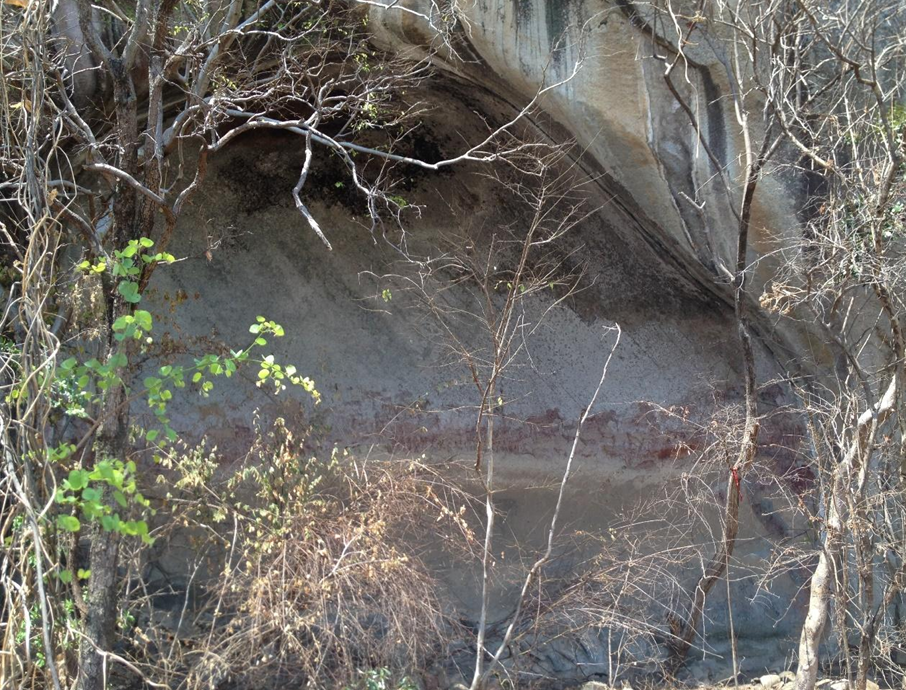
Outline of the Chavadzimu Cave
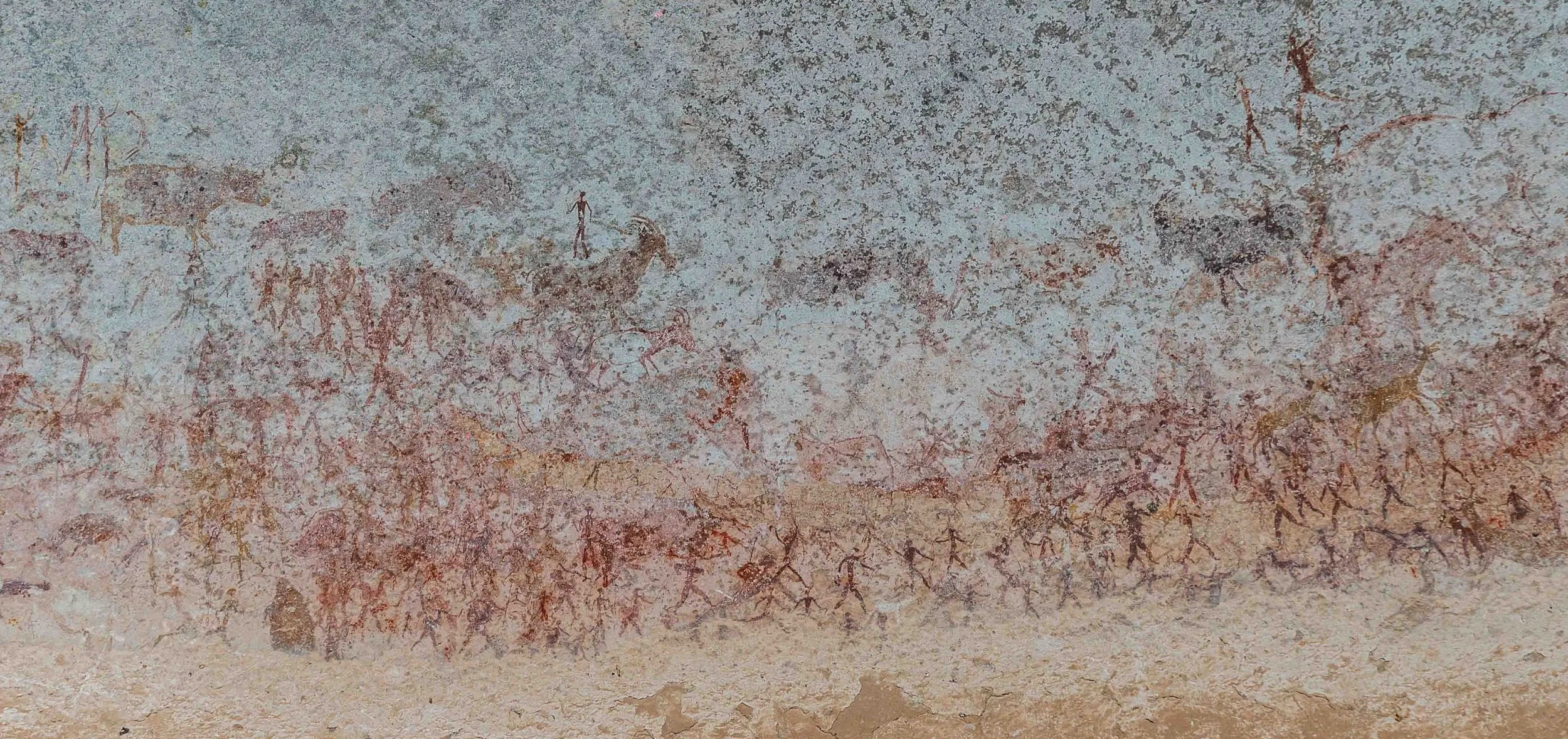
A large view of animal figures (antelope, elephant, bufallo) and a number of human figures in different motions
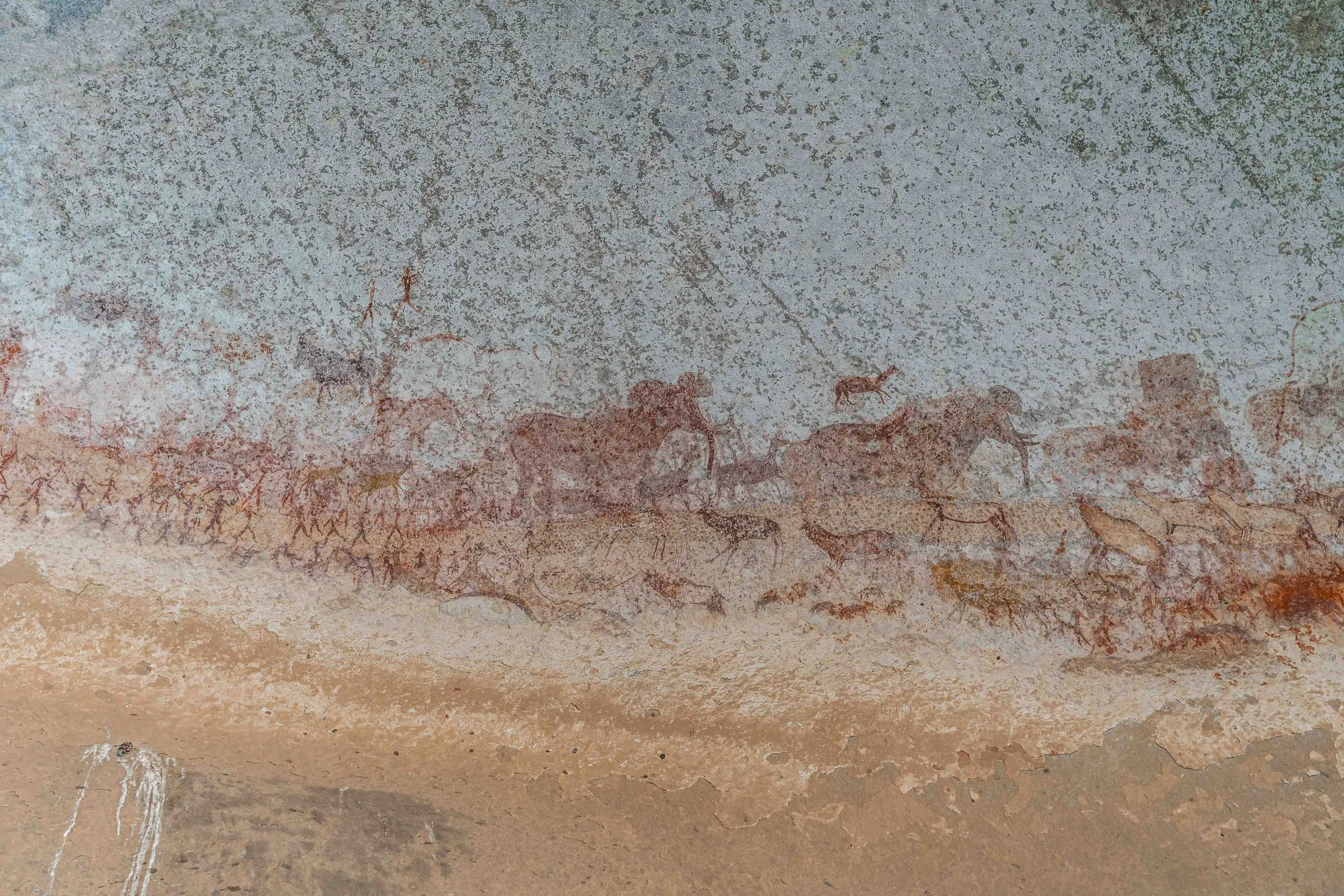
Depiction of elephants, kudu, deer
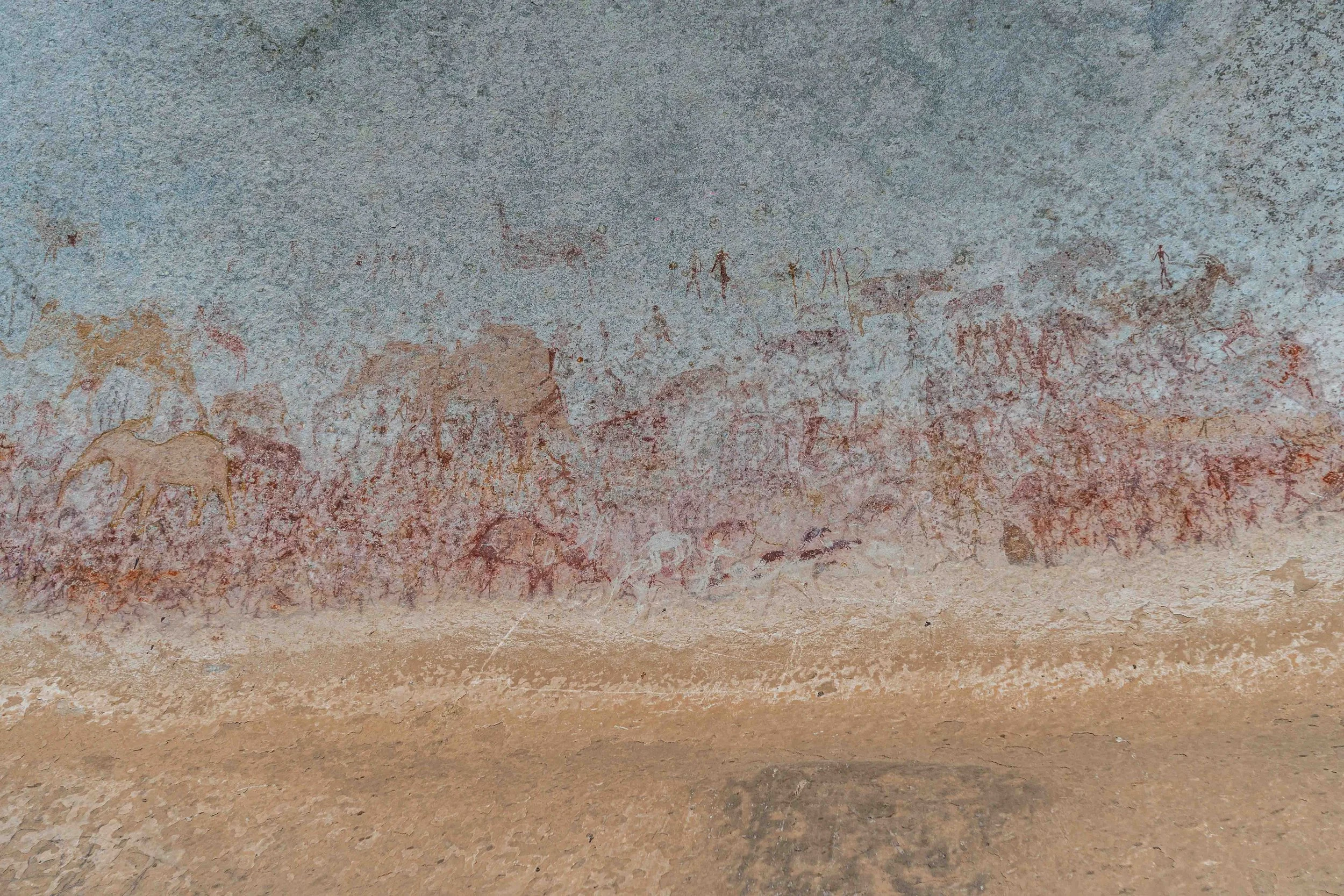
Animal depiction. A line of human figures shown below the animals.
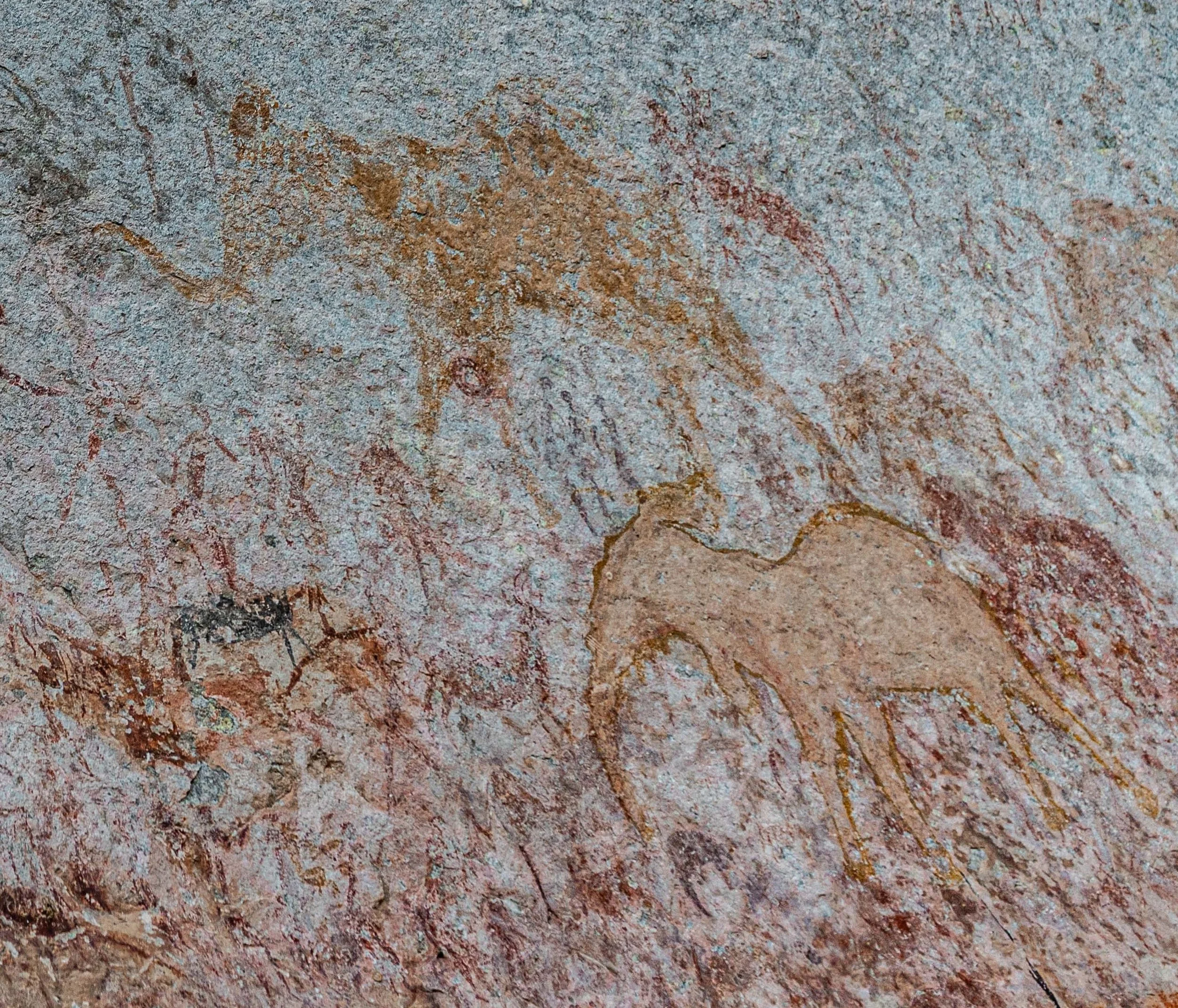
Close up of an elephant in yrllow ochre
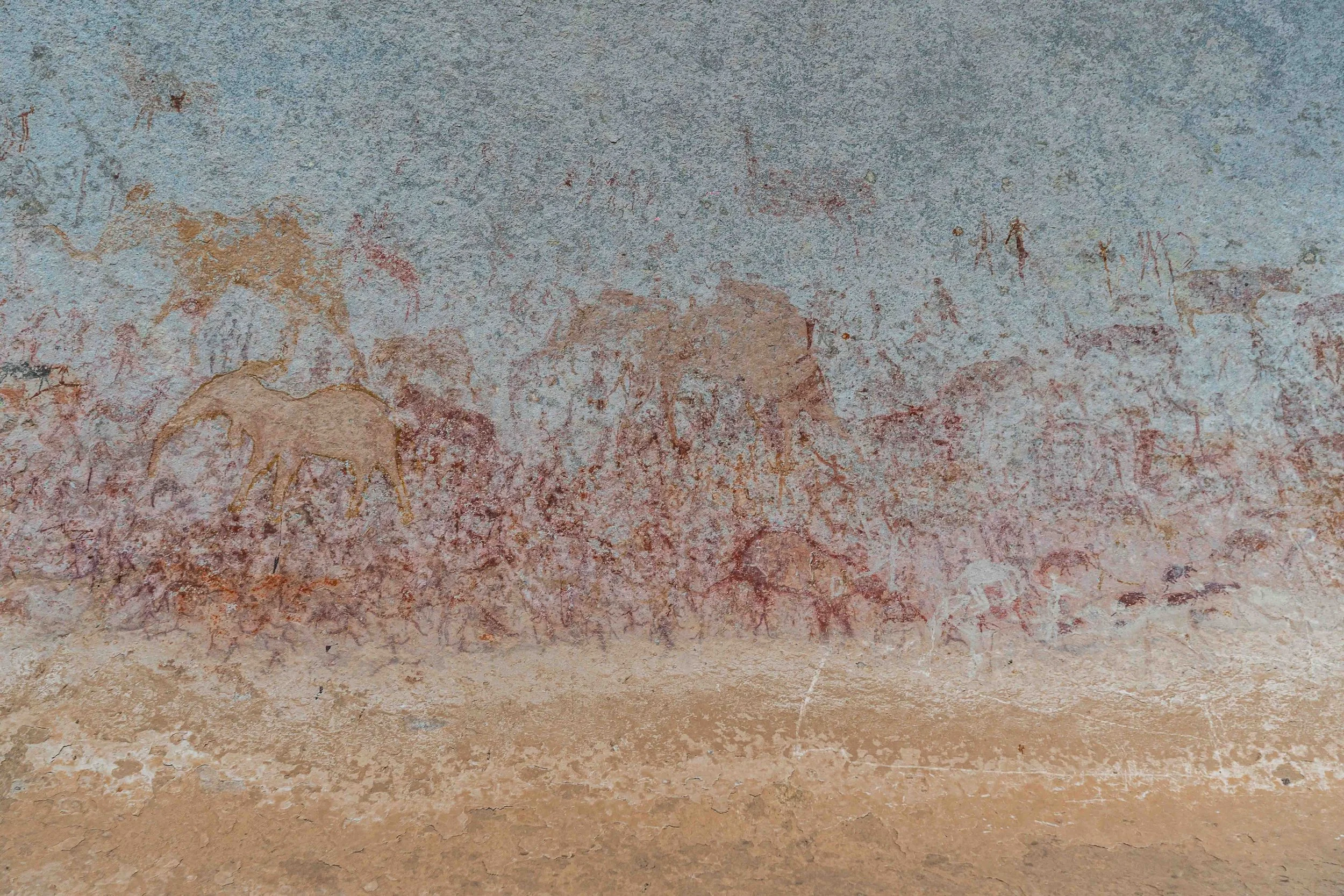
Large elephants and human figures superimpositioned together
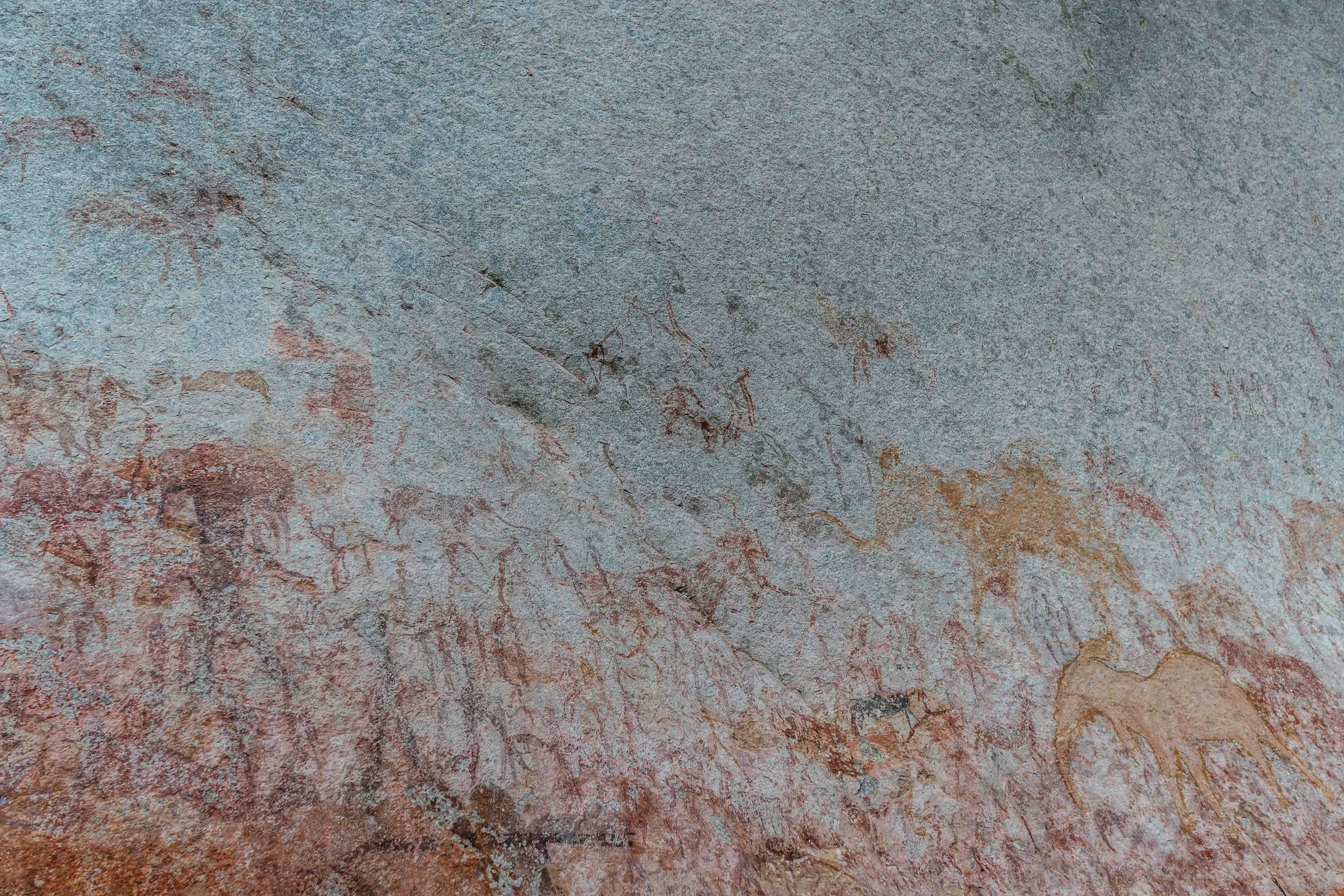
Section showing more human figures in movement and two large elephants in the same panel
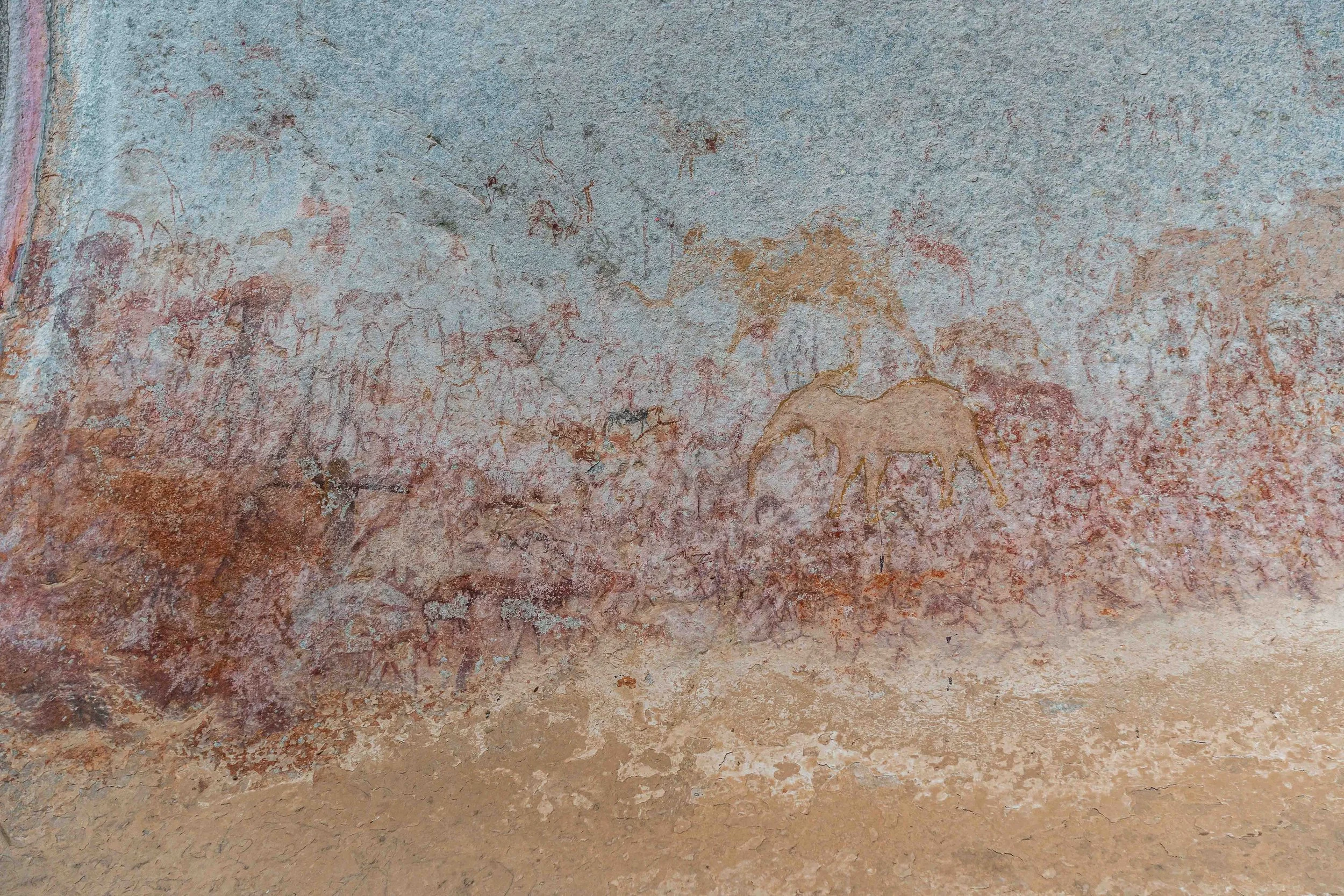
Bottom of this section shows peeling of the granite rock which can affect the art
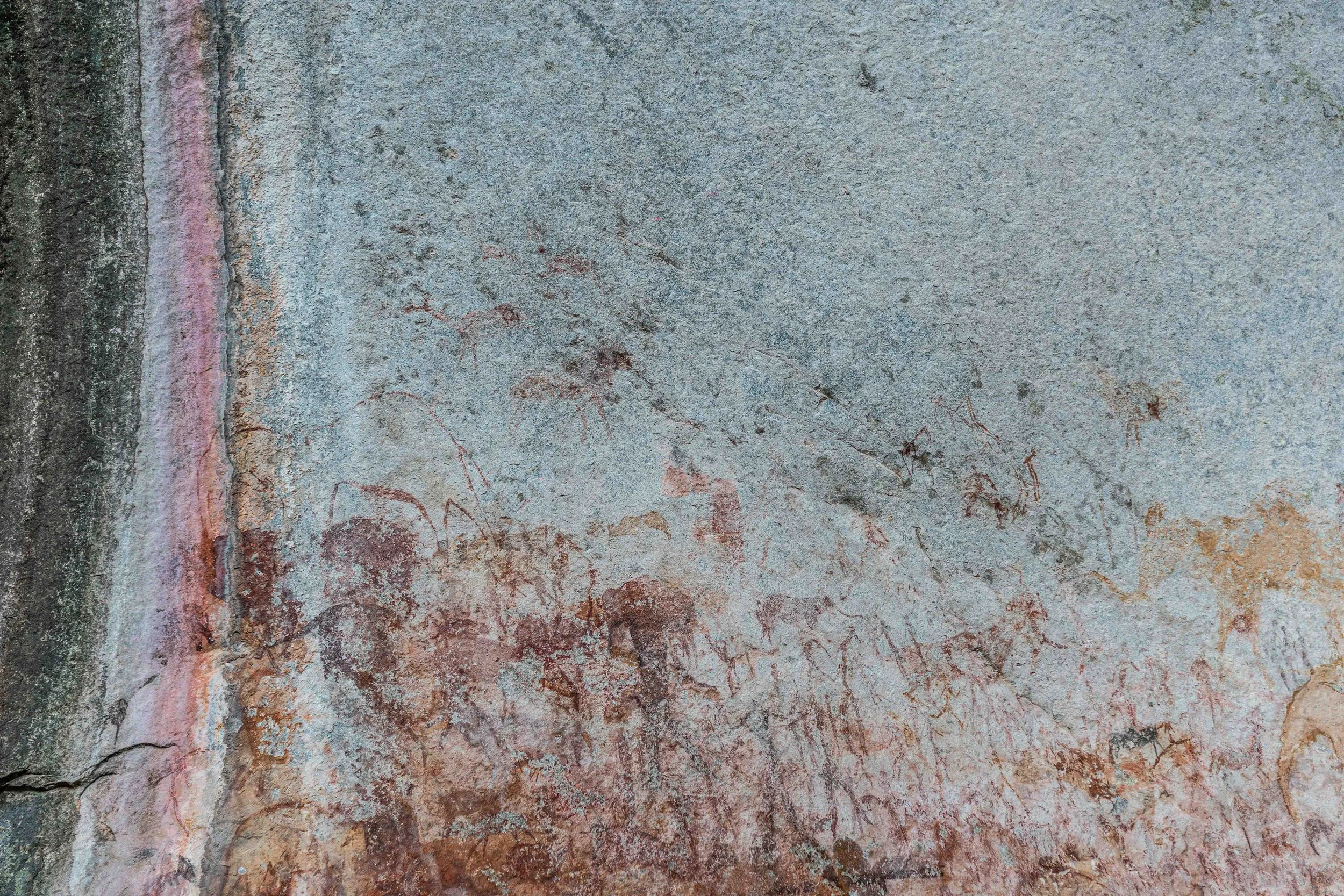
The left side of this section starting to be affected by rain which makes it into the shelter
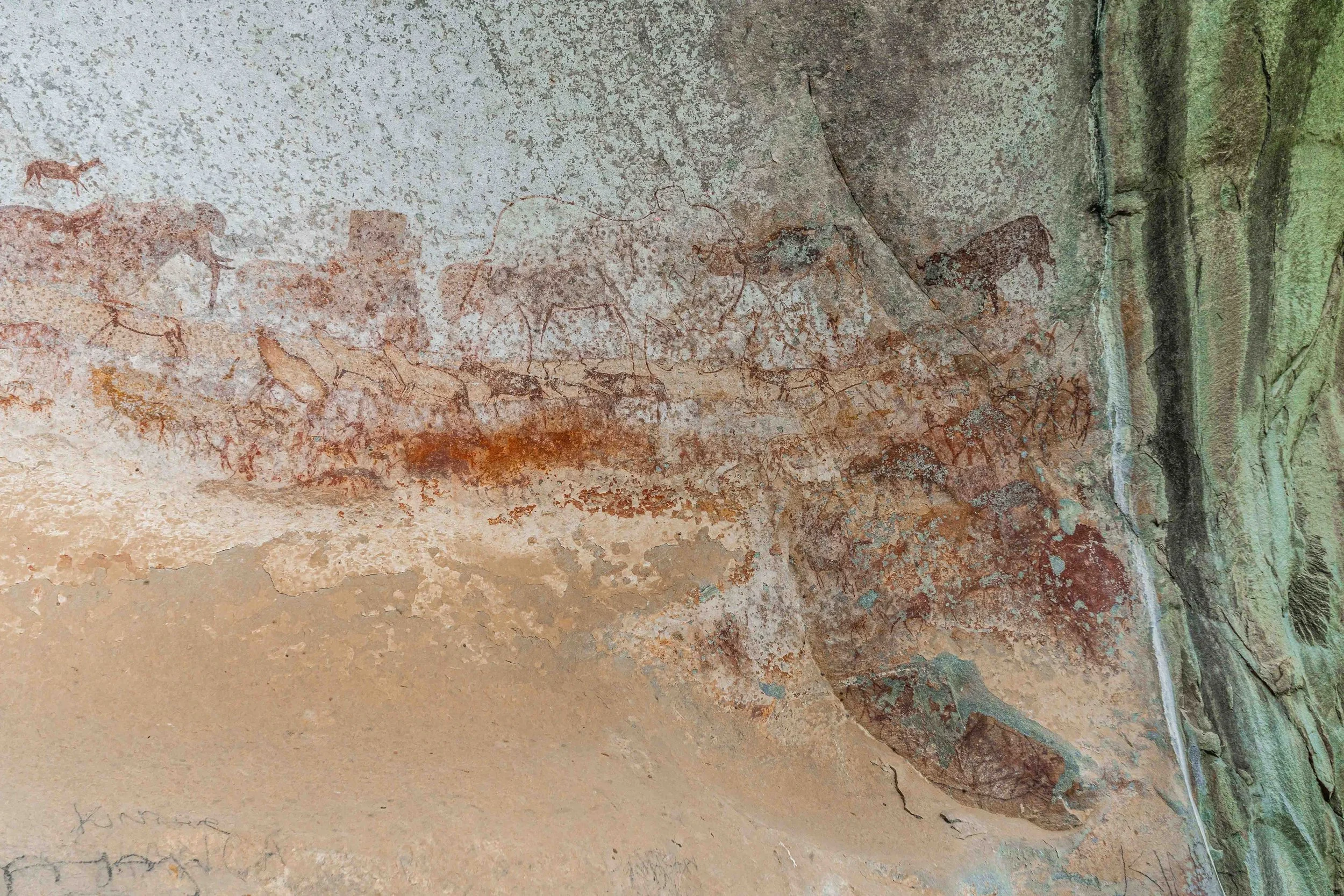
Another section being affected by rain and peeling
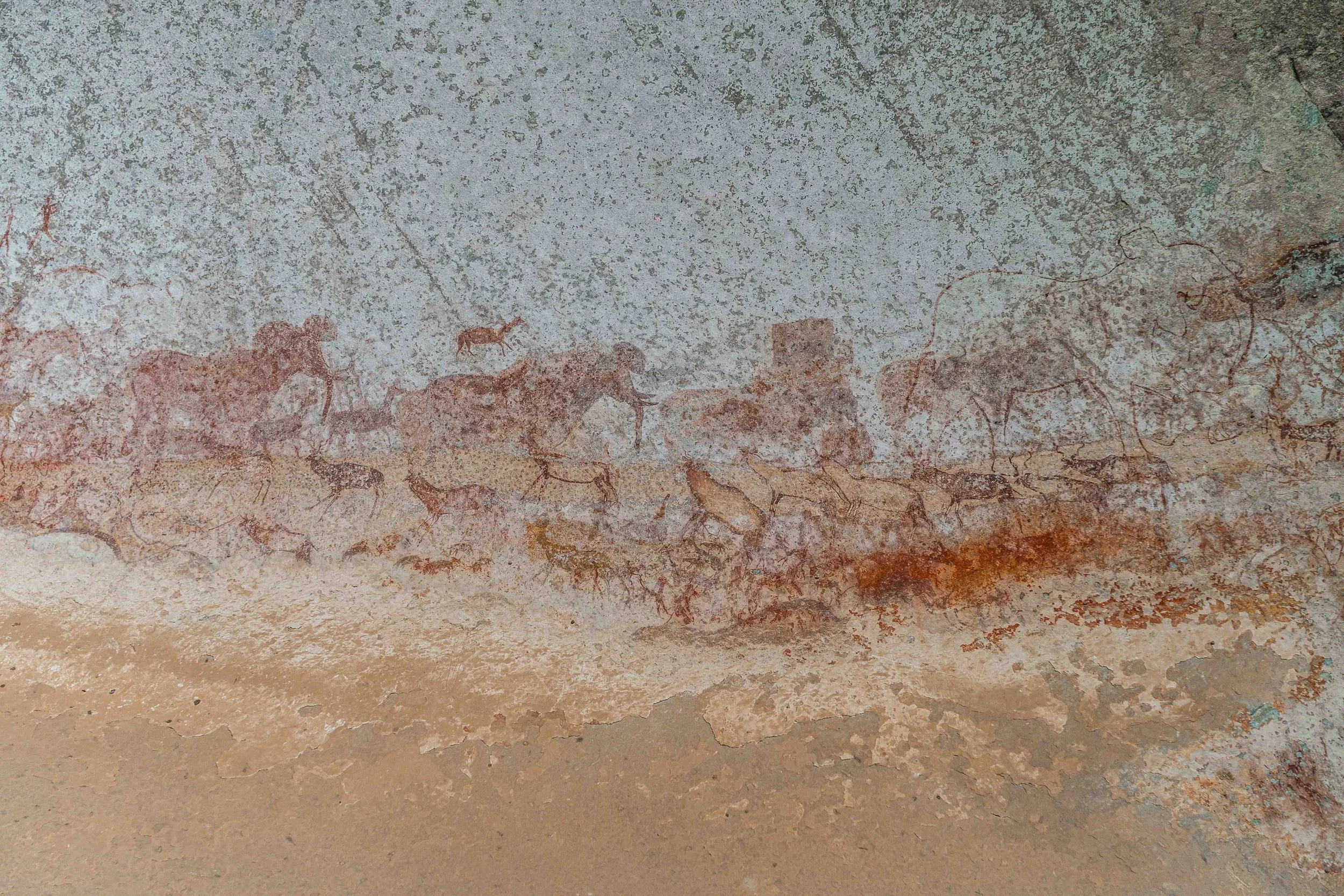
Deer and kudu drawn on top of the large elephants and what looks like a pathway
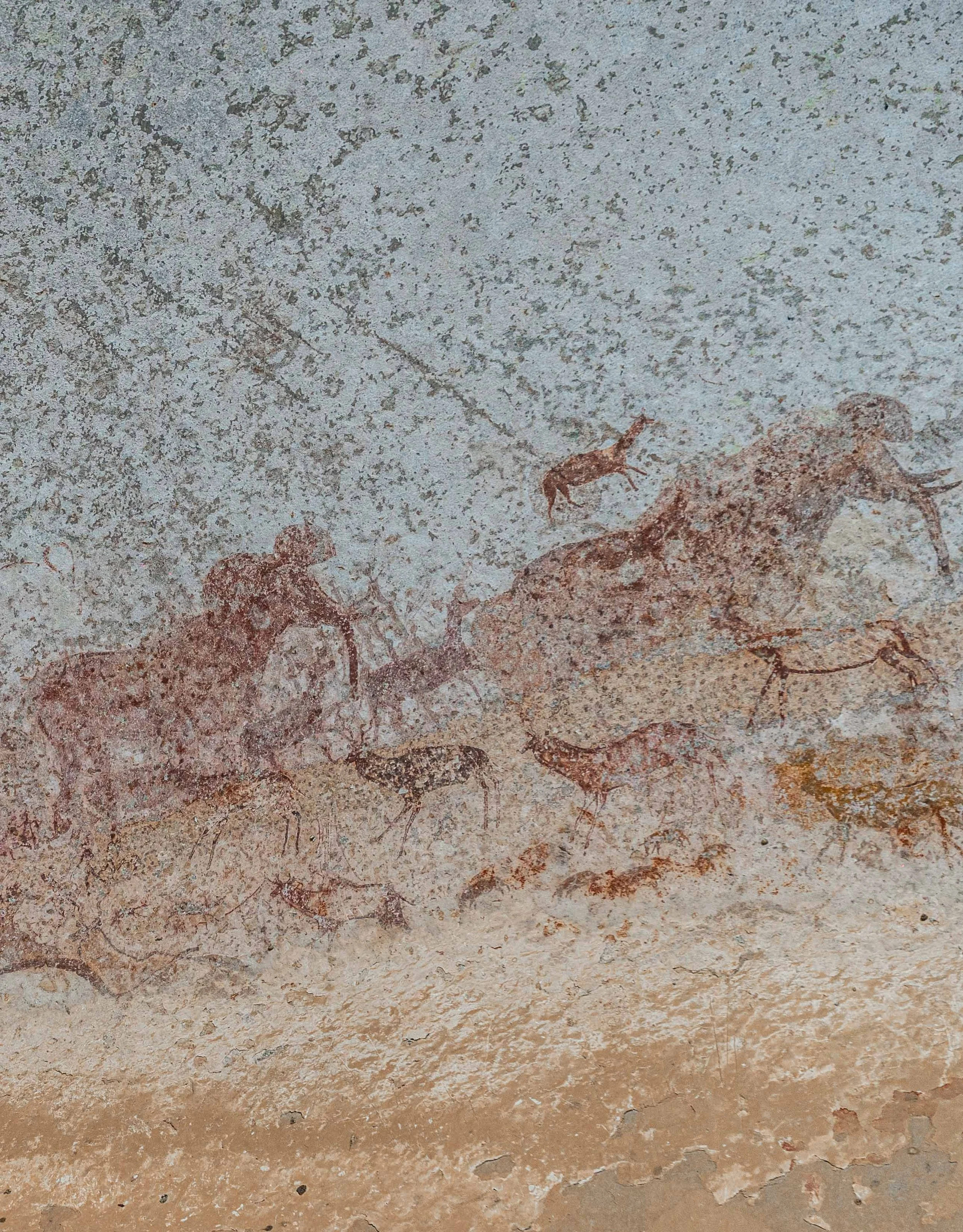
Close up of the deer/kudu and elephants
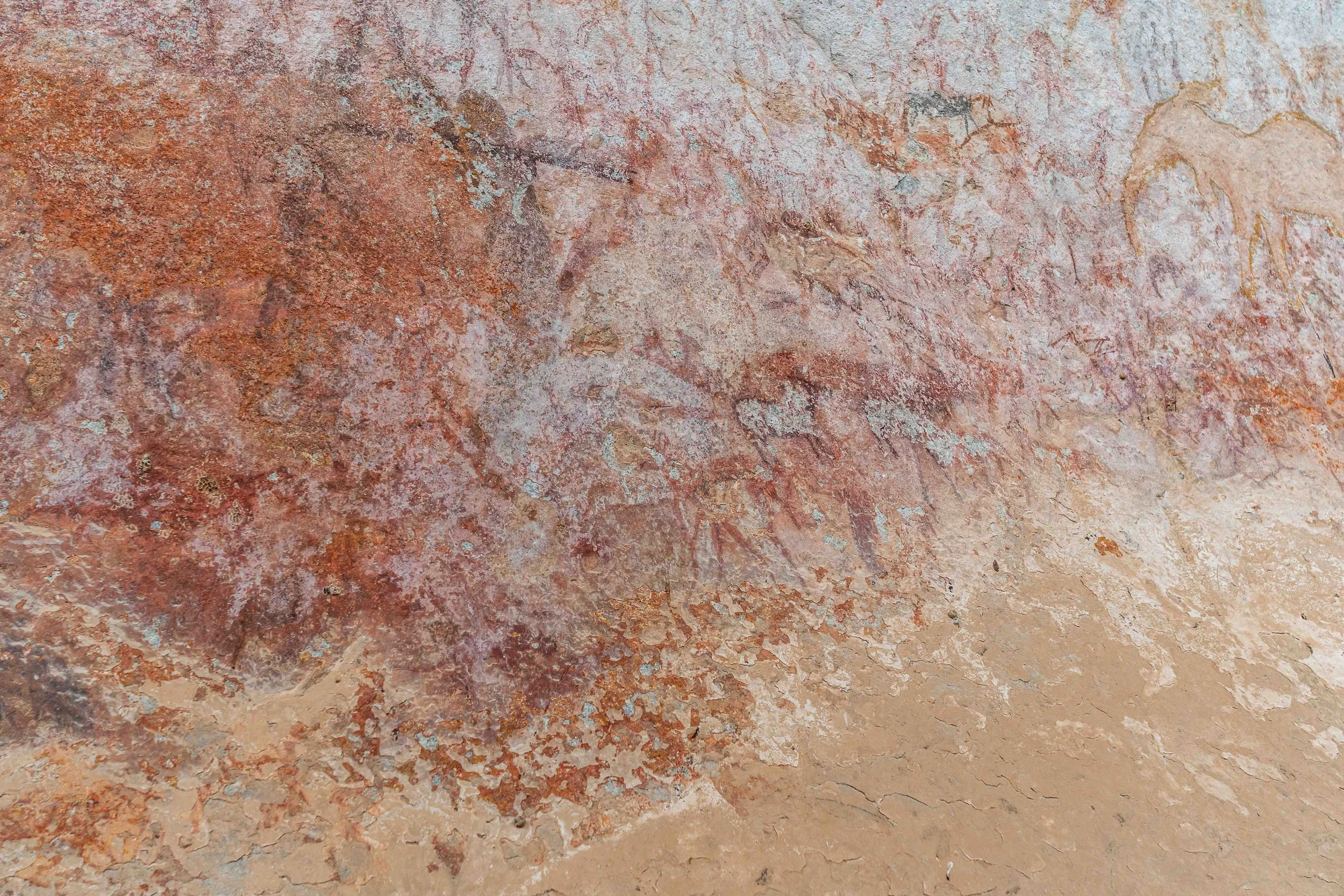
Section of the panel which has been eroded and the art is almost fading
The name Chavadzimu is translated ‘that of the spirits’ or ‘belonging to the spirits’ and it is in the Masembura Communal Lands. The site is covered by vegetation of mostly trees and thorn bushes including the Muhacha, Muroro, Mutukutu, Mupembere and the Muhoronga trees which are all Zimbabwean indigenous trees. The rock is part of the impressive Chavadzimu hill which covers a vast part of the terrain. The art itself is on a rock shelter shaped in the form of a halfway built Igloo or a broken oval and this has assisted in the conservation of the art as it is protected from rain and direct sunlight. The rock is also believed to have given shelter to the past societies and in present day the local communities also use the “bako” (cave) as shelter when it rains.
Directions: by car
From Harare CBD, head north via Samora Machel Ave → Borrowdale Road.
After about 13.4 km from Borrowdale Police Station, you cross a cattle grid and enter Chinamora Communal Lands.
Keep following the tar road and pass these signposts:
16.3 km: Signpost to Domboshava National Monument
26.6 km: Signpost to Ngomakurira National Monument
~28 km: Pass the Makumbe Mission turnoff
30 km: Pass the turnoff to Chikupu Rock Art Shelter
Continue toward Chavadzimu
Follow the intersections carefully:
29.5 km: Turn left but stay on the tar road
35.2 km:Keep right at the junction
40.9 km: Turn left again while staying on tar
Around 48.2 km, you reach Chavadzimu Store.
Park near the store.
From there:
Walk about 450 meters along a track around the base of the hill
The shelter is about 30 meters off the path in thick vegetation.

Kombi Route (local method)
Go to Fourth Street Rank (main kombi rank in town).
Look for kombis going to:
Domboshava
Chinamora Communal Lands
“ask the conductor to drop you off at Makumbe Mission”
At Makumbe or the nearby shops:
Hire a local mushikashika (shared taxi).
Tell them you want to drop off at the Chavadzimu Store.
Travel time from Makumbe:
20–30 minutes
From Chavadzimu Store:
Walk ~450 meters along a track around the hill
The shelter is about 30 m off the path in the bush.
Scan for directions
on Google Maps
Sections of the panel which show large elephants (left) in orange pigment and elephant outline (right) with deer/kudu superimpositioned and a buffalo on the far end in black pigment.
The Art
The large depiction of animals on the panel has been explained using the hunting magic theory (hunting rituals). The panel shows elephants, kudu, rhinoceroses, and hippopotami in line with the trees on the art. The hunting magic theory implies that hunters would draw the animals they wanted to hunt thereby performing the magic of capturing the animal on the next hunt (Vinnicombe, 1976). There is, however, no additional evidence to support this claim as the excavated sites nearby such as the Chisvingo Ruins do not provide fauna remains linked to the animals on the rock panel.
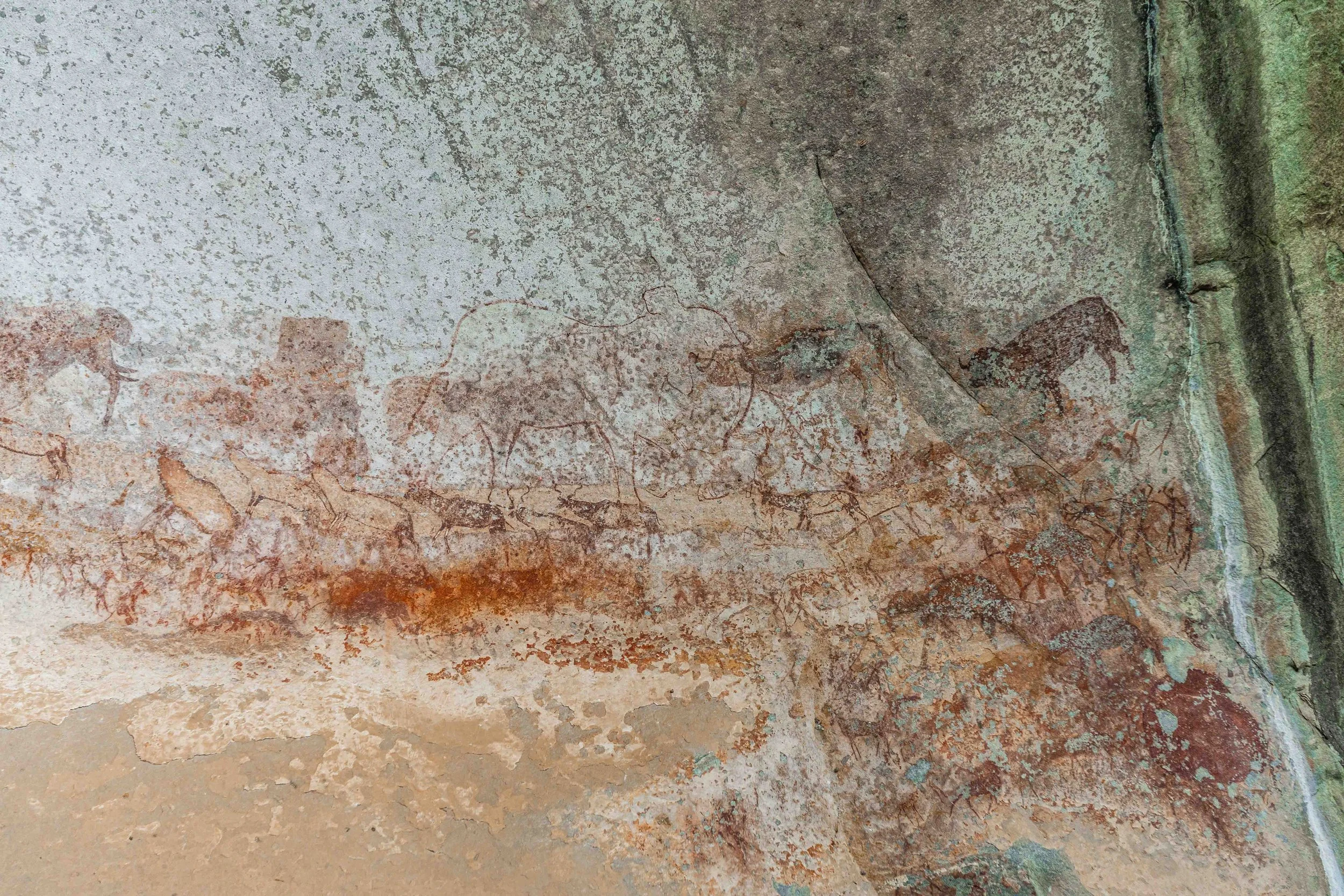
AI generated video of an elephant walking
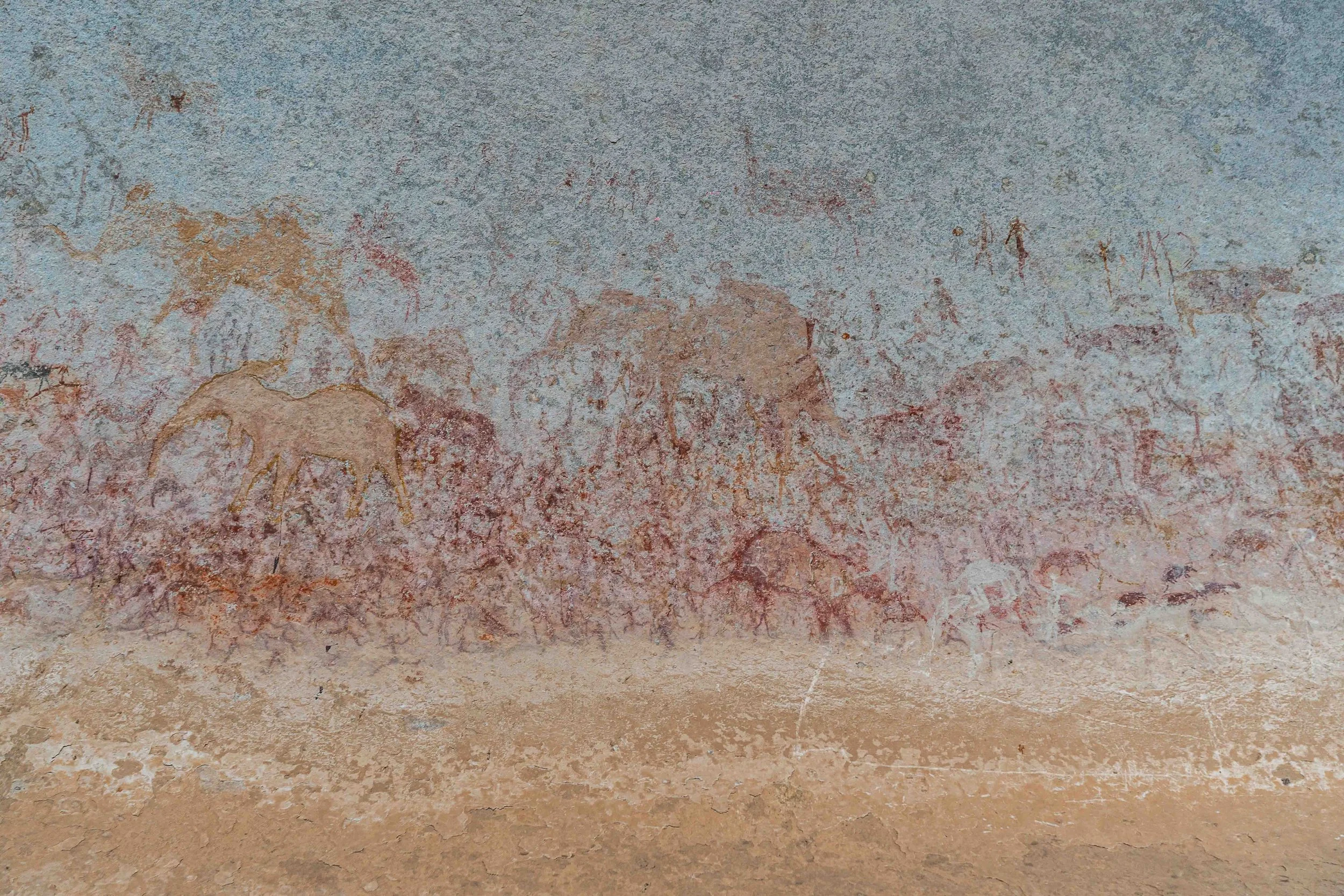
Depiction of large elephants and kudu/deer
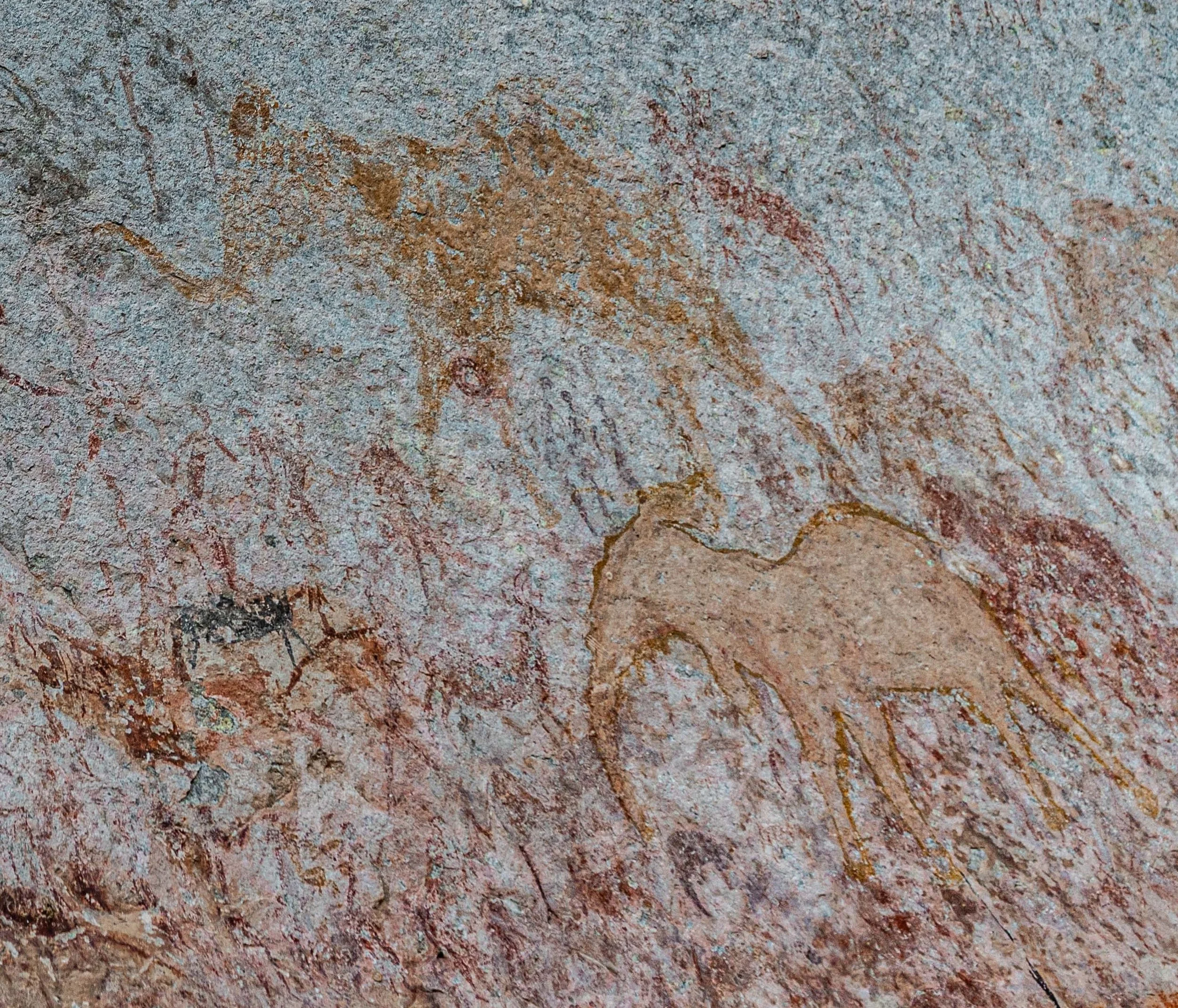
Among these animals there are depictions of porcupines which are not common in the rock art of Zimbabwe. In addition to the elephants and kudu, the porcupines could have been representing totem animals for the groups that painted them. Even though the communities directly associated with the art are long gone, modern reflections on totems are still useful in decoding these meanings.
The elephant to the modern communities is a symbol of might and memory; the people from this totem are often associated with these qualities and are strong. There is a possibility that this area was later associated with warriors and strong hunters during the Mutapa period in the mid-15th and mid-17th century as it is also close to the Chisvingo Ruins. These warriors would be there to protect the Mutapa kings while the strong hunters would provide food for the kings. Assuming a cultural continuation from the San people to the Mutapa and the now modern societies, these symbolic interpretations can also be useful in decoding meanings to the art and how frequently it was drawn.
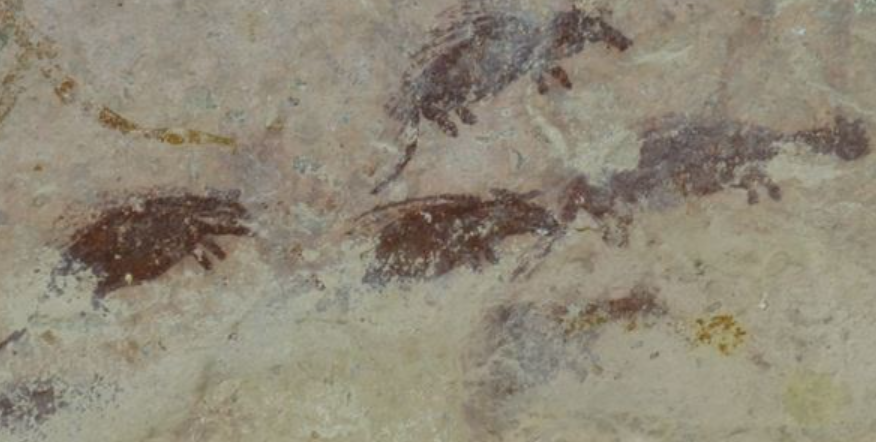
Depiction of porcupines which are now faded at the site. (photo from the ZimFieldGuide)
Beyond hunting magic explanations, the imagery may also be interpreted through the Southern African trance hypothesis (Lewis-Williams 1981; Lewis-Williams & Dowson 1988), which views rock art as visual expressions of altered states of consciousness. In this framework, animals such as elephants and kudu are not merely prey but potent spiritual beings representing spiritual transformations.
The depiction of trees in line with these animals can be explained using the naturalistic art theory. This theory entails that the artists would draw the features they saw in the natural world such as the trees and plants (Williams, 1983) and since it is hard to hunt elephants or rhino (because of size and danger), the art might have just been naturalistic.
Conservation
Rock art is affected and threatened by both natural and cultural occurrences. Natural occurrences include all the processes which are a result of natural causes, for example rain, too much sunlight and toppling of rocks on the mountain. Cultural occurrences are those in which human beings and animals affect the preservation of the art for example graffiti writing.
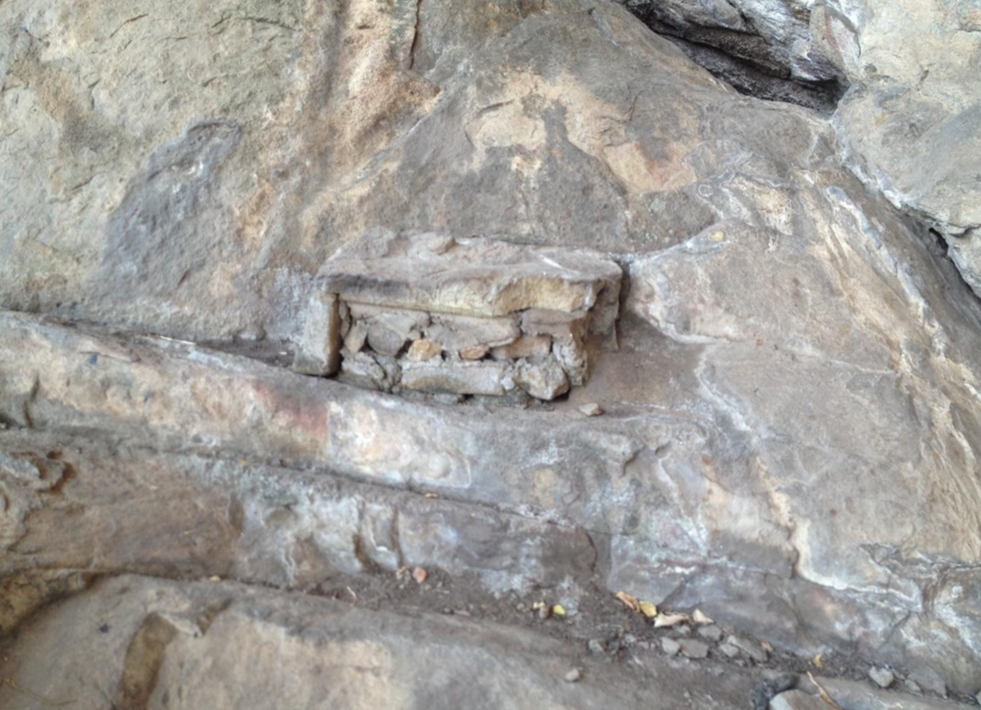
The shelter is threatened by human interaction. Humans continue to interact with the place since the place is not protected by any fence or wall. The site is protected by the National Museums and Monuments of Zimbabwe (NMMZ), but they have not been enforcing any additional security measures in trying to conserve the site. The NMMZ stand which is used to provide information that the site is protected was removed by the people and up to now the NMMZ has not replaced it. The absence of updated signage suggests gaps in routine monitoring, highlighting broader management challenges faced by heritage authorities responsible for dispersed rural sites.
The Chavadzimu Rock Art Shelter features paintings that depict various aspects of the community's cultural heritage, including myths, legends, and ritual practices. Among these are human figures marked with linear patterns or “lines” across their bodies, widely interpreted as symbolically significant rather than purely decorative. Scholars have linked such markings to altered states of consciousness, ritual performance, and the embodiment of spiritual power. Støvring (2021) argues that paintings in caves and shelters reflect the cosmological beliefs and cultural narratives of San communities, as has also proposed by earlier scholars such as Garlake (1987) and Lewis-Williams (1981).
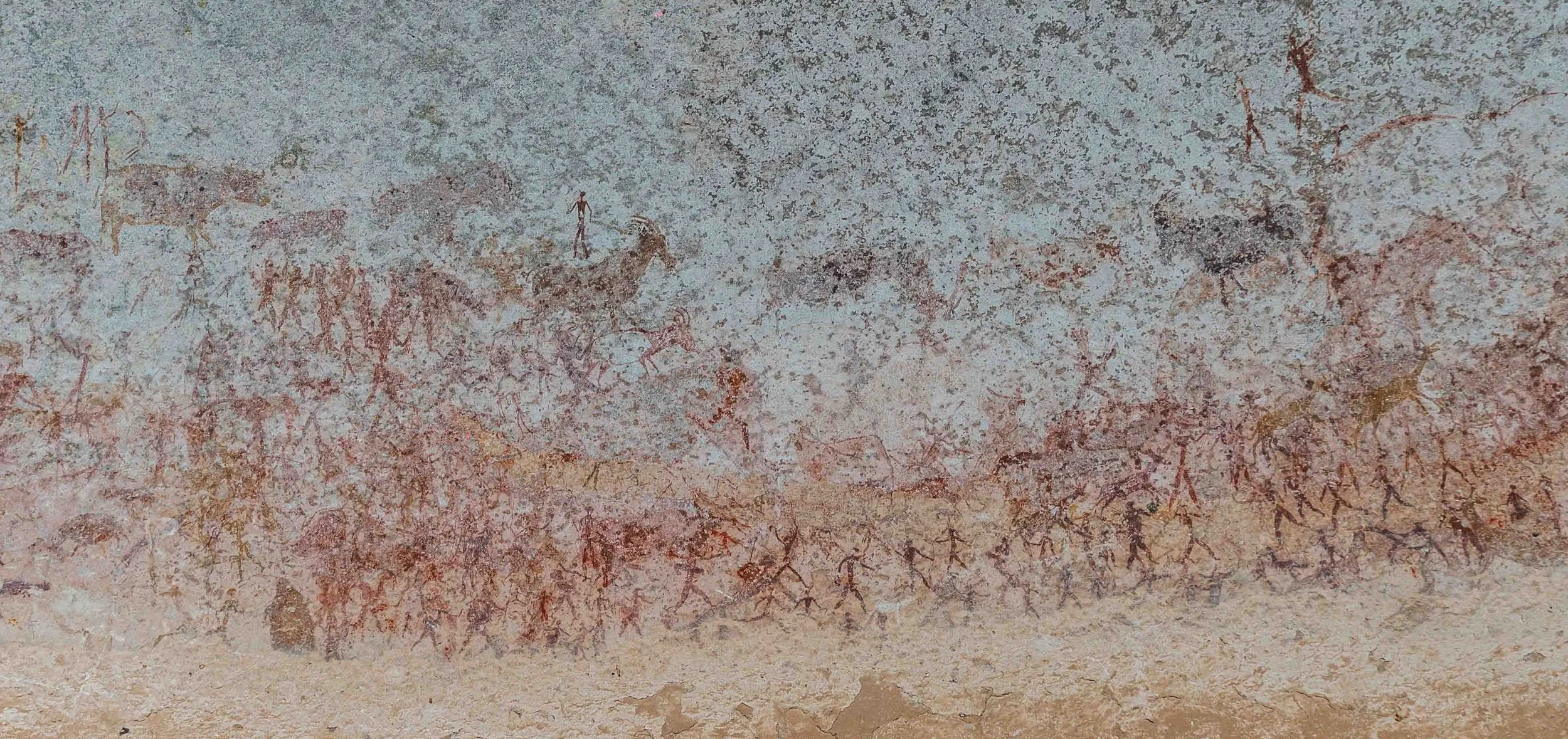
Panel showing human figures and animals figures together
In some interpretations, the lines on human figures are associated with ritual preparation for hunting, where bodily markings and dance formed part of practices intended to ensure success. In the context of Zimbabwean rock art, the frequent depiction of animals alongside human figures holding weapon-like objects has similarly been linked to these ritualized hunting practices (Figure 1). However, rather than representing literal hunting scenes, such imagery may encode symbolic or trance-related meanings connected to broader cosmological beliefs.
(a)
(b)
(c)
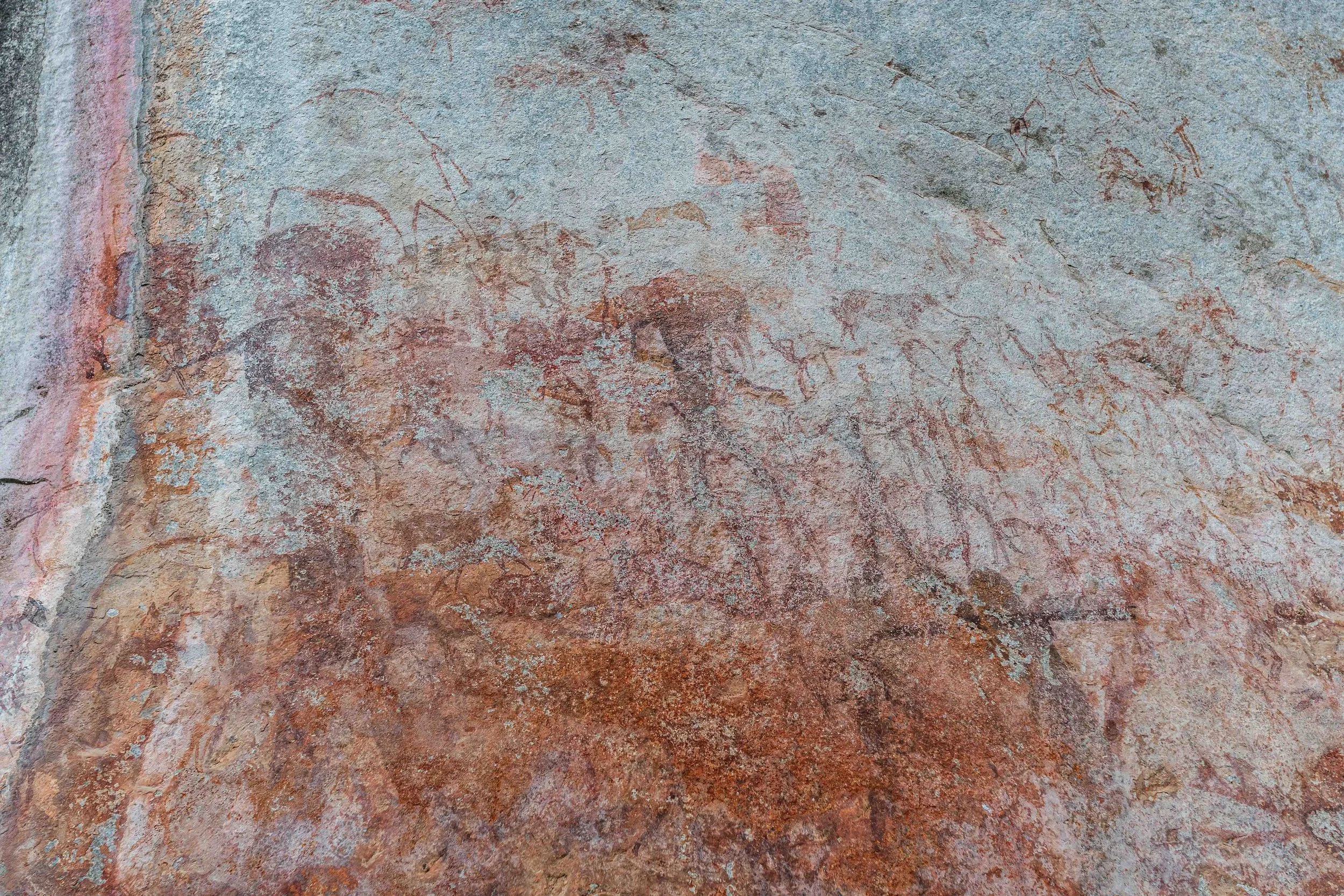
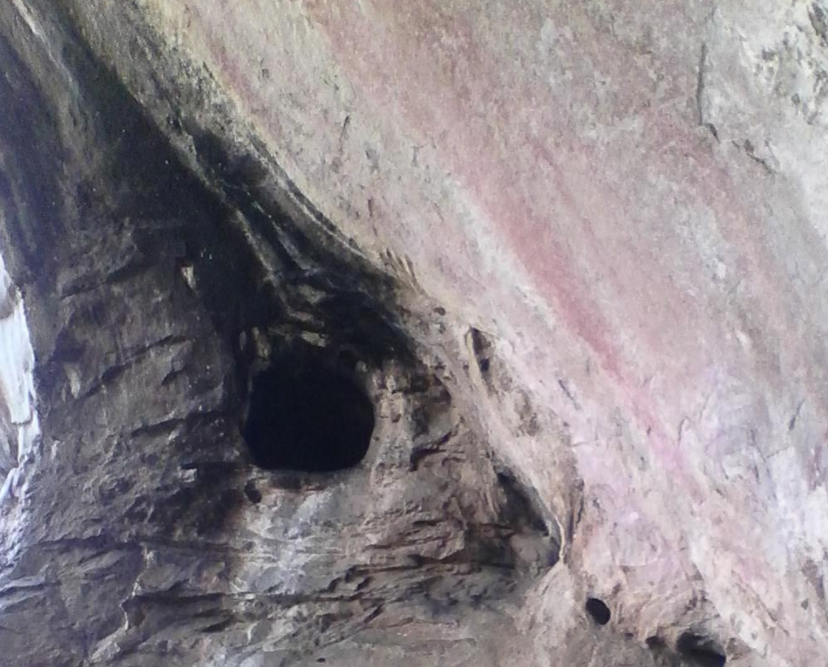
Above (a) is a section from the panel which is being affected by erosion, and the art is staring to fade. the empty rock boulder (b) is where the NMMZ information should be but was probably removed by people. (c) shows a geological tunnel which housed blue bees which would attack people who visit the site
There is evidence of graffiti below the rock art which affects the general aesthetic nature of the rock art as it diverts attention of tourists as they see the art. Some of the local community people start fires while they are at the site (as it is an open site) which may then affect the art on the rock face by making soot develop on top of the art.
On the rock shelter there is a large hole which is shelter to what the community refers to as blue bees which are very dangerous as they can lead to death. This is thus a threat as most visitors do not want to visit the place due to the fear of being bitten. The local communities, however, have undergone certain methods in trying to remove the bees by starting those fires but this affects the art near the hole as the smoke has eventually covered the rock surface.
Weathering and precipitation also affect the art. Some parts of the rock which are exposed have started to undergo weathering which is caused mostly by precipitation. Also, because this is a granite rock formation, when rain or water continuously hits the rock, it produces salts that stain rock surfaces affecting the rock art depicted on the panel.
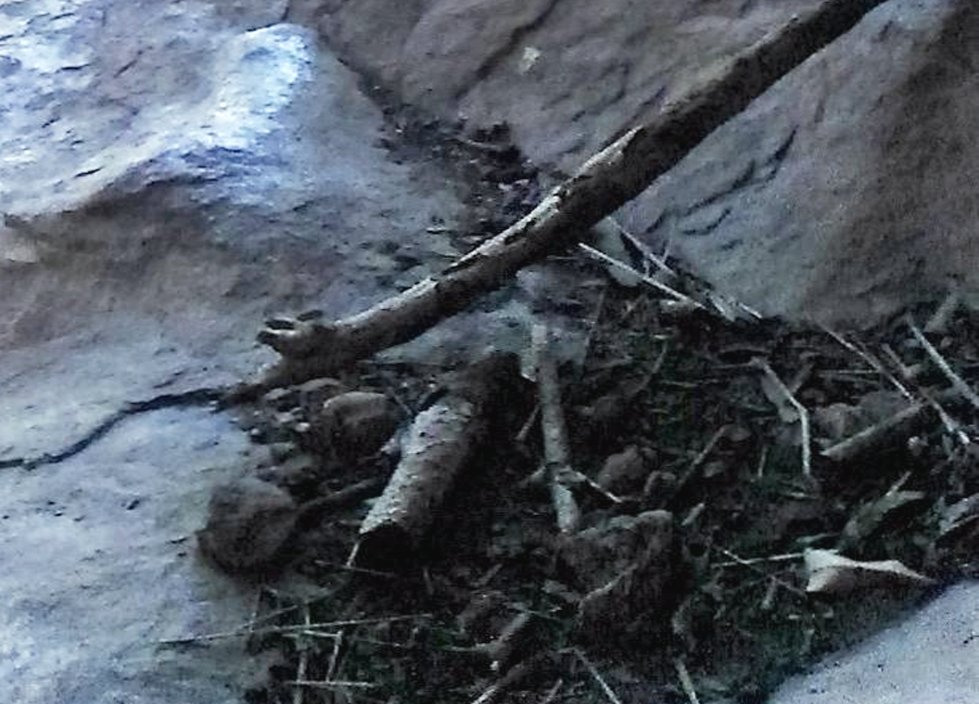
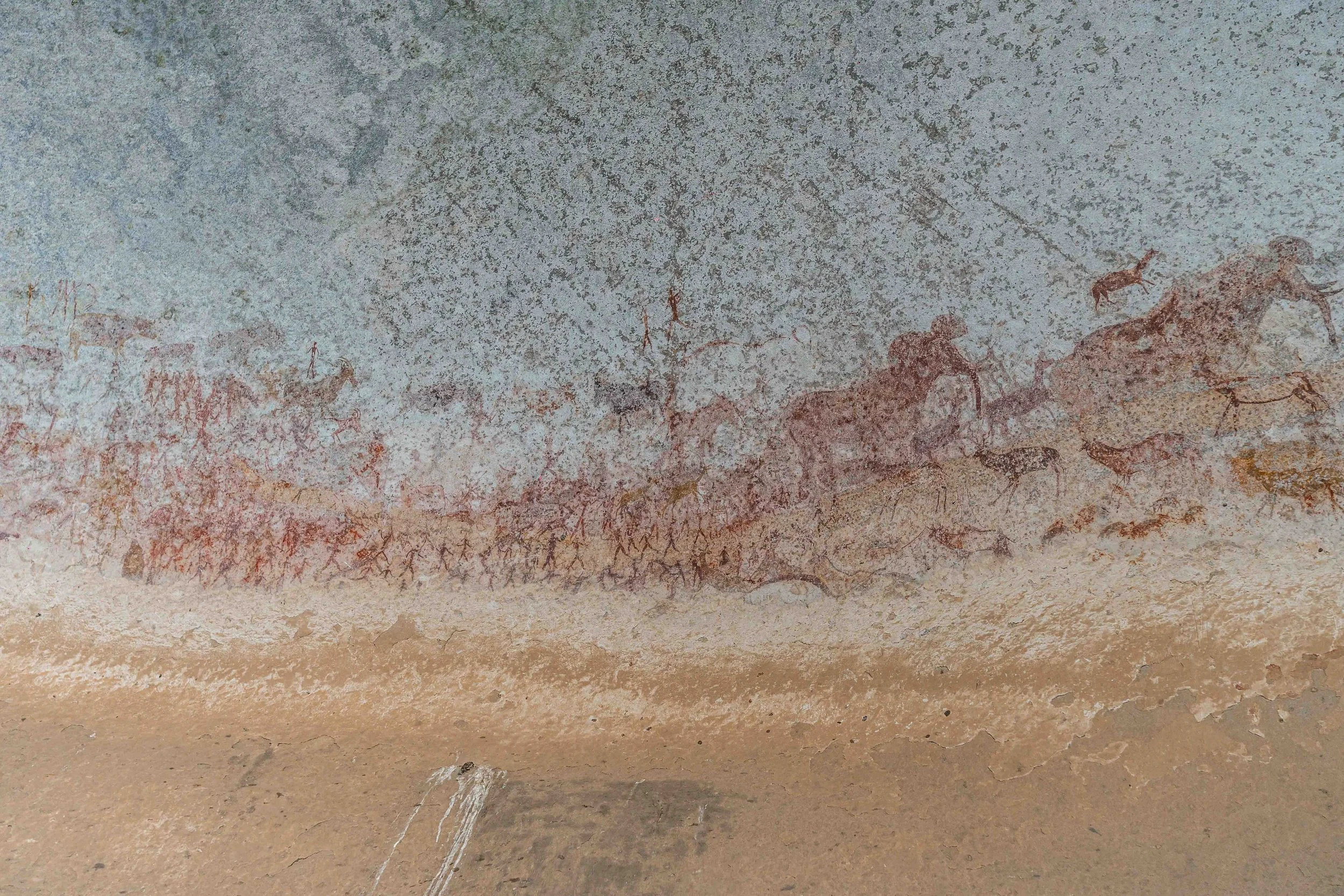
Sticks and charcoal remains(above) indicating local communities started fires within the shelter probably to remove the blue bees. The panel shows a section which is starting to peel off and below that someone tried to engrave their own art.