
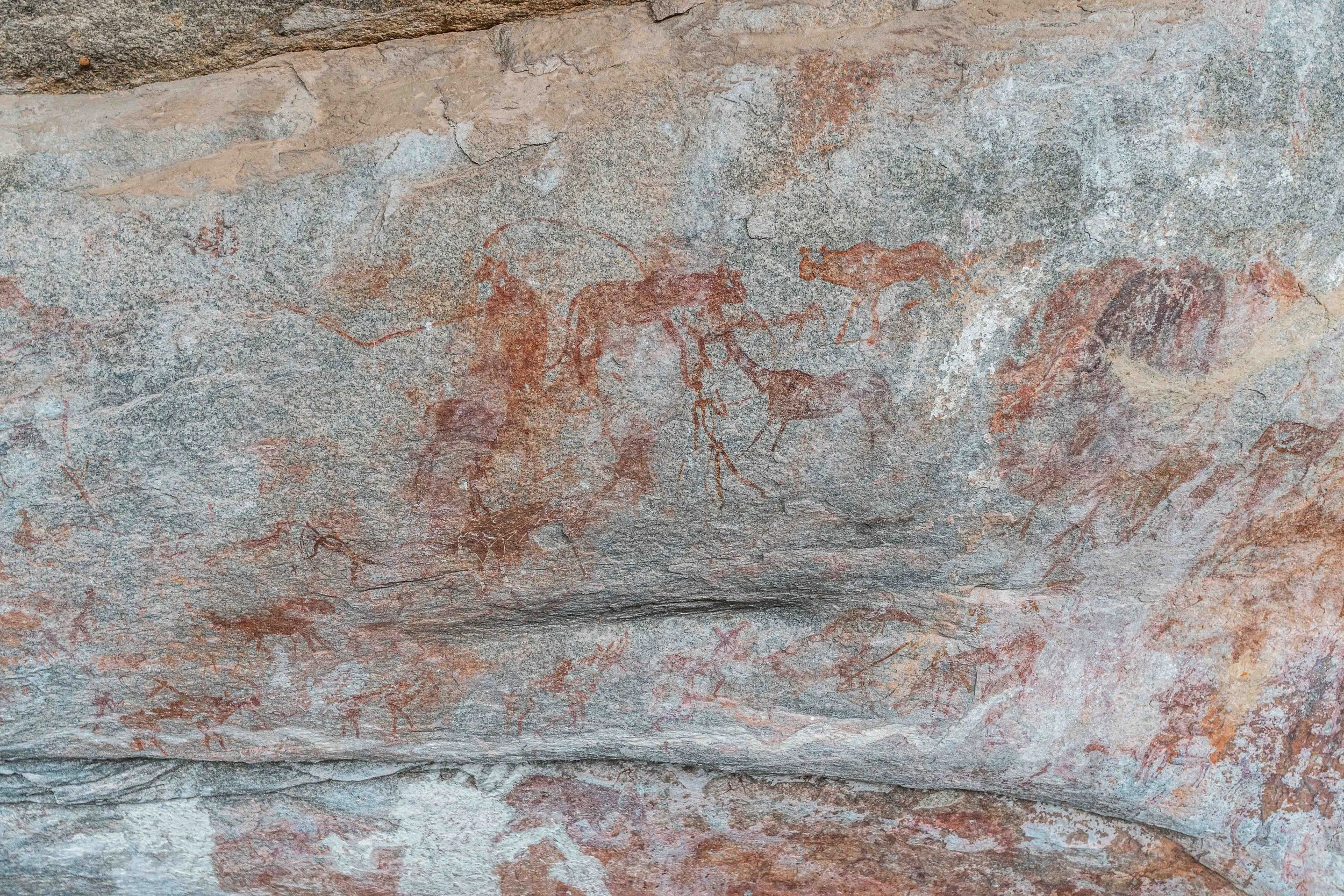
Depiction of animal figures; antelope, deer, what looks like felines (very rare) and a girrafe. A couple of human figures are also in the scene, behind them is a large outlined elephant almost faded
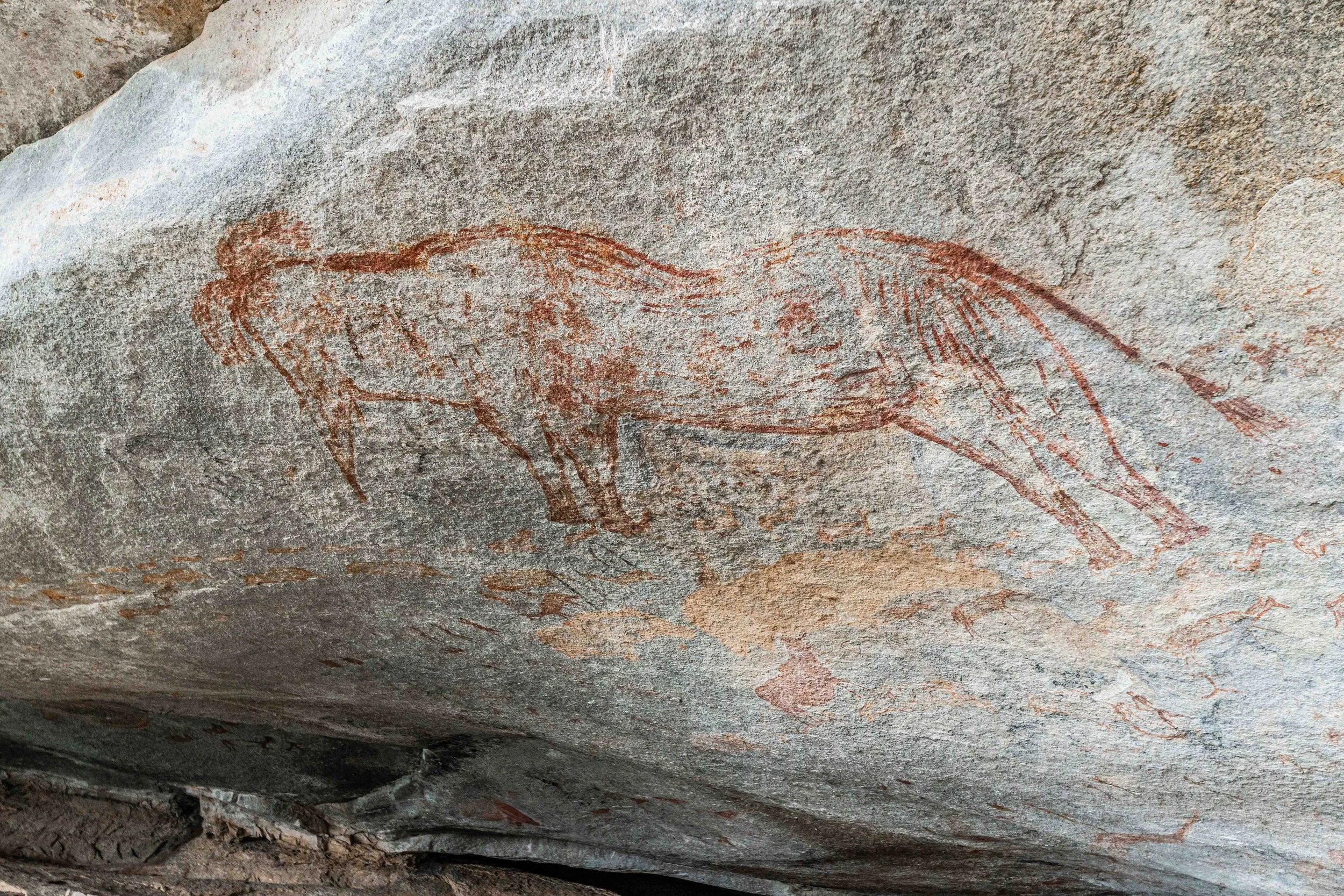
Probable depiction of a large quadruped, probably a feline enlarged
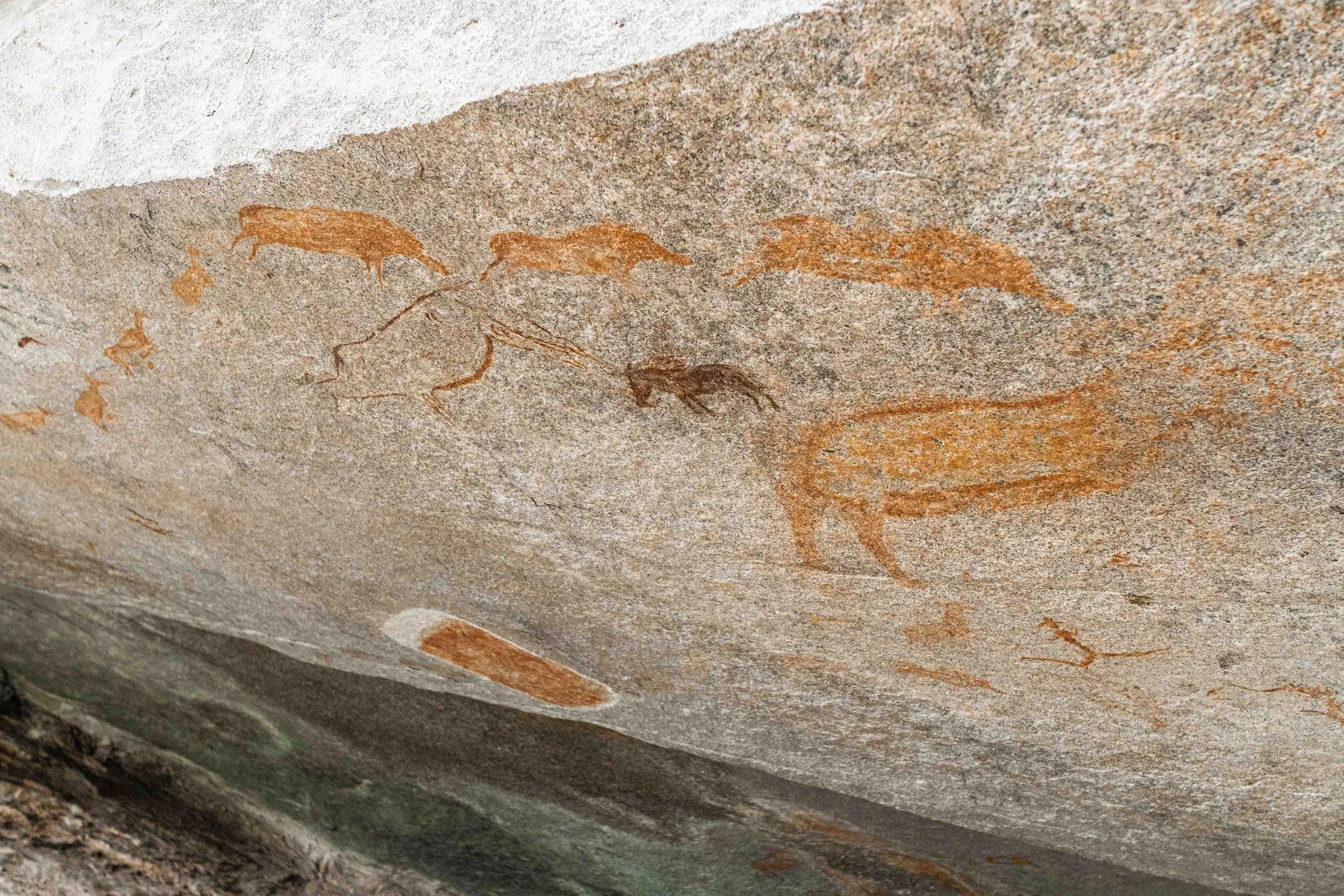
A line of warthogs in motion going east depicted in orange pigment, one smaller warthog is depicted below then in black pigment. far lower is a geometric oval in white and red pigment
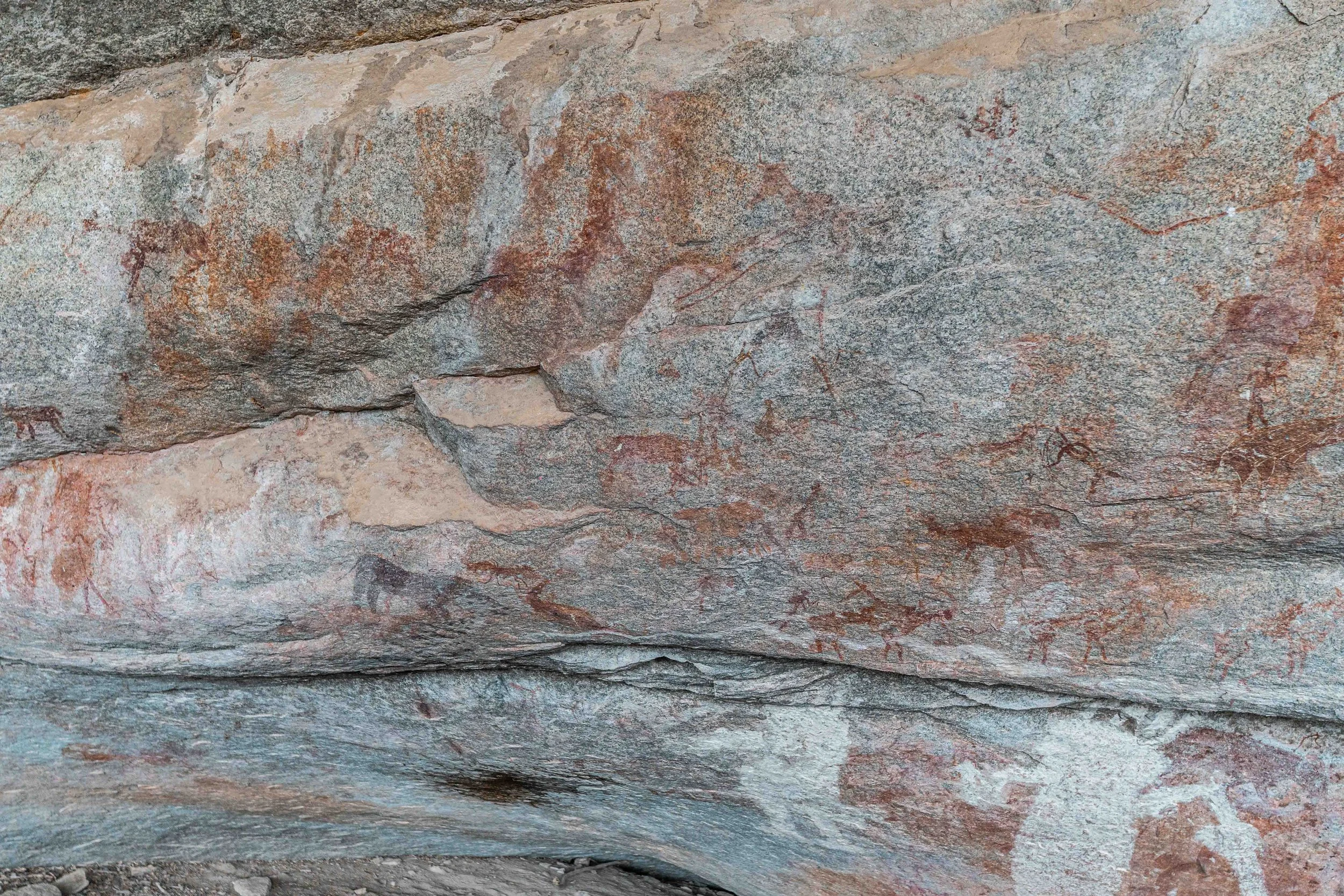
Depiction of both human and animal figures in red pigment, below is a large figure in white pigment wearing a headdress
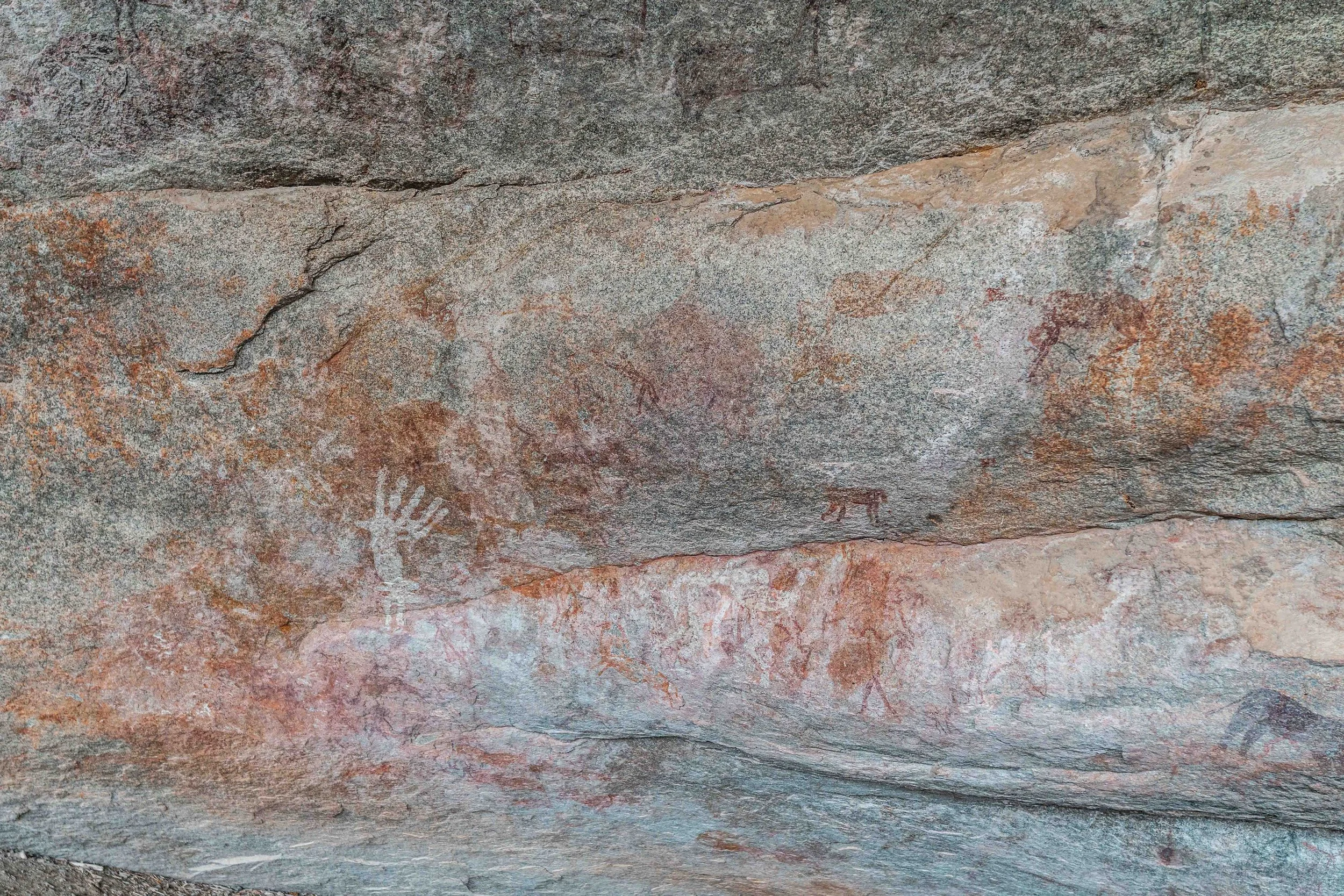
A couple of faded white dipictions on top of red human and animal figures. Among them is a monkey whose tail has faded
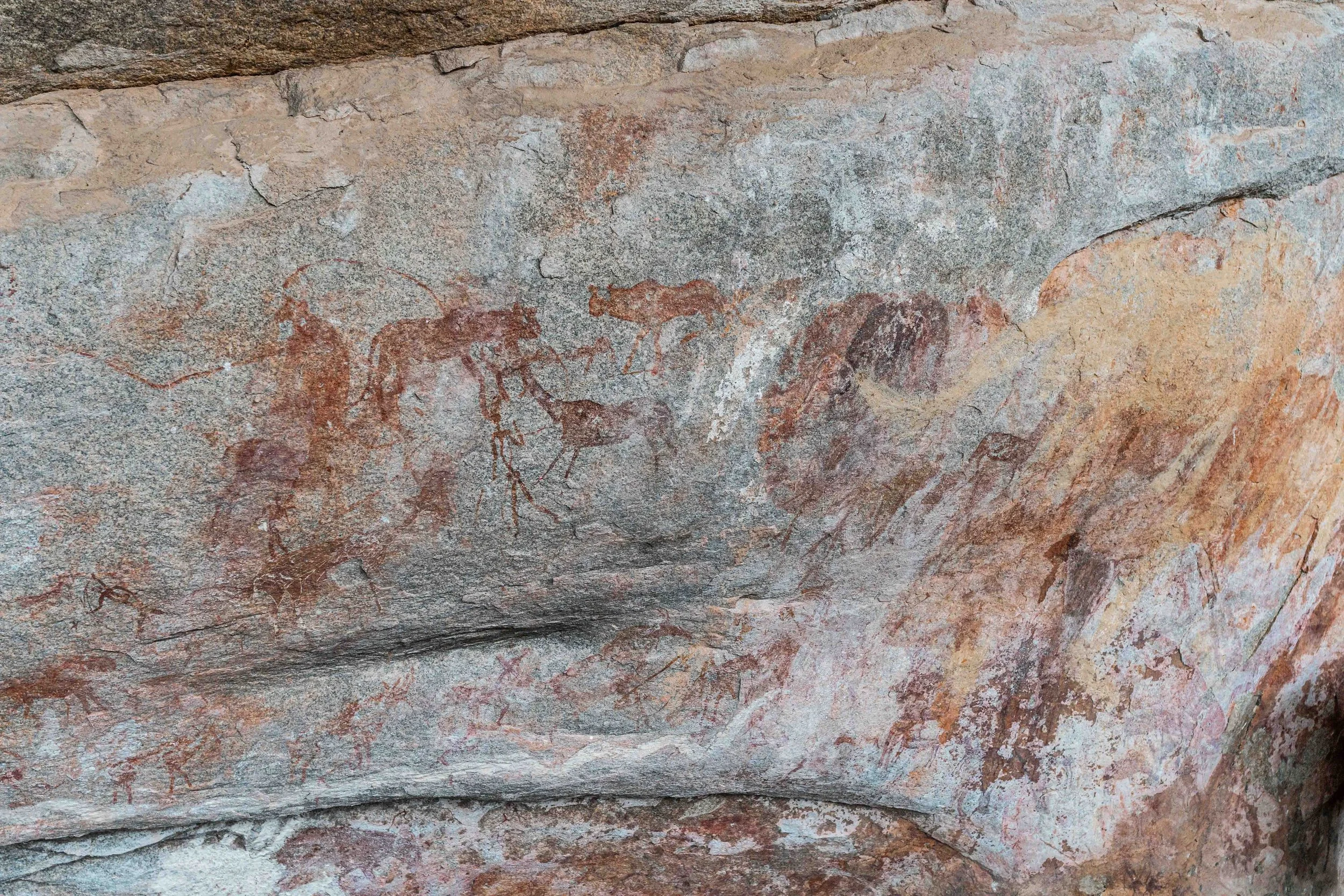
Closer view of the human figures with the felines above them in red pigment
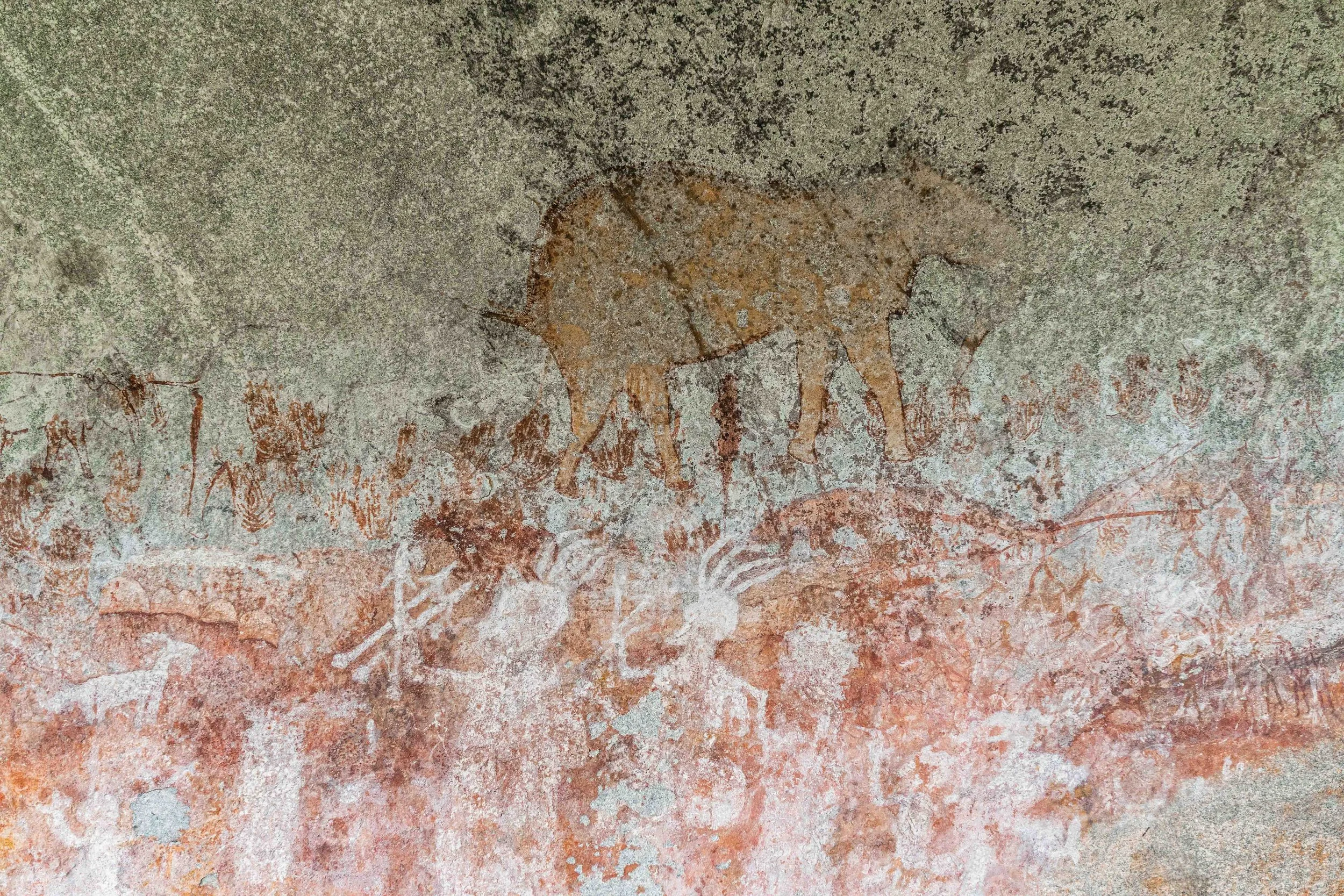
A large elephant in yellow pigment outlined by red/brown with smaller ones following behind it. Below is a depiction of hunters with headdresses and arrows drawn in white pigment
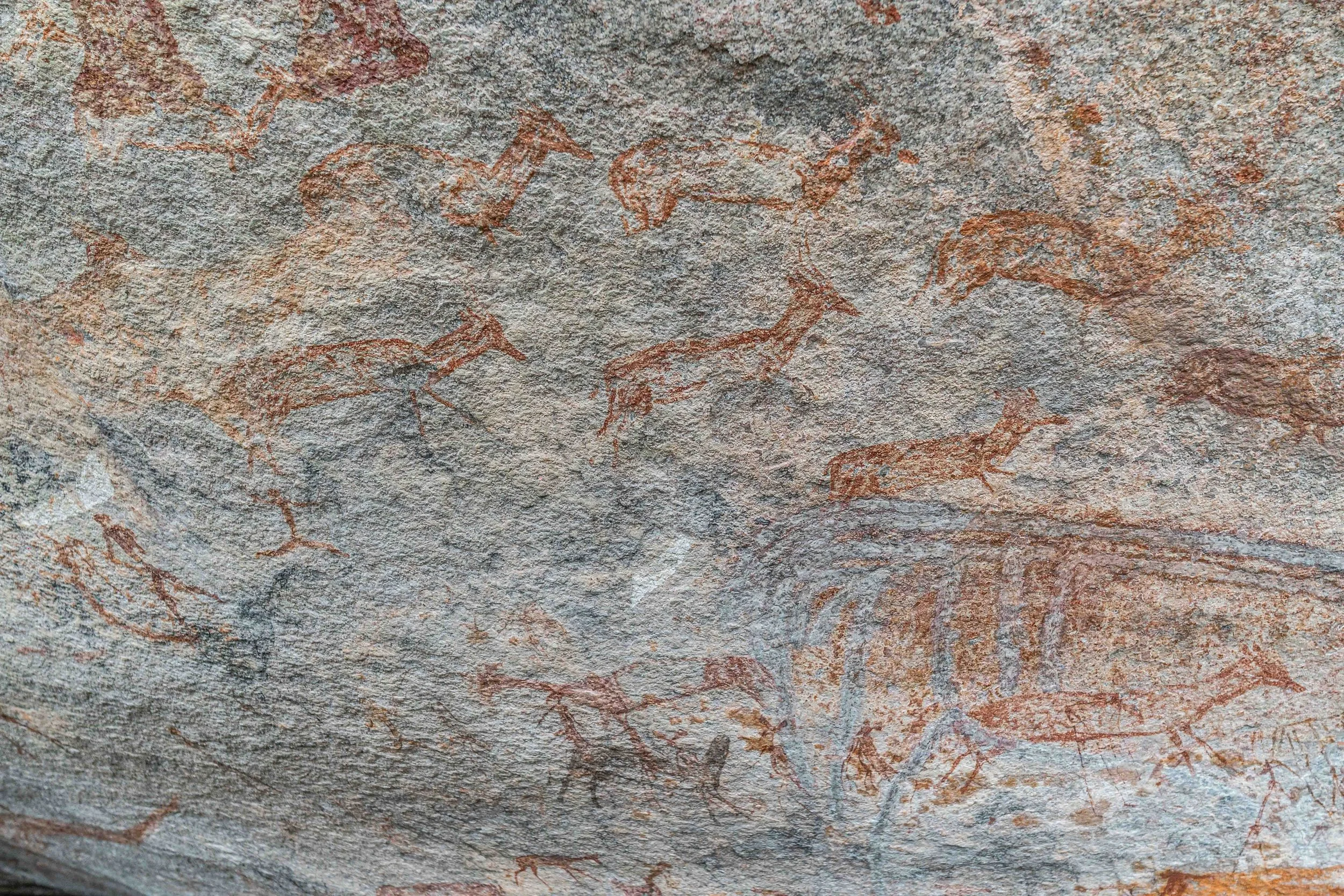
Kudu and an almost faded zebra by the right corner
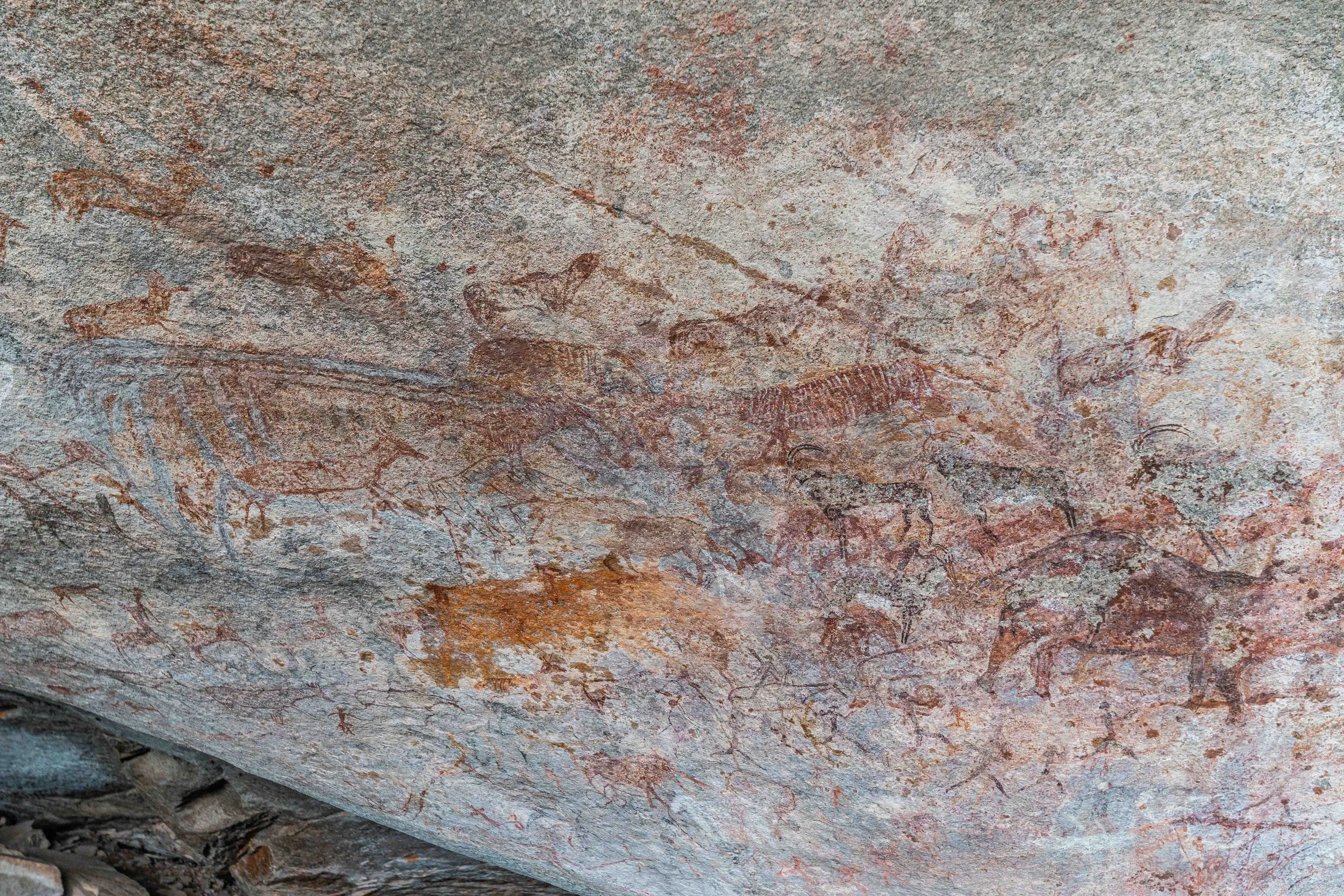
A couple of zebras and human figures superimpositioned together
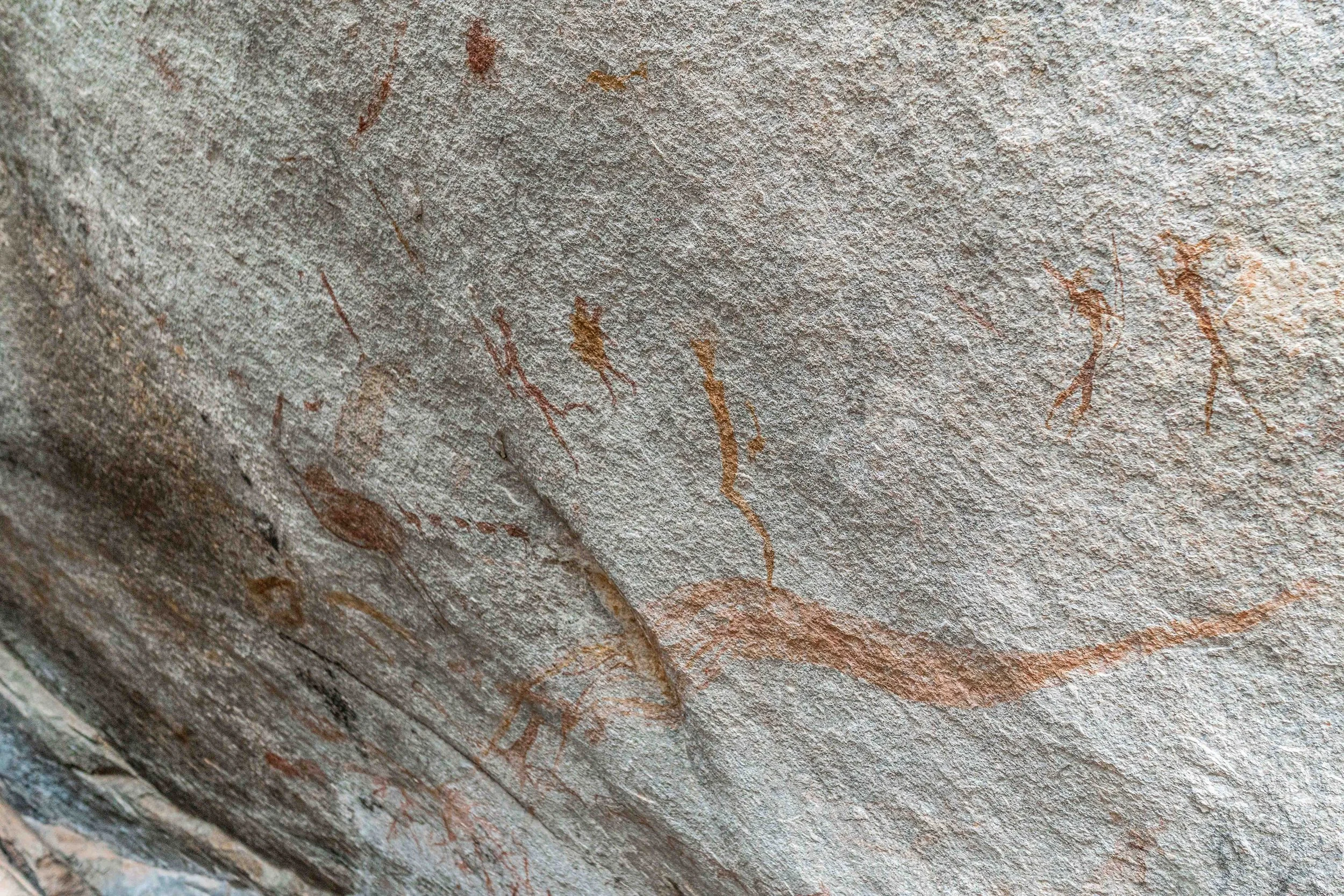
Human figures possibly in motion holding weapons
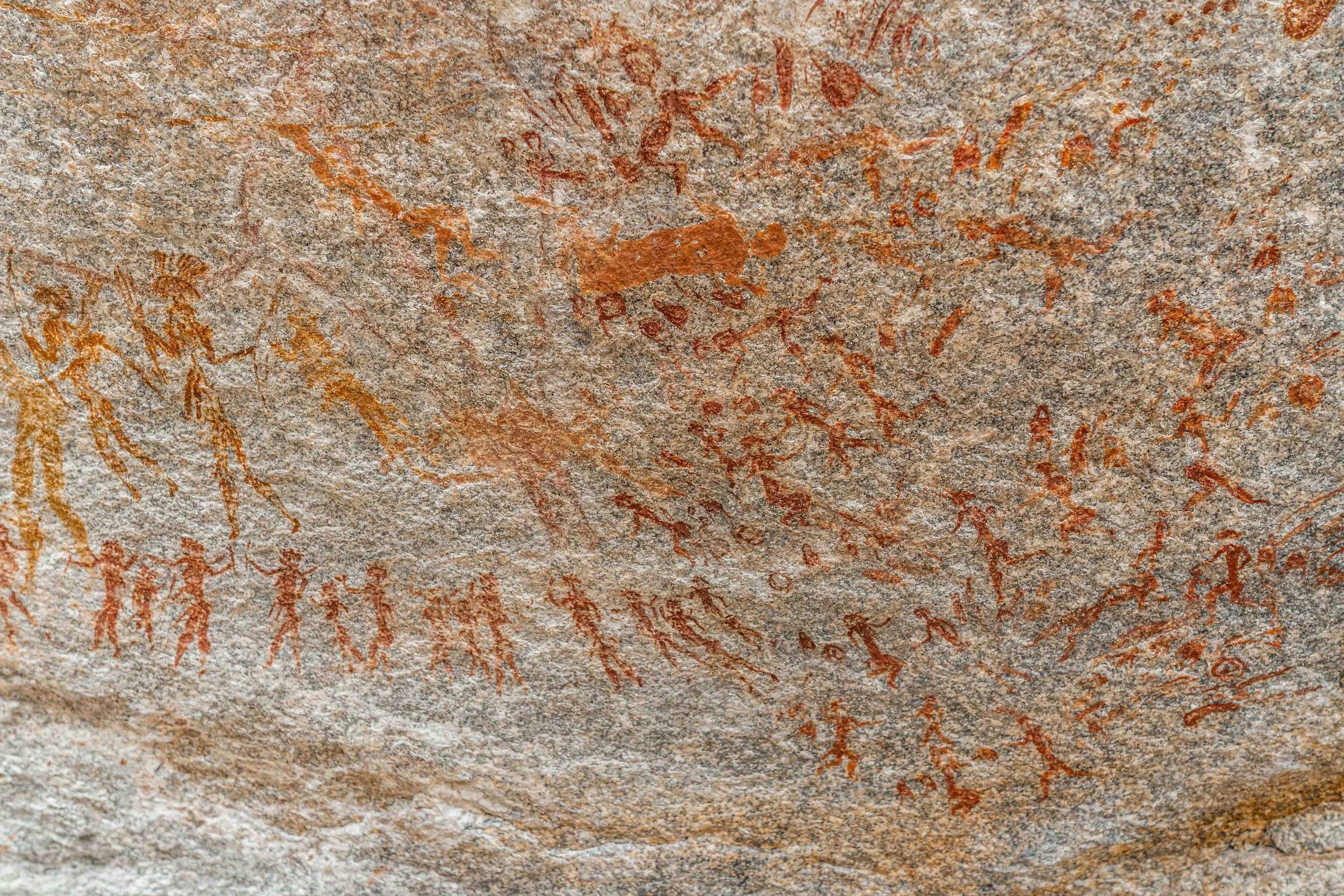
A group of human figures in a trance ceremony and dance among them are three hunters in regalia holding bows and arrows (left)
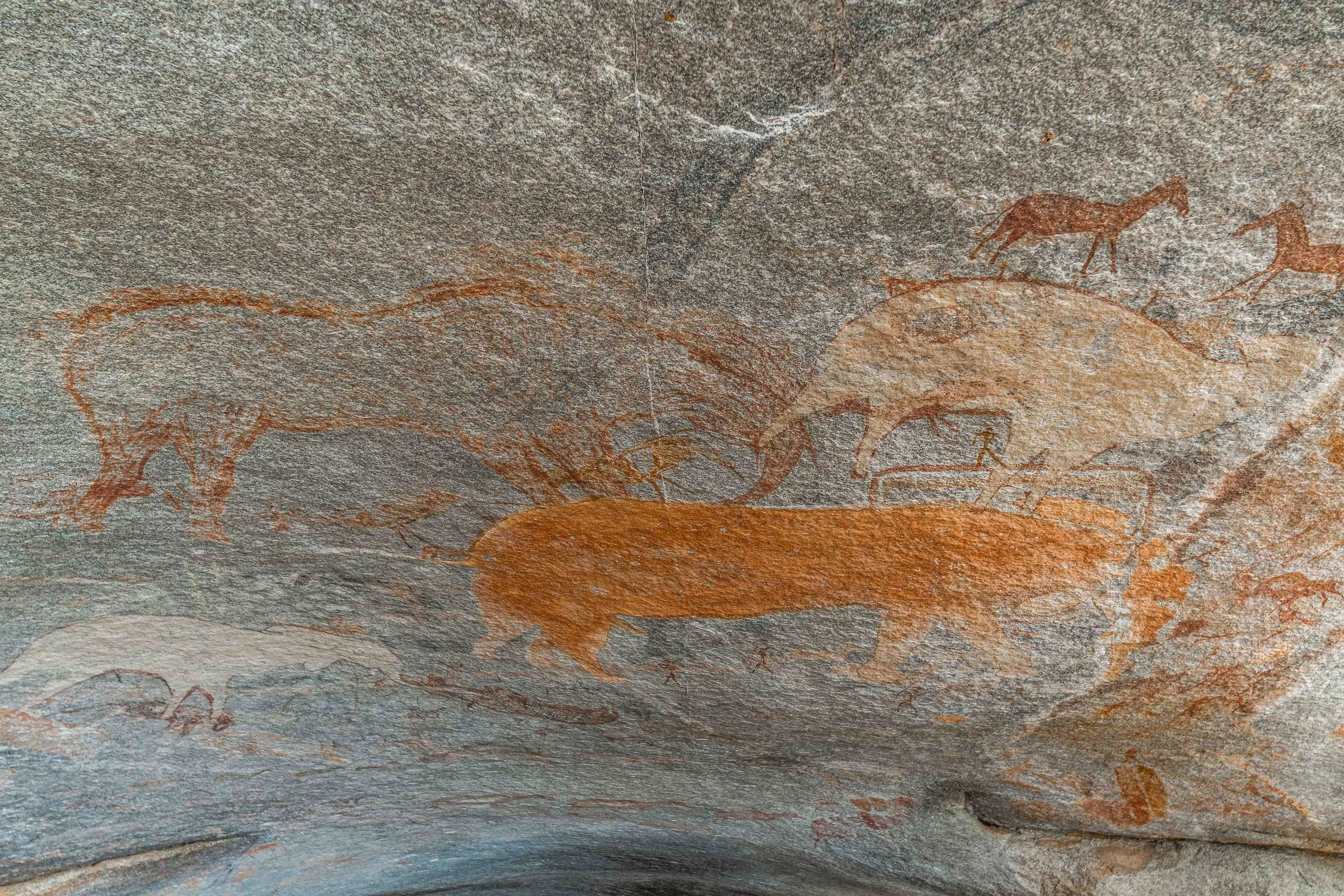
Elongated animal depictions
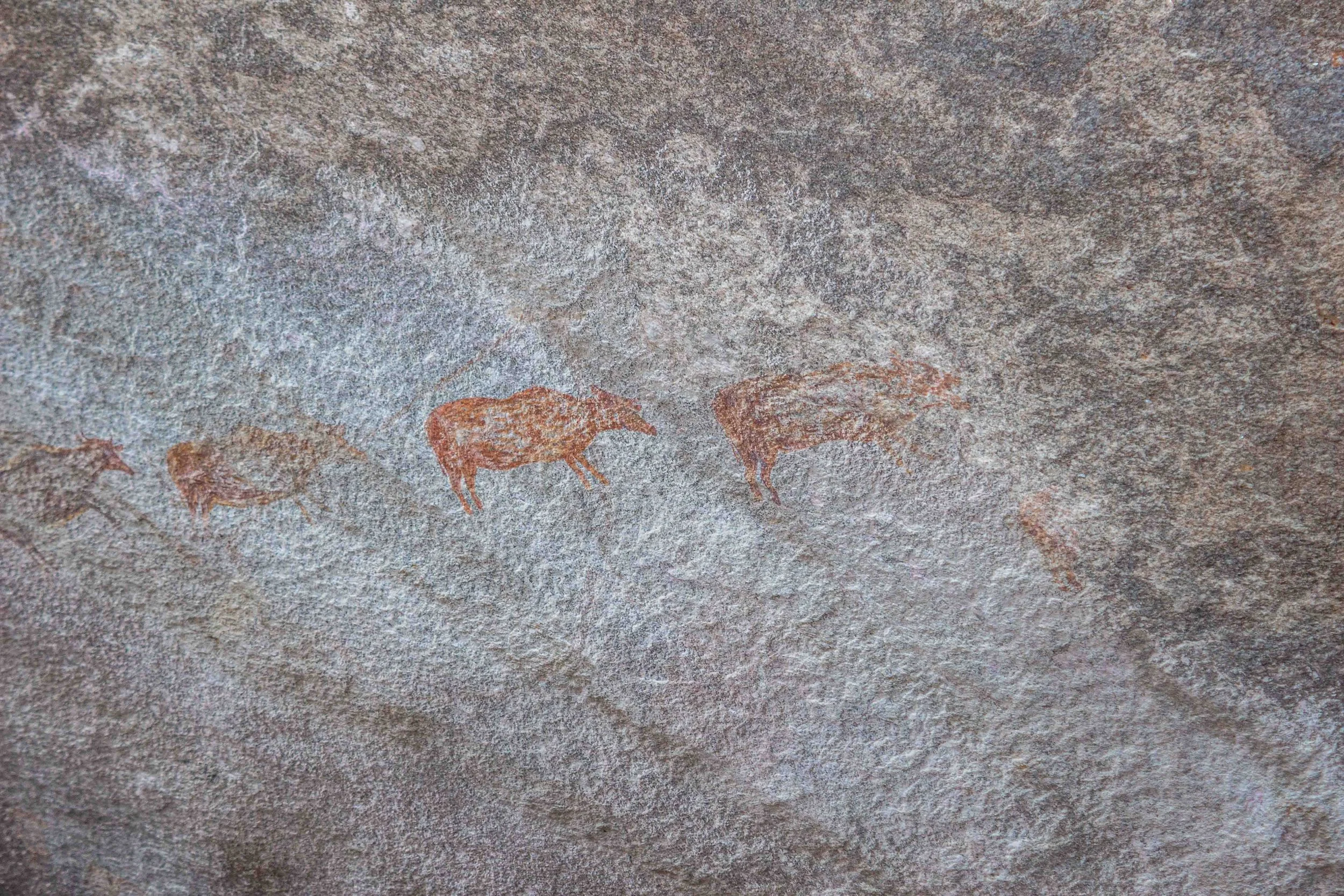
Depiction of animal figures in motion towards the East
scan for directions on google maps
Chikupo/u Caves
The Chikupo caves are located in the Chinamhora Communal Lands of Mashonaland Central Province. It lies northeast of Harare, about a 90-minute drive over tar and dirt roads both accessible to researchers and visitors. The site comprises of multiple rock shelters, i.e. the Southern and Central cave, Northern cave and the Western cave each featuring extensive panels. These shelters are reached by ascending short slopes and the western cave lies across the small valley which is another additional climb.
Directions: By car
Estimated time: ~1.5 hours
Depart Harare CBD via Borrowdale Road (heading northeast)
Continue past Domboshava turnoff into Chinamora area
At ~30 km → turn left onto a dirt road
Pass local landmarks (schools and small centers)
At main junction → turn right
Near Chisiga Store → turn right toward Masembura
Continue straight until you see a granite hill (Chikupo) on your right
Turn onto a small track and park at the base

By Kombi (Public Transport)
Step 1: From Harare CBD
Take a kombi heading toward Murehwa or Mutoko
Ask to drop off at Chinamora / near the Chikupo turnoff
Step 2: From Drop-off Point
Look for a local lift (ask at nearby shops or schools for cars)
Step 3: Final Approach
Ask locals for “Chikupo Hill” or rock art caves
Walk up to the caves (short climb)
***Signage is limited so local guidance is essential. Road conditions may vary based on season so, it is best to visit during daylight hours. Wear comfortable walking/hiking shoes. ***
The Art
Southern and Central Cave
The largest painted objects are four large elephants in thick orange, black, ochre pigment and white clay chemical pigment. One thing to note is that in most Zimbabwean rock art, elephants are drawn in large sizes. It could be that they are big in size, however, if that was the case then giraffe should also be seen bigger or at least taller sizes, but they are often illustrated in a smaller scale than the elephants. This may mean that elephants were seen as important by the communities thus being presented in large sizes. In addition to that, the African elephant is found in abundance in Zimbabwe, the country is home to one of the largest populations in the world estimated to be over 100,000 (Biology, 2026).
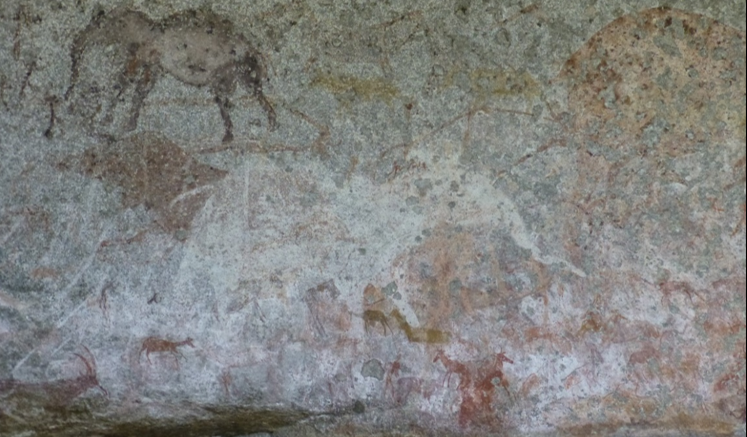
Depiction of a large white elephant (photo from the ZimFieldGuide)
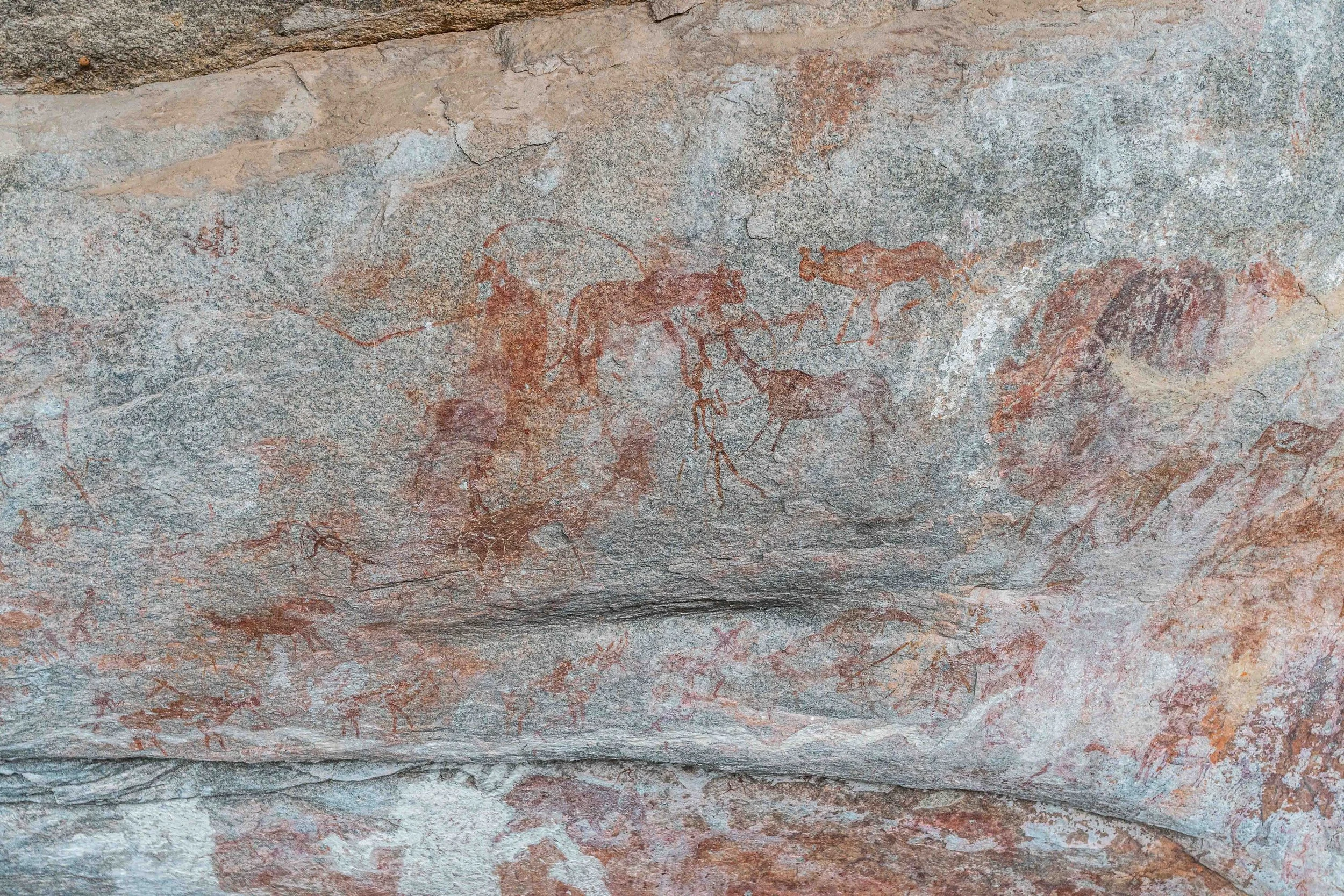
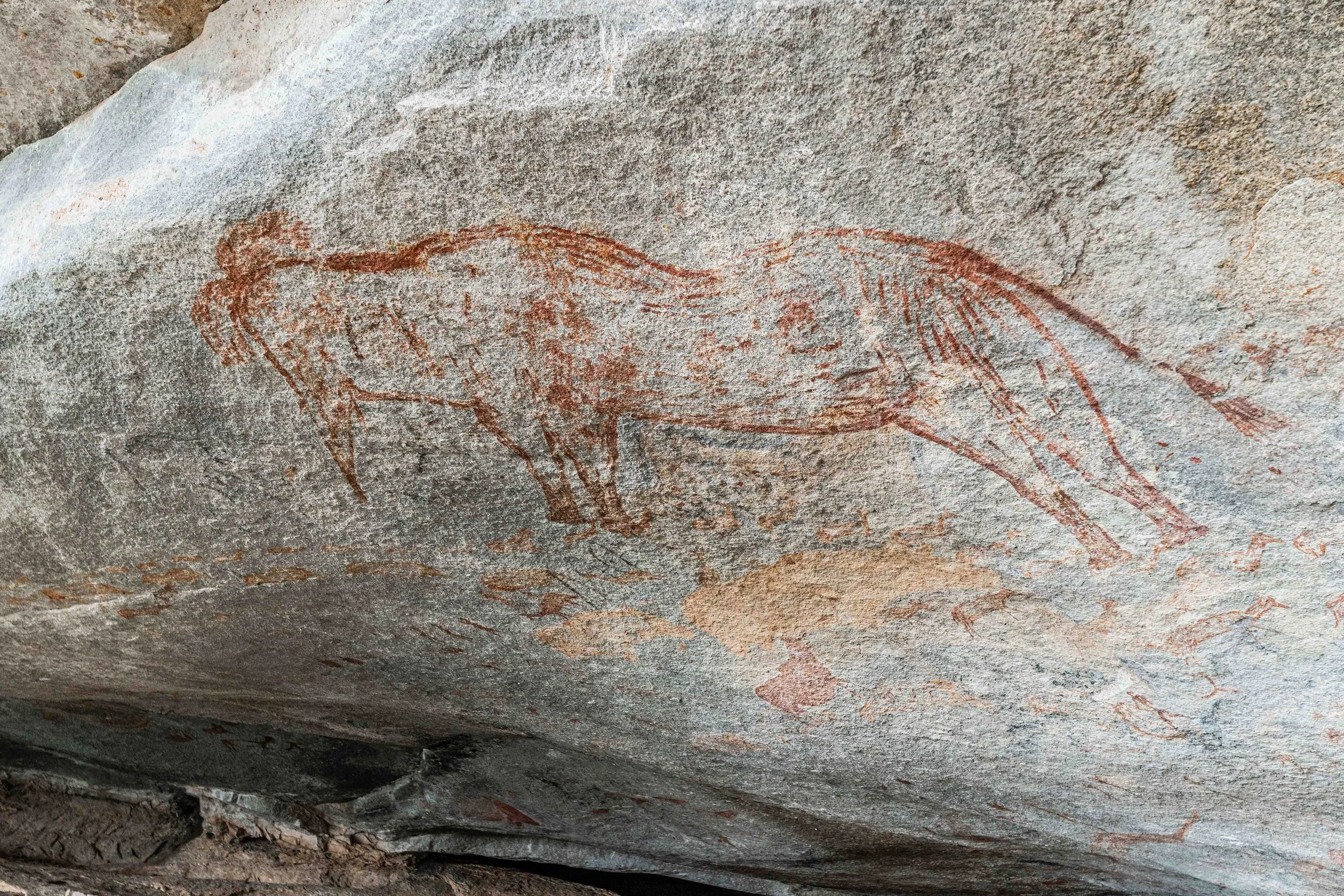
Other animals shown include the kudu and felines (rarely seen in Zimbabwean Art). The kudu are largely depicted in this cave and across rock art sites in Mashonaland probably because they were abundant in Zimbabwe. Kudus, specifically the Greater Kudu (Tragelaphus strepsiceros), are now sparsely populated in Zimbabwe due to factors such as declining habitat, deforestation, and poaching (Animalia, n.d.). A number of these kudu depictions (especially the female ones) can be seen with a white pigment outline on their bodies delicately and precisely, they probably used a thin material to do the outline.
(a)
(b)
depiction of kudu and felines above them (a) there are also a couple of human figures among them. A large animal depiction (b) which could be an enlarged feline or a warthog
In one of these scenes, there is a clearly depicted hunter in white pigment. This hunter is superimpositioned above what looks like a greater kudu and then kudu horns above the hunter’s feet. The hunter is wearing a headdress and holding six arrows in the right arm, there is also a bow and one arrow in the left hand. Another depiction of hunters is seen at the Western Cave where several human figures in orange pigment are seen holding bows and arrow. This indicates that these communities would hunt game adding to our understanding of the societies’ subsistence strategies and how they would hunt these animals.
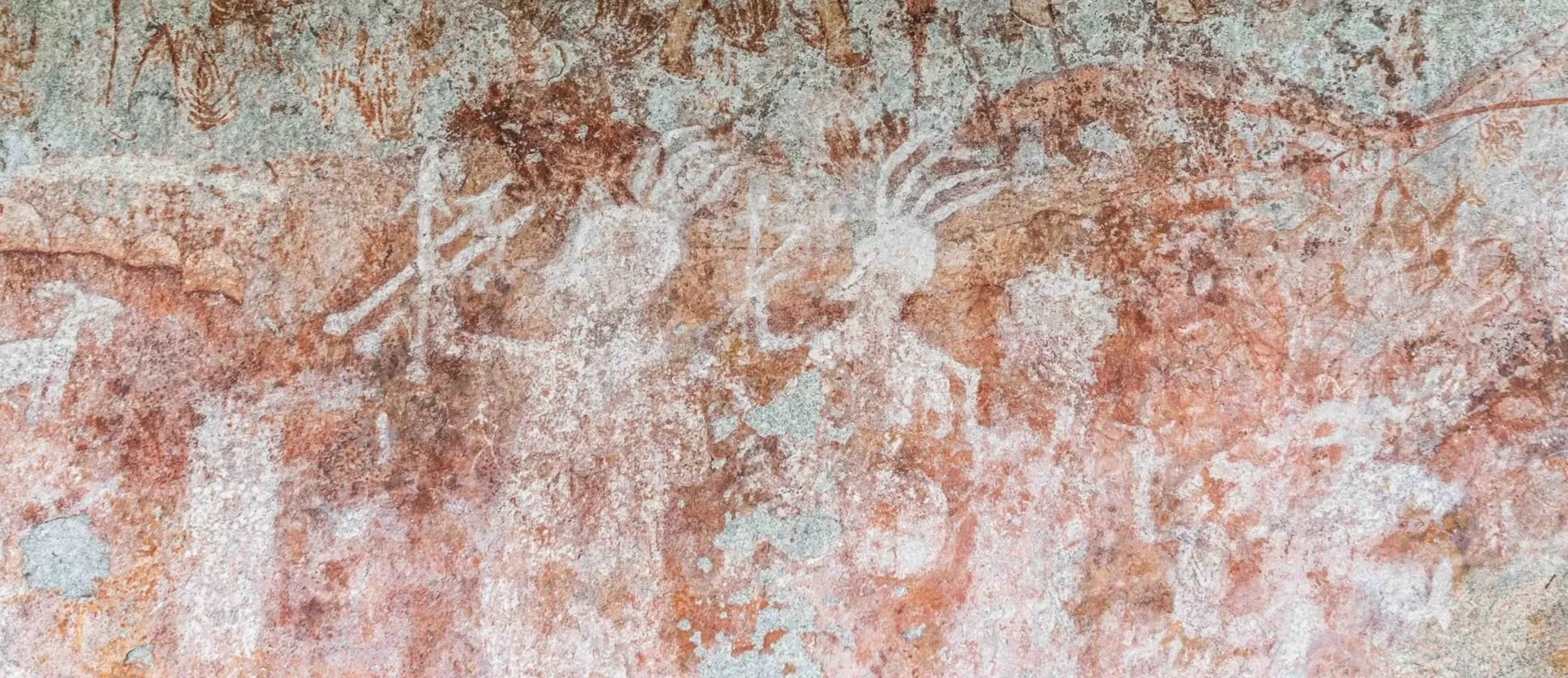
hunters in white pigment
Western Cave
There is a mass of paint remains on the western side; the original paintings were probably ruined by cattle being penned in the cave and rubbing up against them some time in the past (Zimbabwe Field Guide, n.d.). At the front right of the cave, beneath a depiction of weapons and bags, a line of dancers (men, women and children) with headdresses, holding sticks, are painted in black pigment.
Garlake (1987) describes a line of 29 men with long thin legs and large feet, some divided to form two toes. They wear aprons or tails and have tufts above their aprons. Three are armed and some carry switches or rattles (one of the few representation of musical instruments) associated with ritual dance scenes for healing, hunting and social cohesion in San hunter gatherer cosmologies.
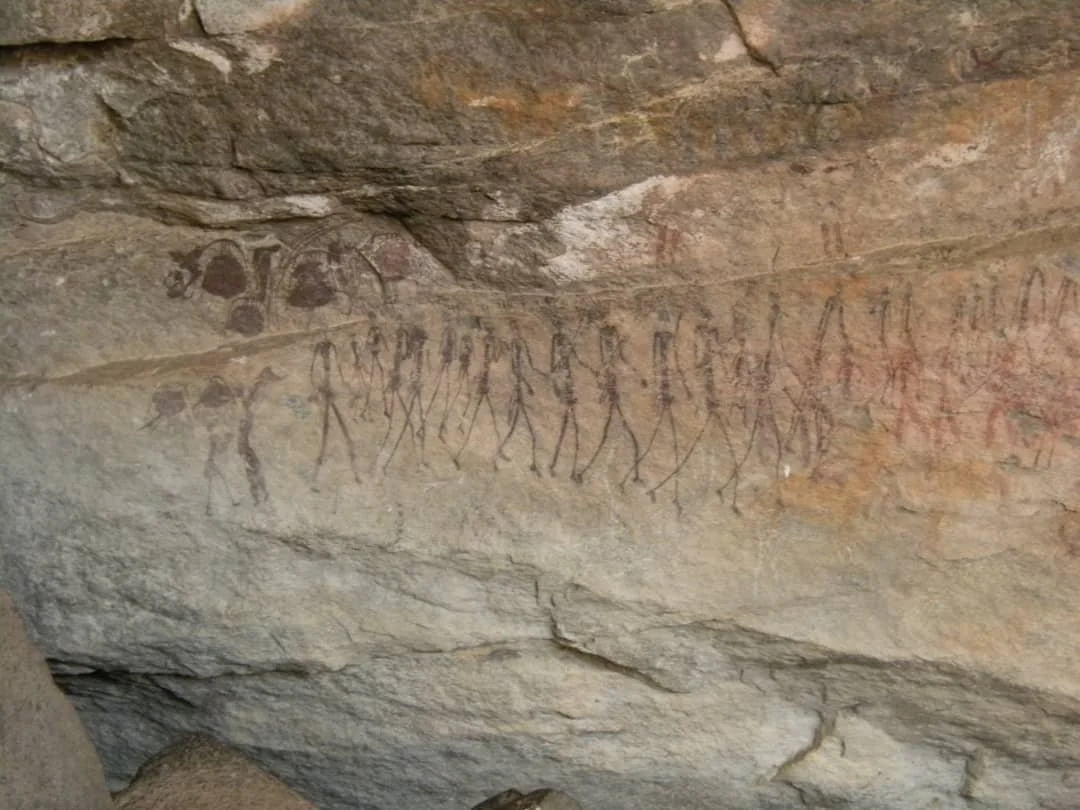
The eighth figure in the line from the left holds his arms rigidly in front of him, suggesting dancing and probably the start of a trance ceremony. The presence of weapons in the same vicinity suggests rituals or dances associated with hunting game for consumption and using this panel, we can argue that it could have been in line with capturing warthogs in the wild. On the far left and separate from the line, a male in an elaborate headdress faces outwards towards a woman who appears to be offering him some object showing communication. As much as this shows communication between the people in the community, it could also depict trading within the groups which adds to the understanding of the societies’ economic activities.
The presence of rhythmic body positions, raised arms, and objects resembling rattles or dance sticks supports interpretations linking the imagery to trance dances performed by San communities. Ethnographic studies of Kalahari San ritual practices show that such dances were central to healing ceremonies in which participants entered altered states of consciousness through dancing and playing instruments (Katz, 1982). Within this interpretive framework, the elongated limbs and exaggerated postures often depicted in rock art are understood as visual representations of trance experiences.
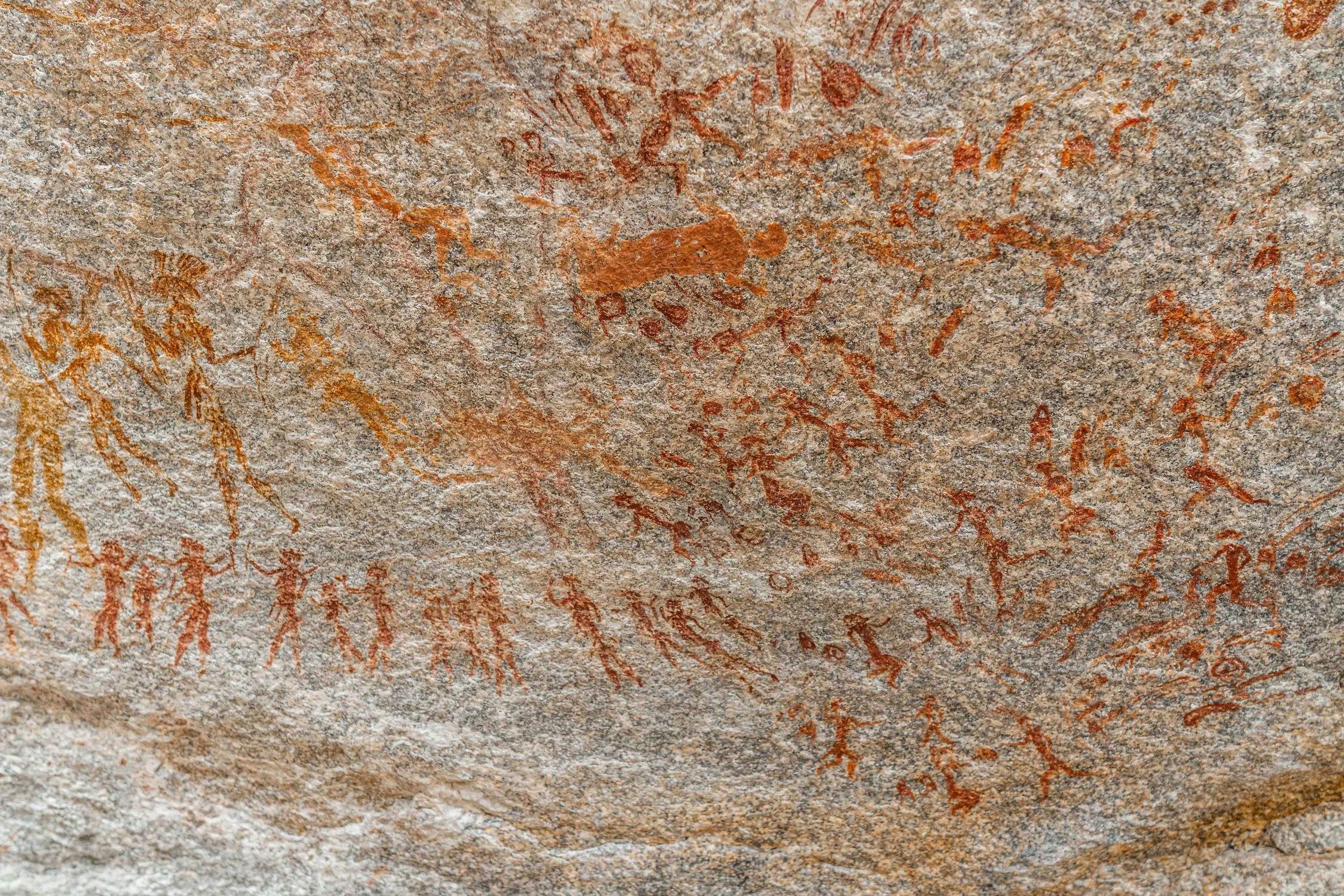
Several human figures in rhythmic poses indicating dancing associated with ritual activity. To the left, we have a couple of figures holding bows and arrows.
Conservation
Despite its significance, Chikupo faces both natural and human‑induced threats. The site is under the management of the NMMZ and is National Monument no. 112 in the database. Just like the Chavadzimu Rock Shelter, the Chikupo caves are rarely visited by the management making it vulnerable to a lot of issues. Because the caves are part of the Chikupo mountain (a lot of people go for hikes since it is an open site), it is hard to enforce rules or small fences (like at Domboshava) to protect the art from vandalism.
Weathering processes like exfoliation, chemical weathering, and water infiltration gradually weaken rock surfaces and pigments, a challenge shared across many exposed rock art sites. Smoke, soot, and biological growth may accelerate deterioration.
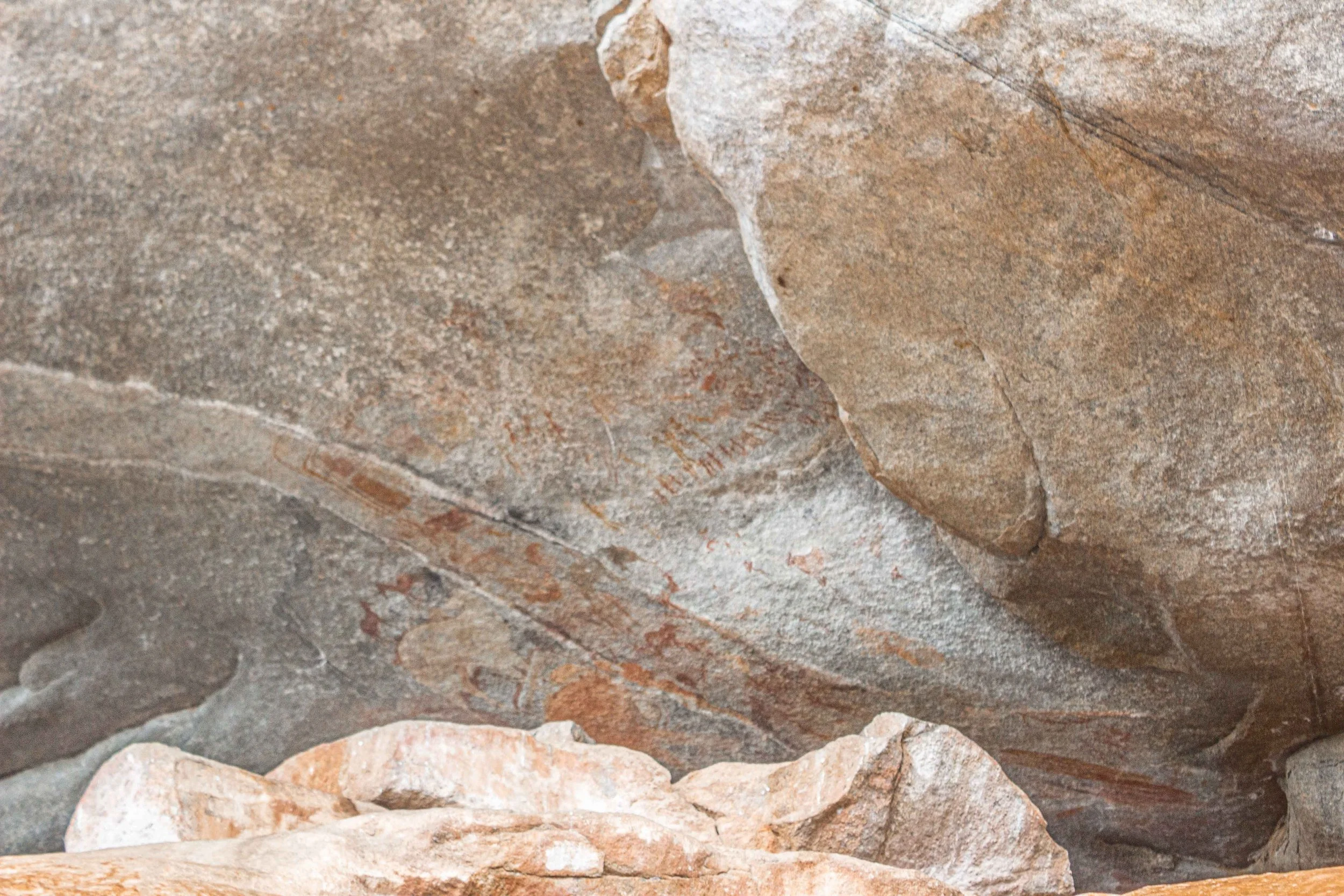
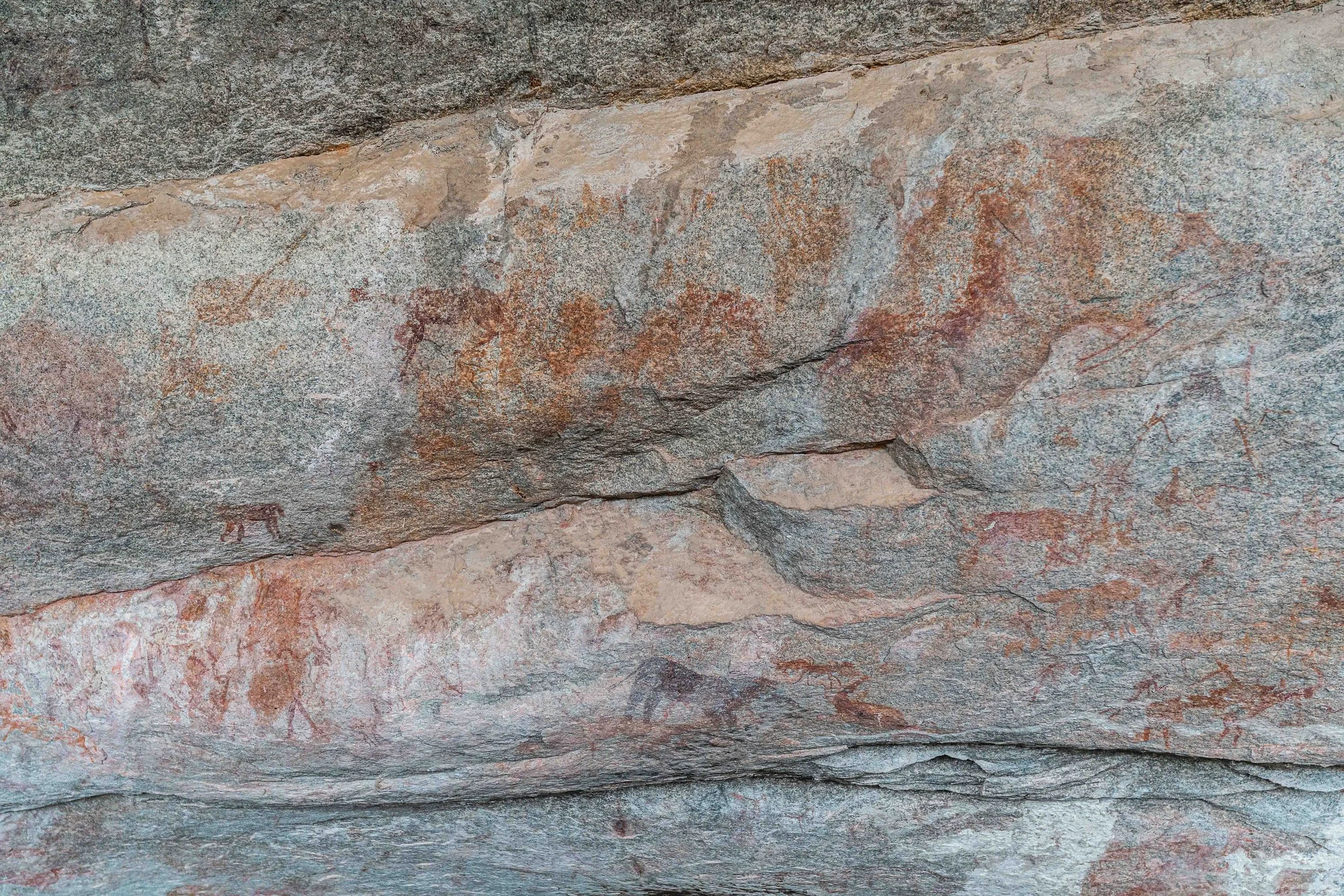
Sections of the panel which have started to fade and be affected by erosion
Efforts toward more structured conservation and site stewardship are underway: Bindura University of Science Education (BUSE) has entered into collaborative agreements with the National Museums and Monuments of Zimbabwe (NMMZ) to assist in research, documentation, and proactive site management for Chikupo and Chisvingo Ruins. The adoption of these sites will enable BUSE to carry out research as well as maintain and restore the sites (BUSE, 2022). This model exemplifies emerging approaches that integrate academic partners with heritage authorities to support sustainable site care while fostering educational advancements for the students studying in the discipline.