
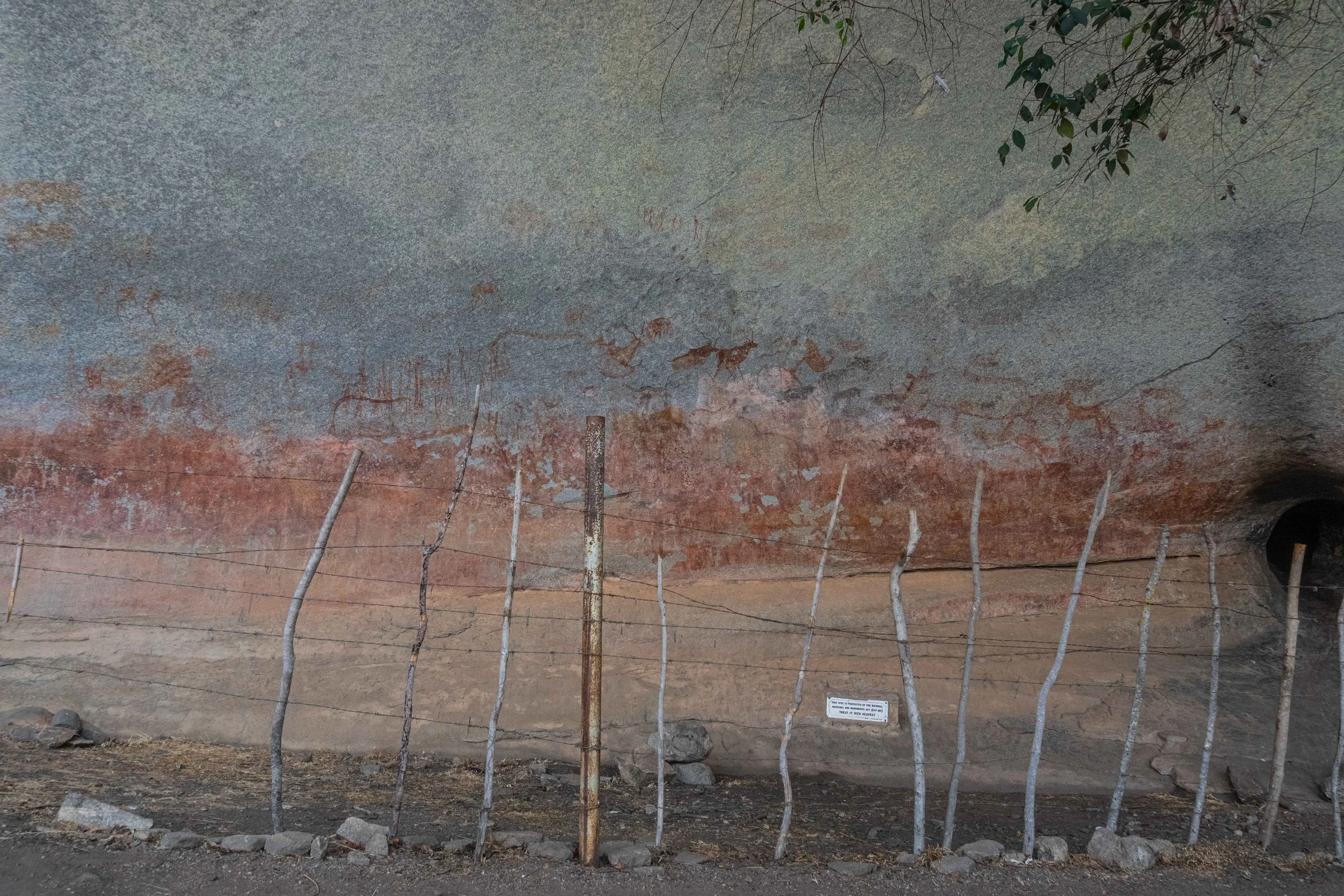
The right side of the Domboshava caves showing rhinos, kudu, antelopes and human figures. To the far right is a geological tunnel which the community used for rain making ceremonies
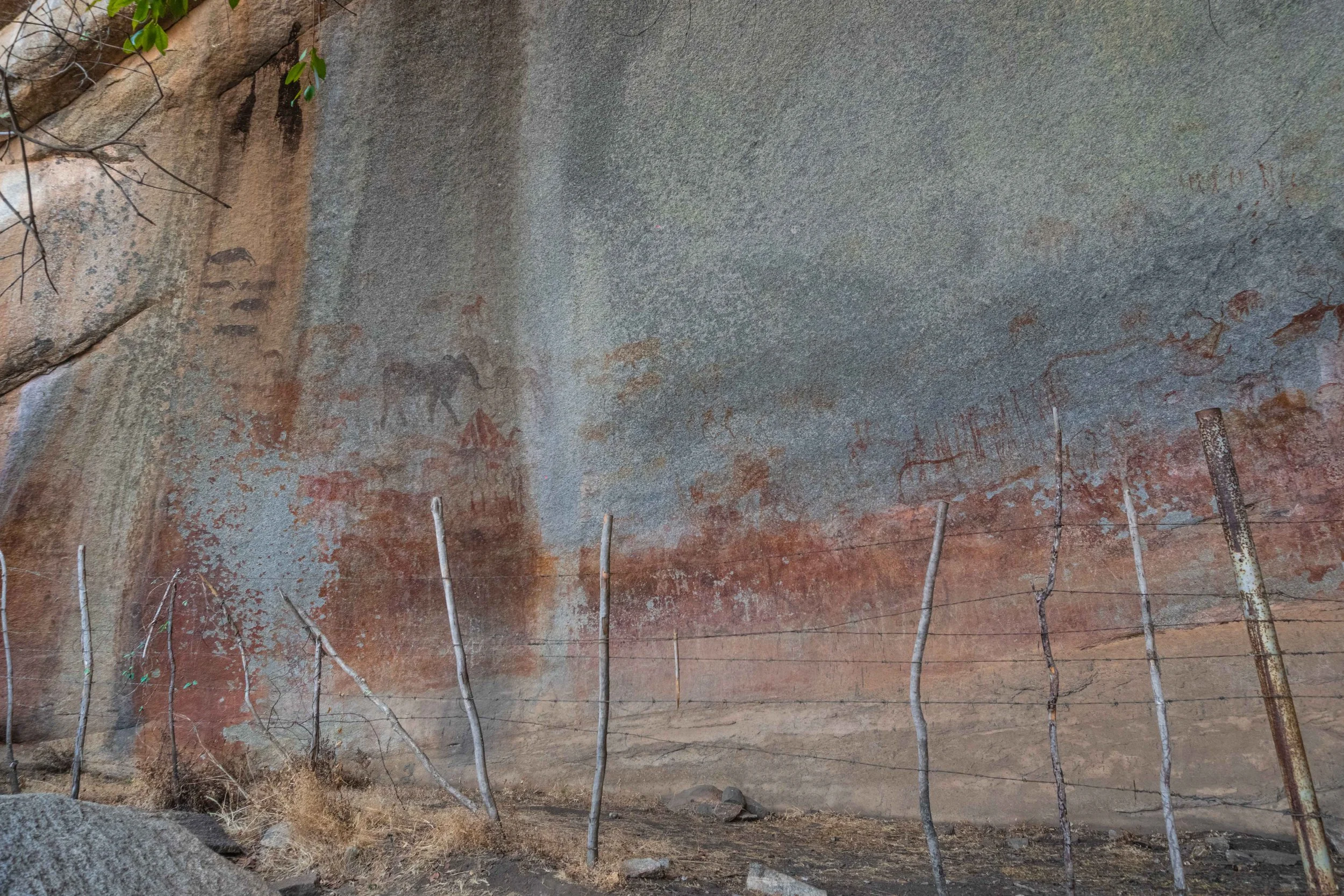
The left side of the cave with depictions of more human figures and a large elephant
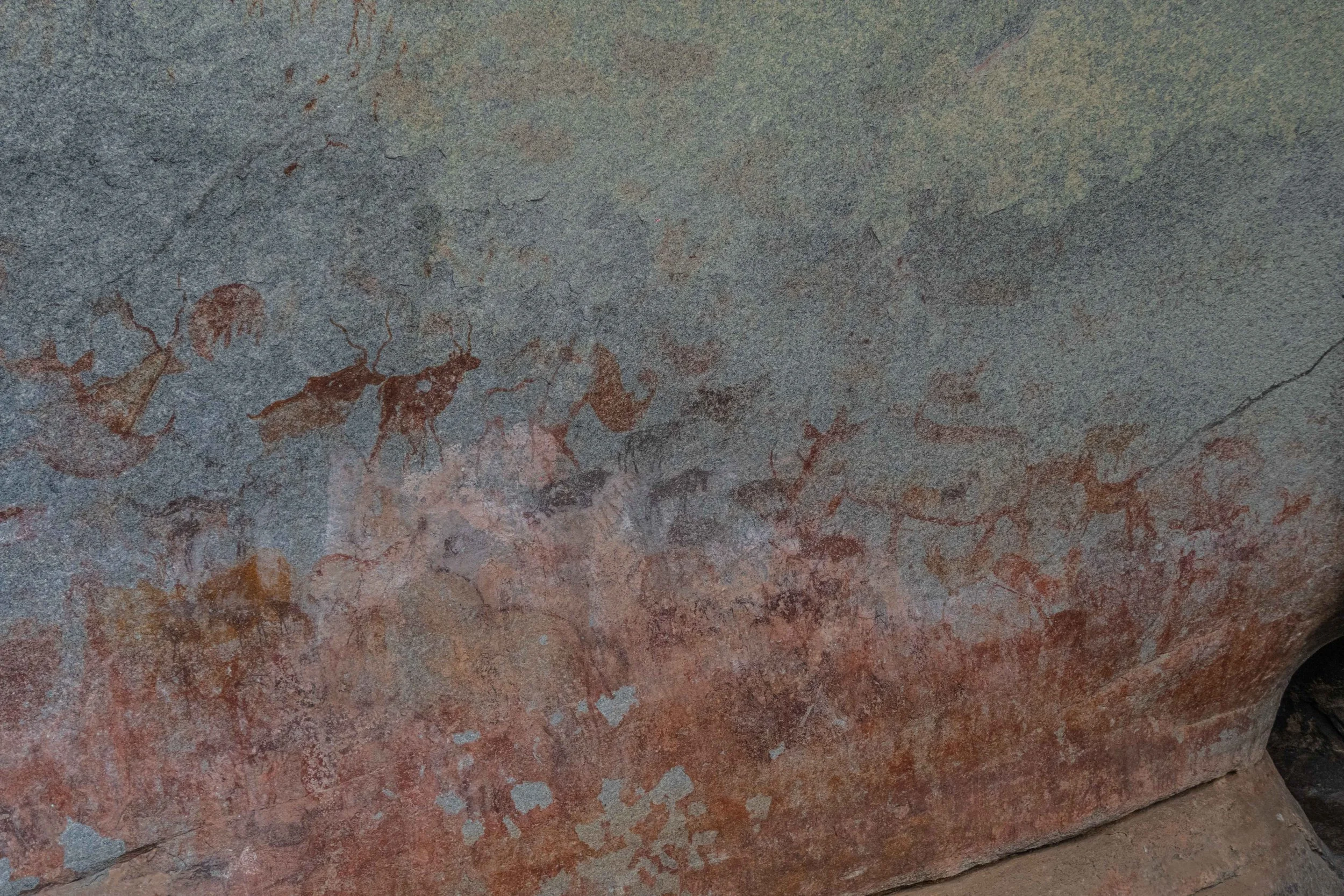
Animal (kudu, antelope, elephant, deer) figures in motion. This may represent naturalistic art showing the game they encountered.
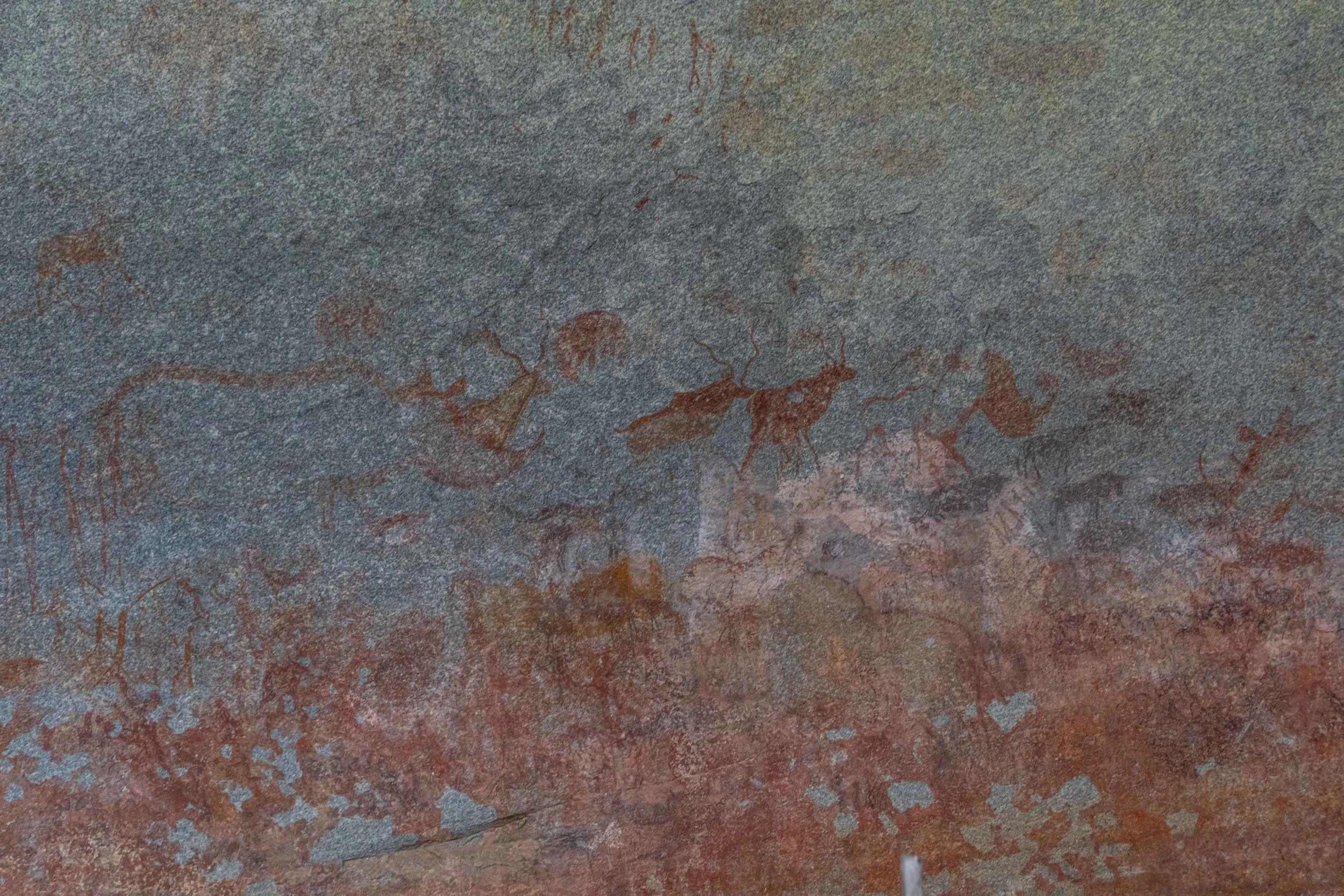
Clear depiction of rhino in same frame
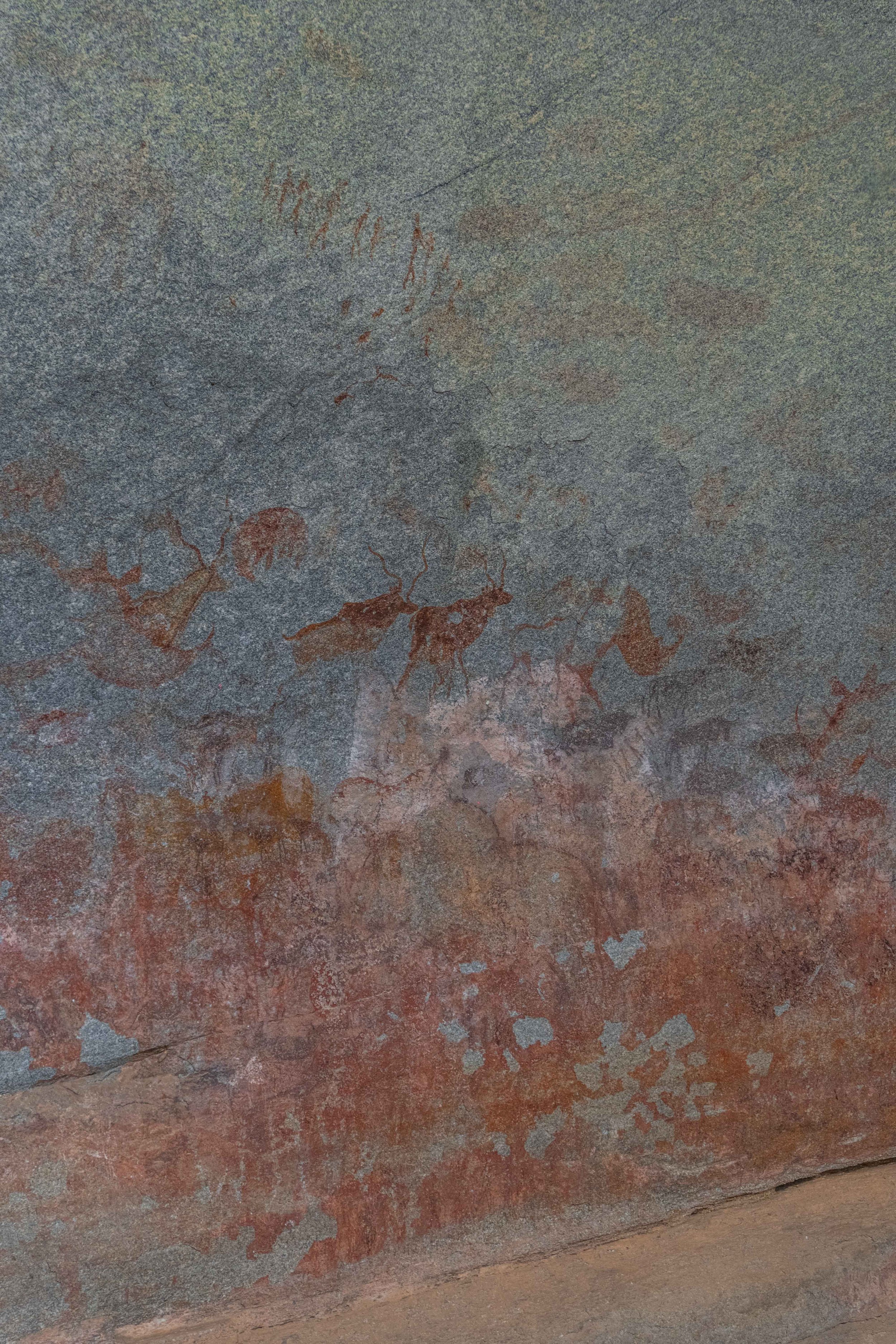
Animal depiction. A line of human figures shown above the animals.
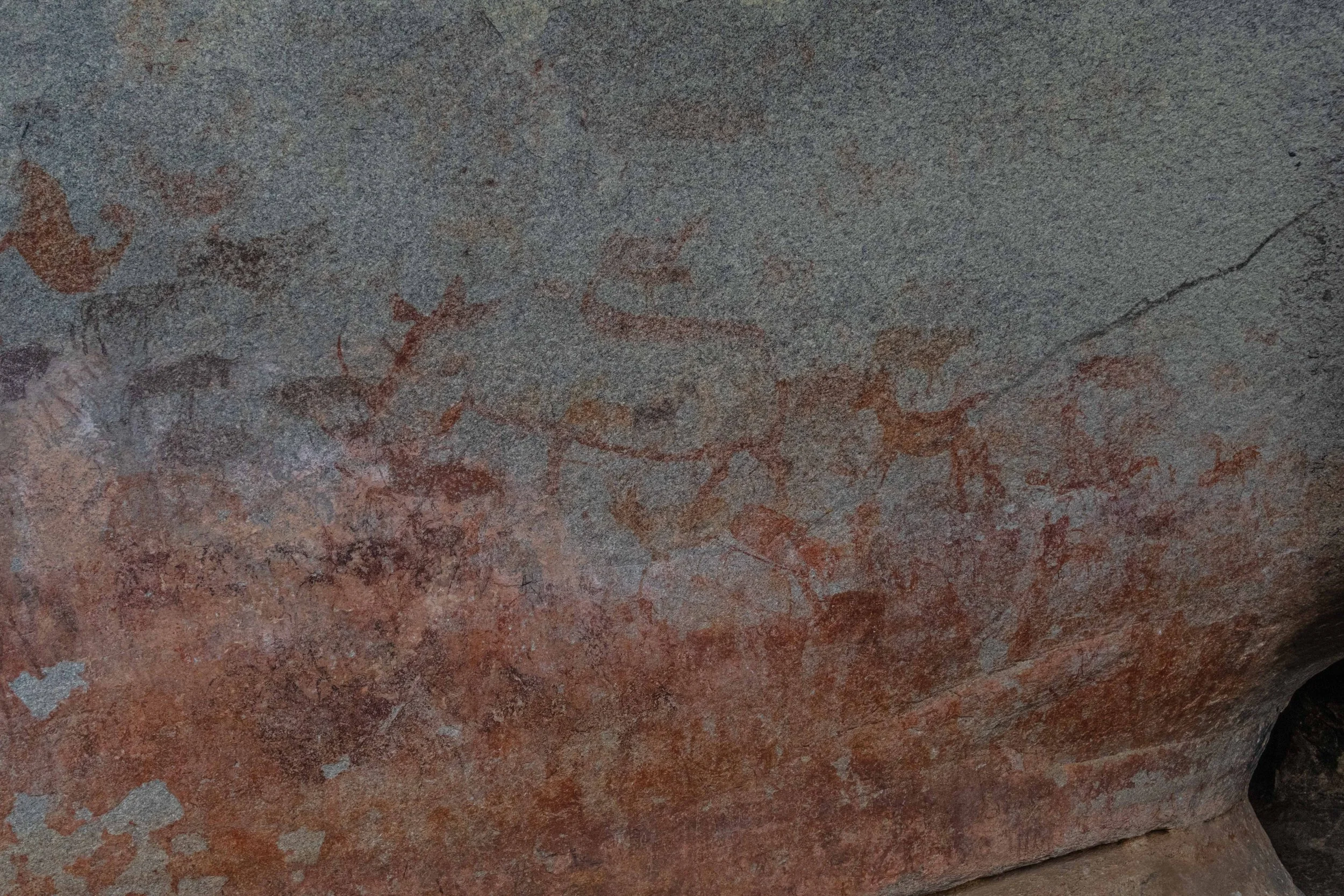
Close up showing an outlined rhino
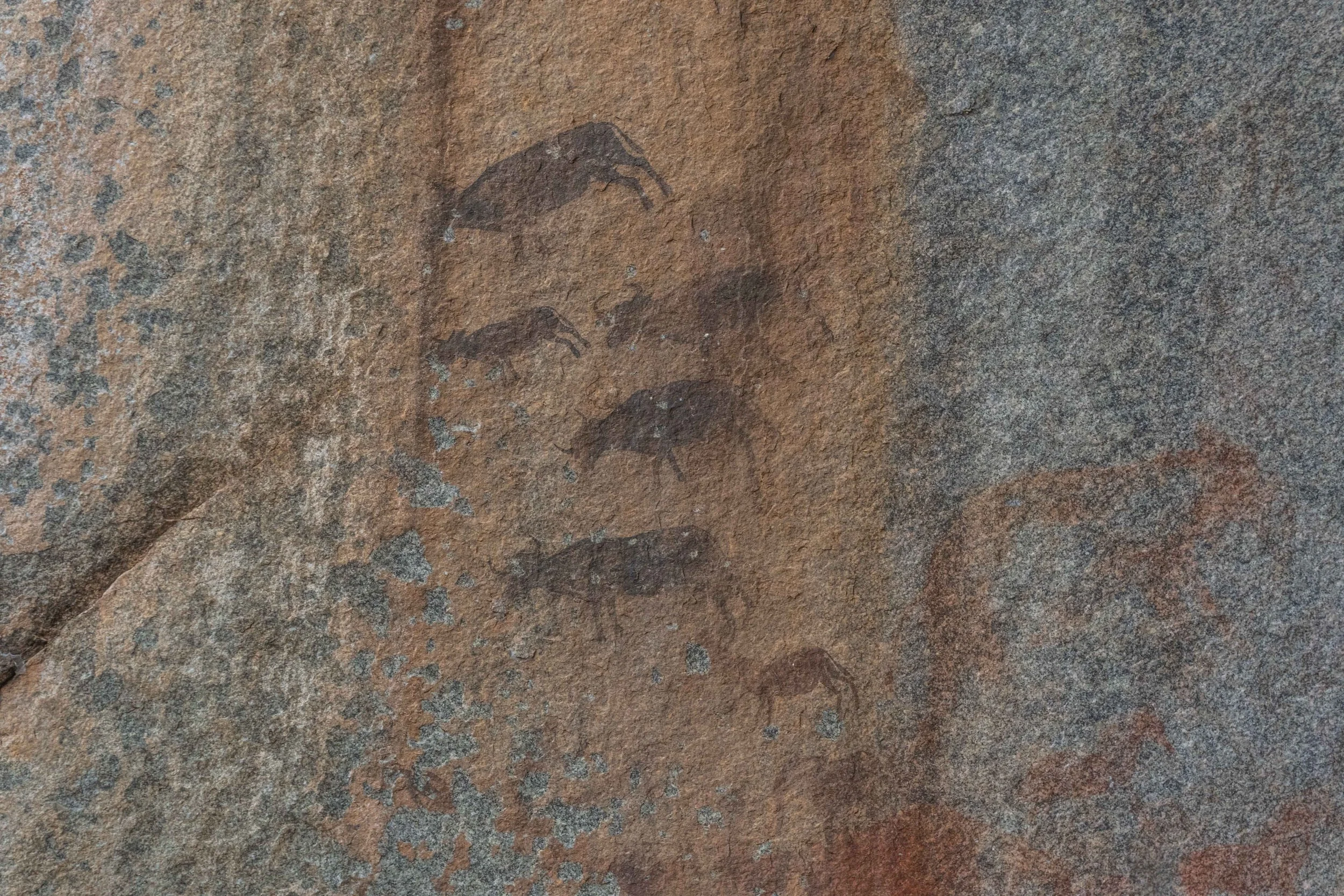
Buffalo
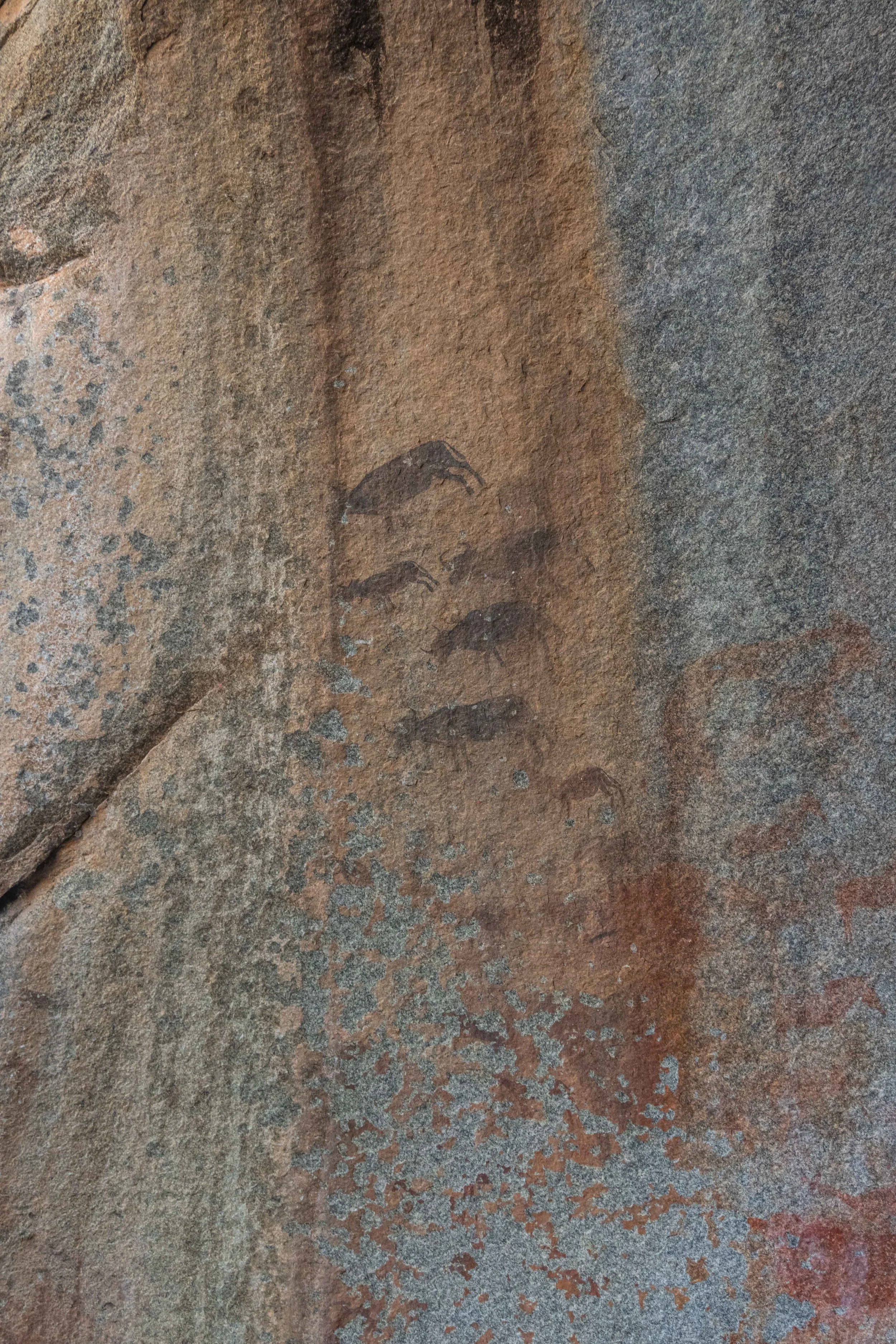
Buffalo depictions from a further distance
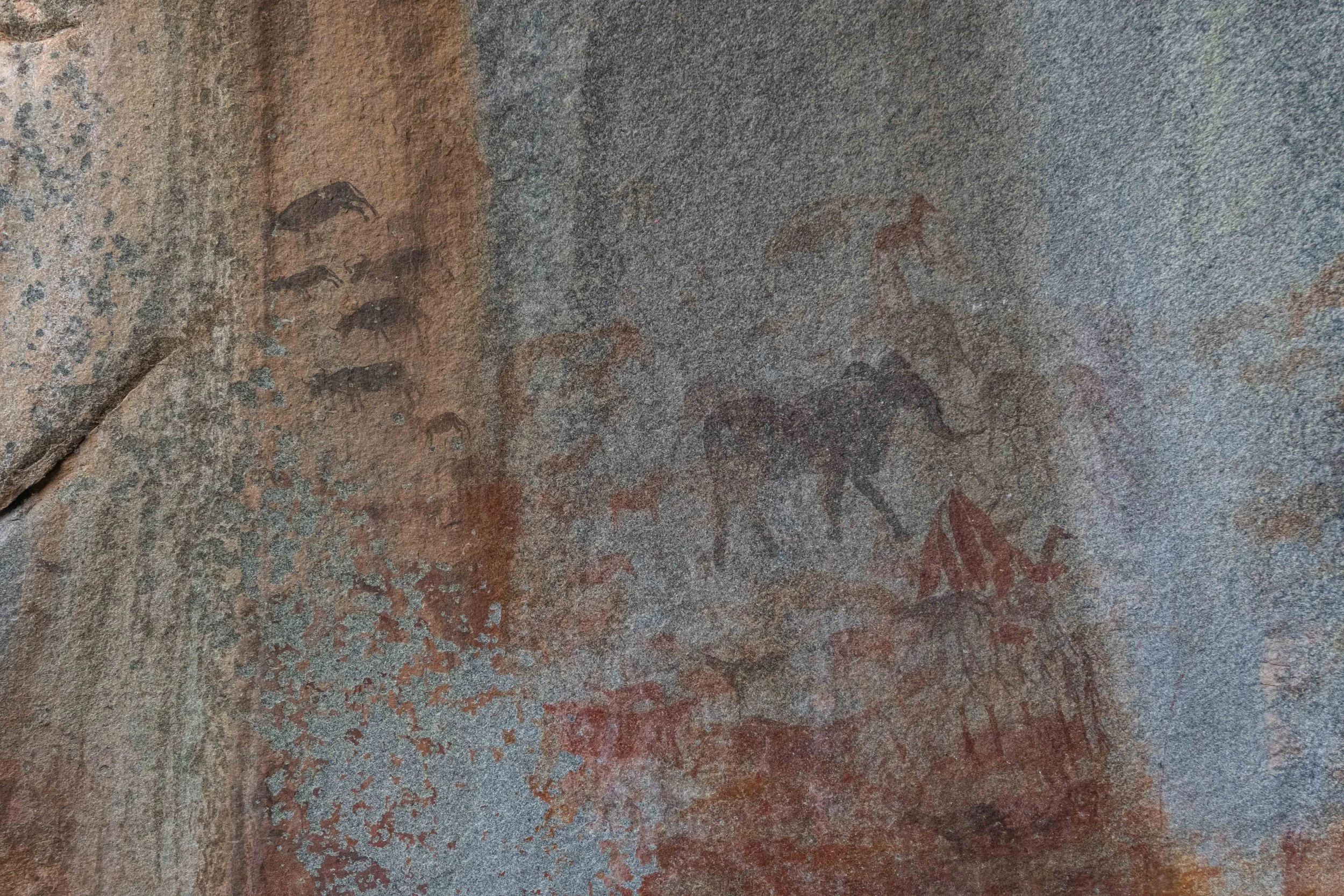
Animal depiction of an elephant, geometric structure potentially a house, few human figures below the structure.
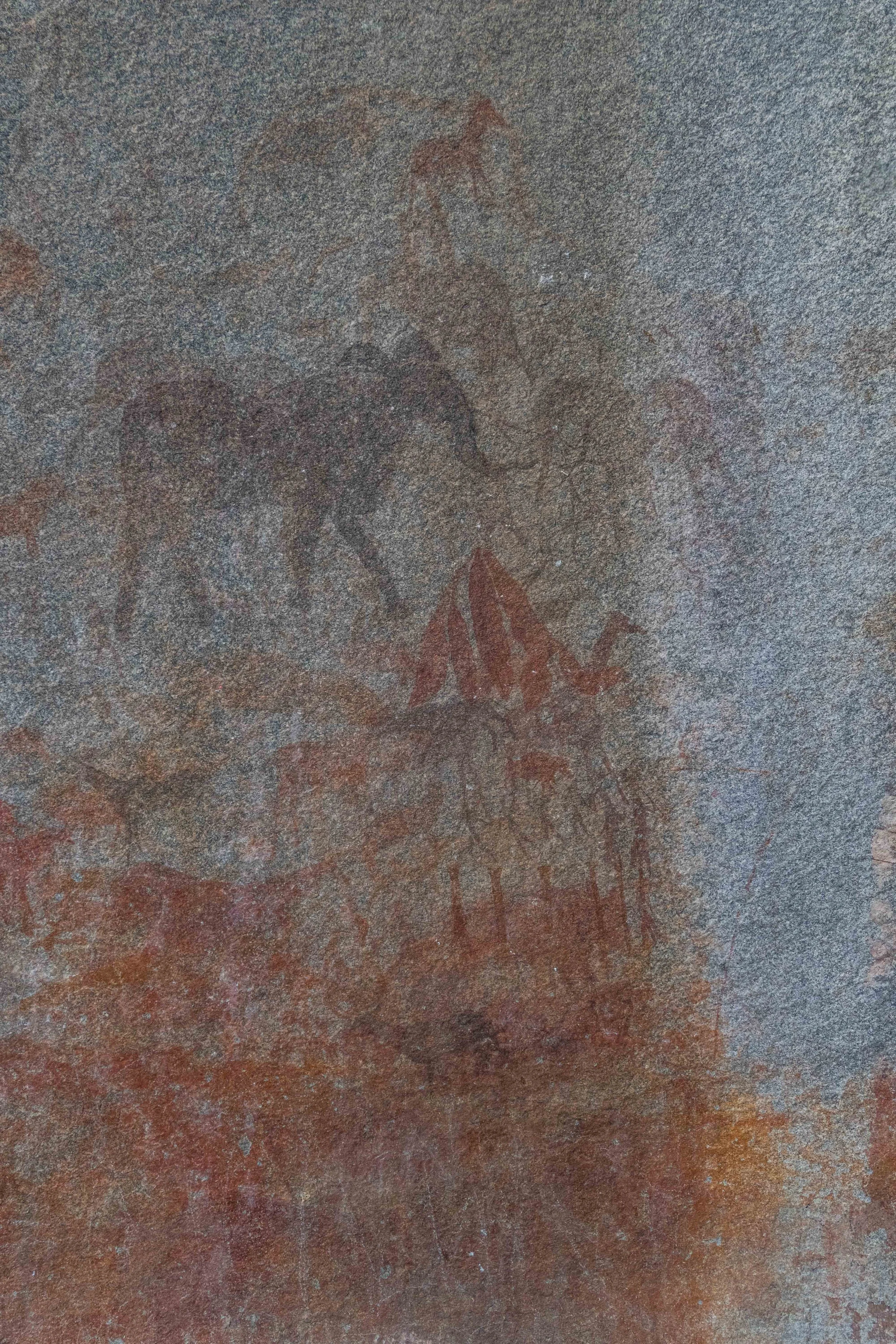
The large elephant and another one infront of it which has started to fade
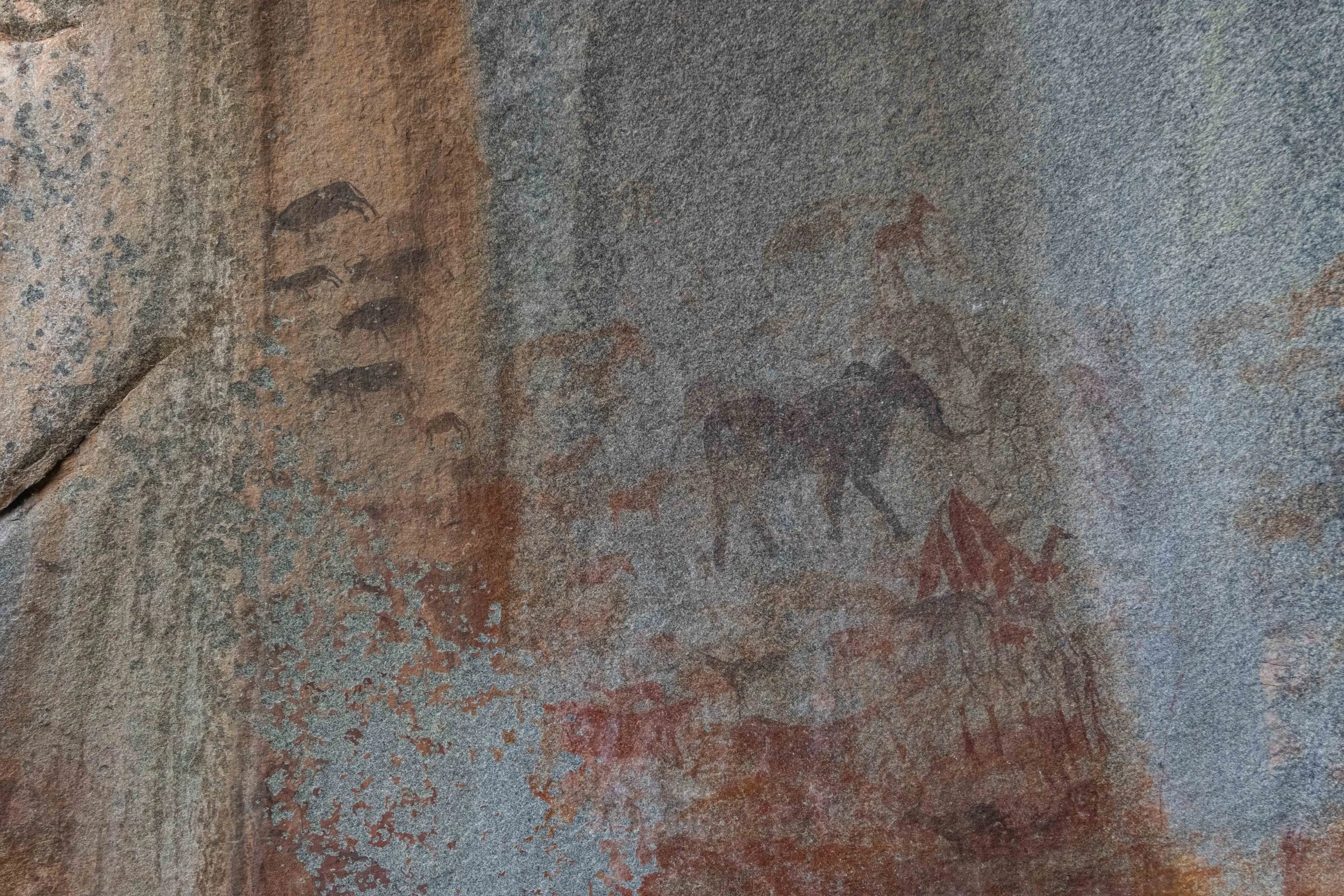
Part of the section showing the buffalo, elephant and structures together
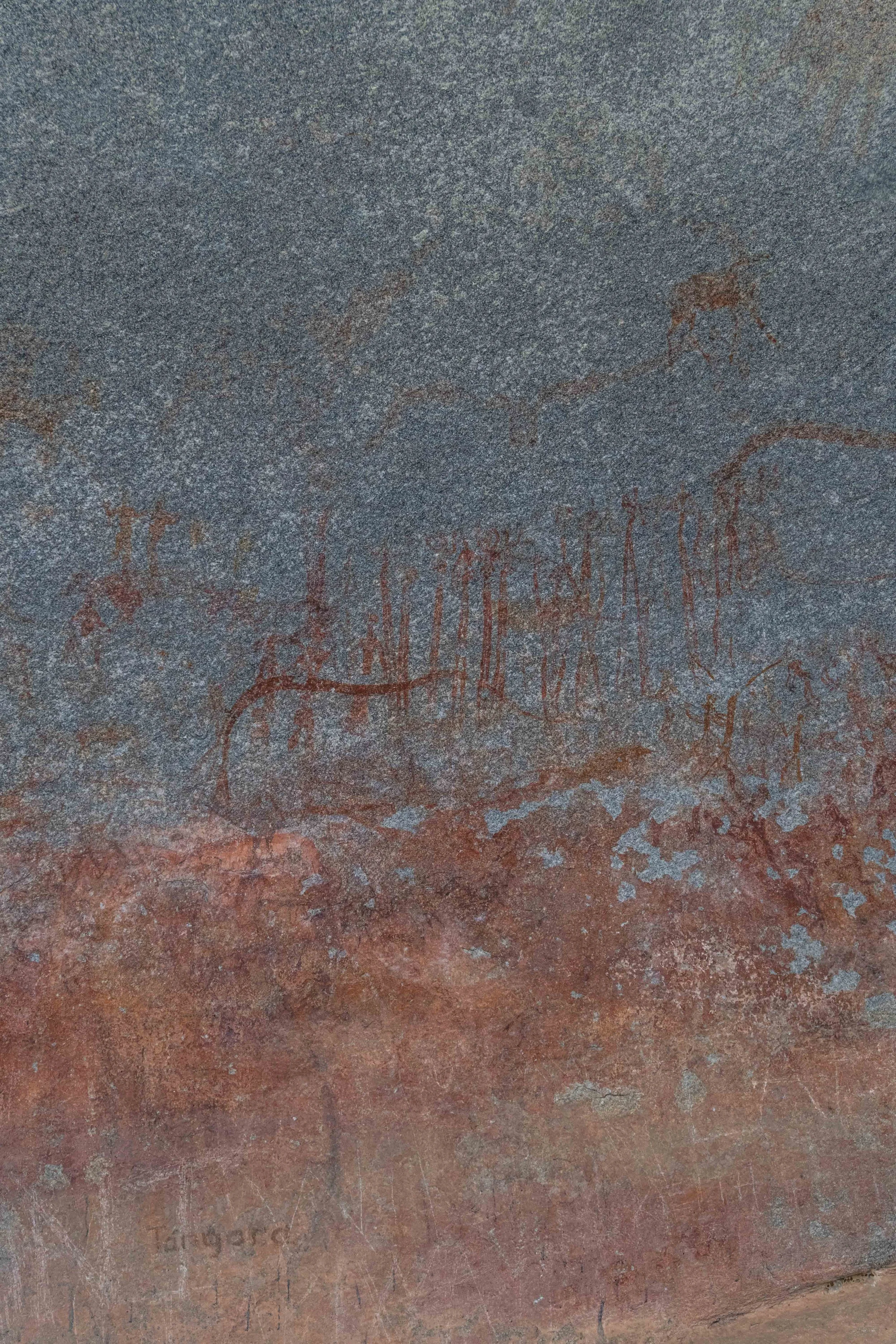
Elongated human figures symbolizing trance state.
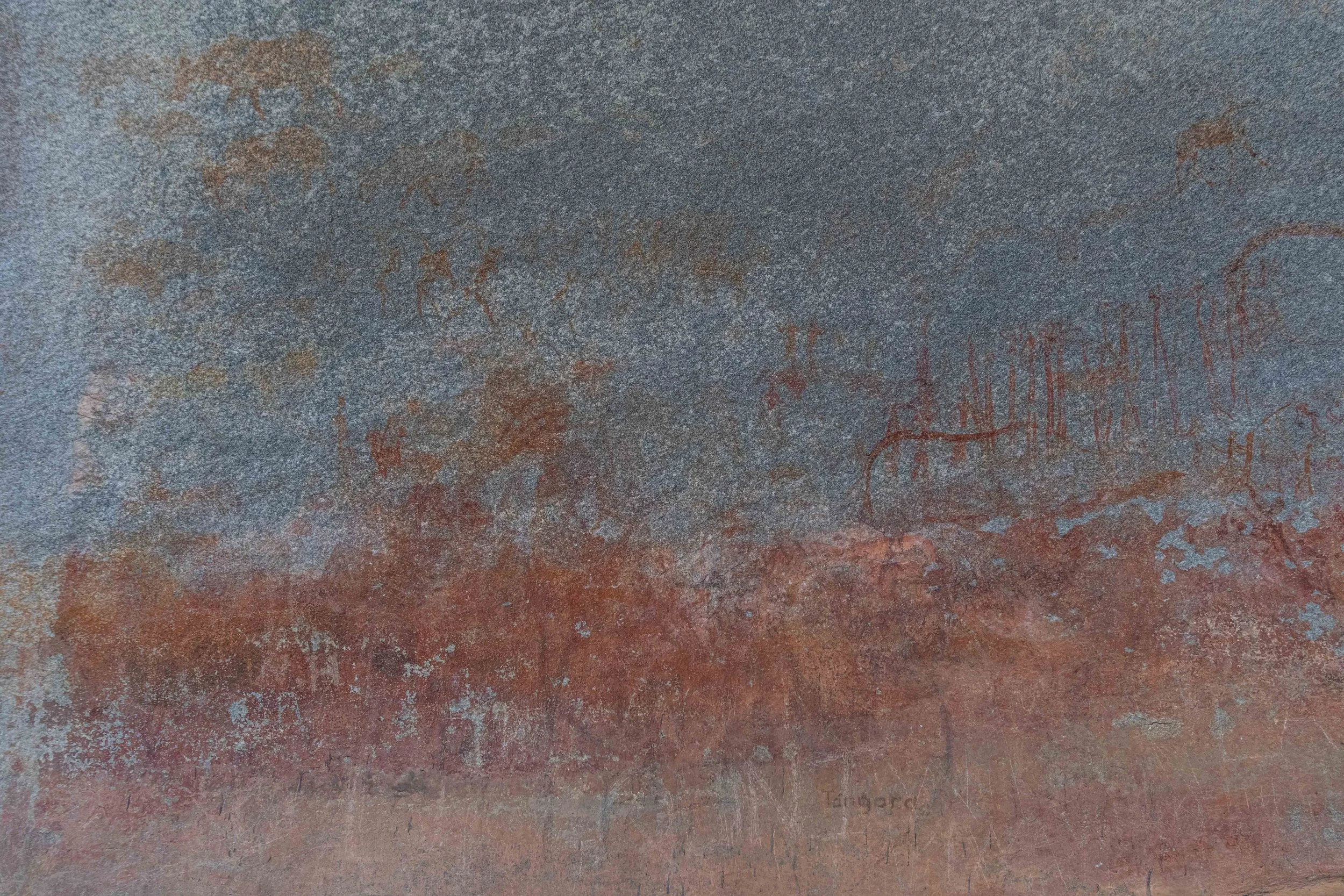
Larger panel showing the line of elongated human figures. Below you can see the art starting to be affected by erosion and grafitti on top of it
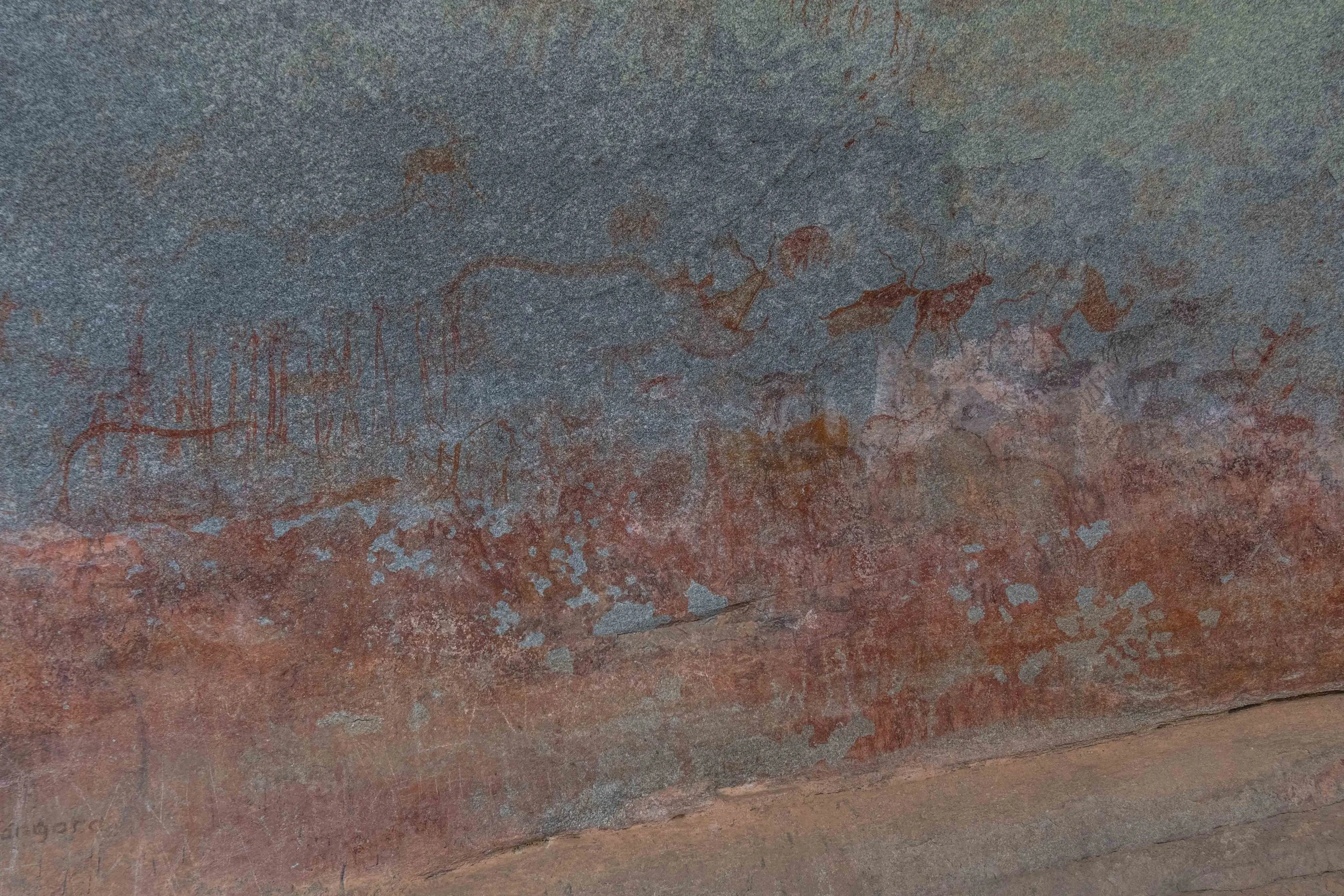
Another section being affected by erosion
scan for directions on google maps

Domboshava Caves
The name Domboshava comes from the Shona words ‘dombo’ (large stone or rock) and ‘shawa’ (red) referencing the reddish color of the granite colored by red and yellow lichens). It is located approximately 27-35 km north of Harare, Zimbabwe within a massive granite dome that stretches across the Chinamora Communal Lands (Mashonaland East).
“Be ready to meet some monkeys, don’t scare them away”
Monkeys at Domboshava
Directions: By car
Leave the CBD and head toward Borrowdale Road.
Continue straight toward Domboshava Road.
Follow signs for Domboshava for about 30 km.
Turn right at the Domboshava Caves signpost.
Drive a short distance to the park entrance and parking area.
Travel time: ~40–50 minutes.

Kombi Directions
Go to Fourth Street Kombi Rank in Harare CBD.
Take a kombi going to “Domboshava.”
Ask the conductor to drop you at Domboshava Caves turnoff.
Walk about 10–15 minutes to the entrance.
Travel time: ~45–60 minutes.
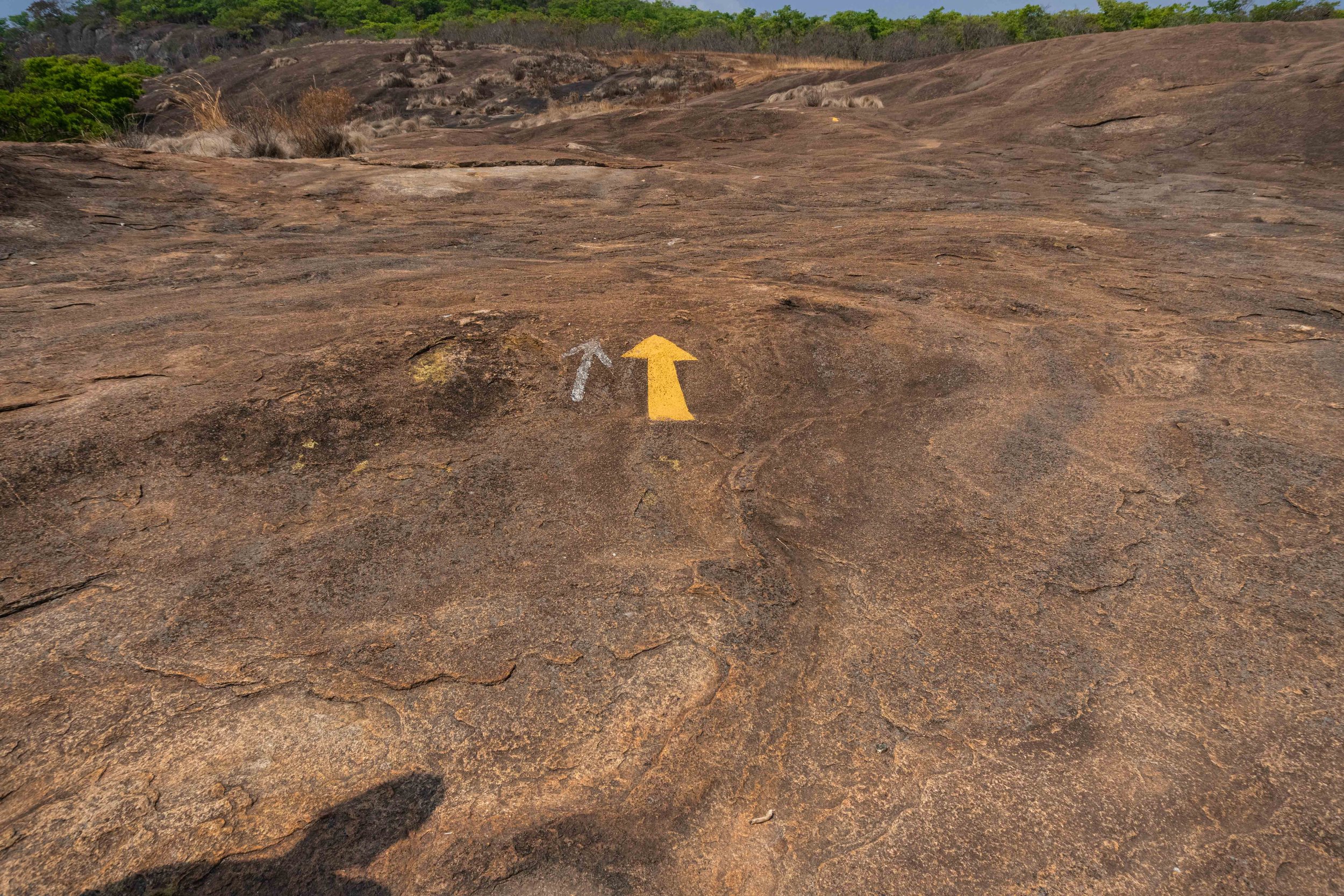
marked pathway to the art and back to the entrance
The Art
The rock art at Domboshava represents an extensive and diverse imagery, with about 140 individual identifiable pictographs in red and brown pigments. The pictographs attributed to the San/Bushman communities, depict scenes of hunting, dancing and ritual activities which contribute to the community's cultural identity and preservation of collective memory. Some researchers estimate the age of the art to be roughly 13,000 years old. The exact age however remains uncertain since no absolute dating techniques have been applied to the pigments themselves.
The pictographs include human figures and animals (such as kudu, elephants) in what appear to be hunting scenes. These images align well with the lifeways of hunter-gatherer groups who would have occupied the area. Pwiti and Mvenge, (1996) emphasize the significance of Domboshava rock art in conveying social messages and practices. They argue that these images reflect the social practices and cultural narratives of the communities who made the rock art.
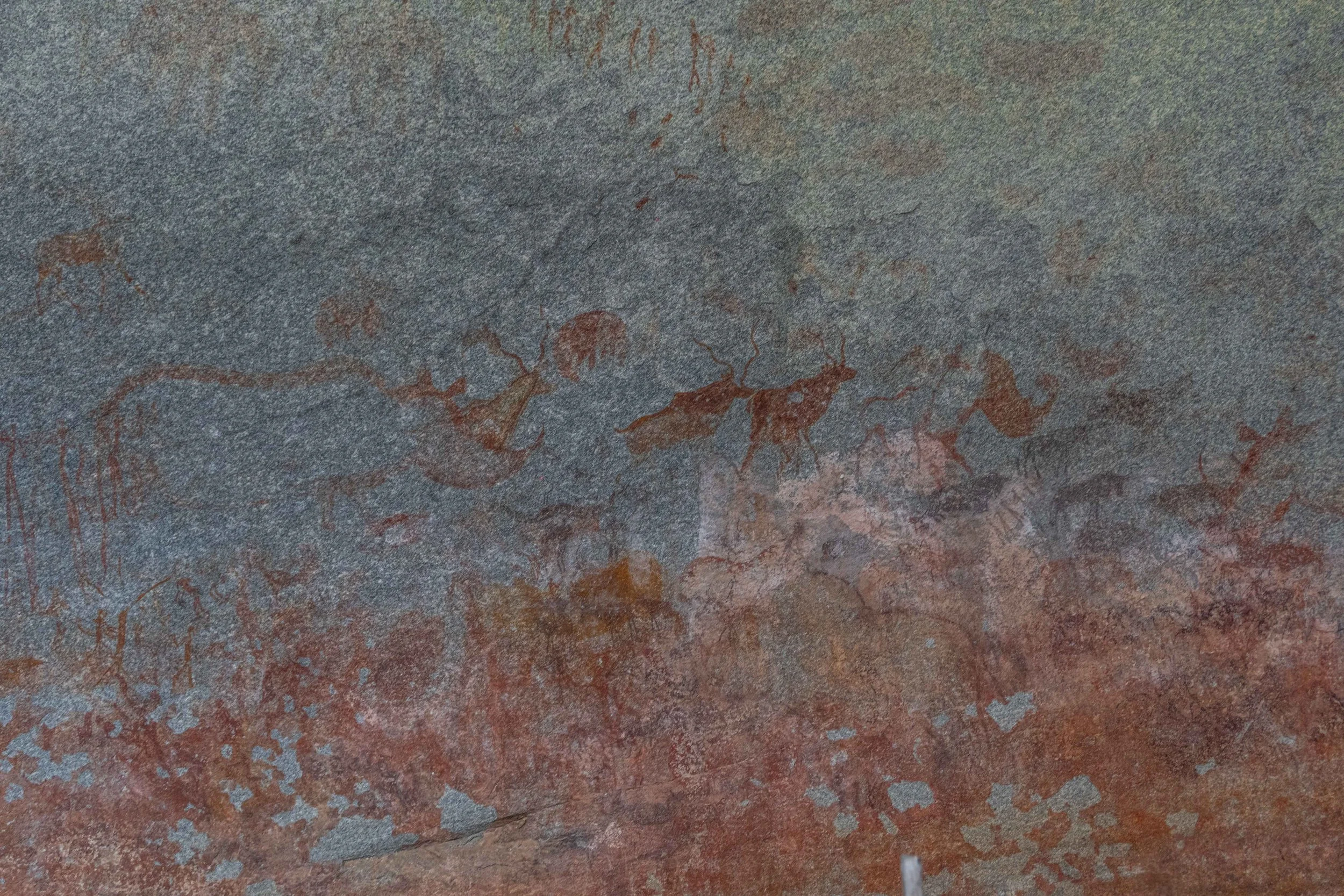
Depictions of Kudu, Antelope, Buffalo and Rhino with red/orange and black pigment.
The presence of game animals reflects both the subsistence practices and ecological knowledge functioning as a visual record of species distribution. The art shows multiple kudu, elephants and rhino (rhino is no longer found in this region). These images show the different game the hunter-gatherers would come in contact with. It also may have served as knowledge maps, helping communities remember where certain game could be found. In the Chinamhora region (where Domboshava is located), animals such as the kudu, antelope and elephants used to be found in abundance before modernization which lead to the migration of these animals into game reserves and other regions.
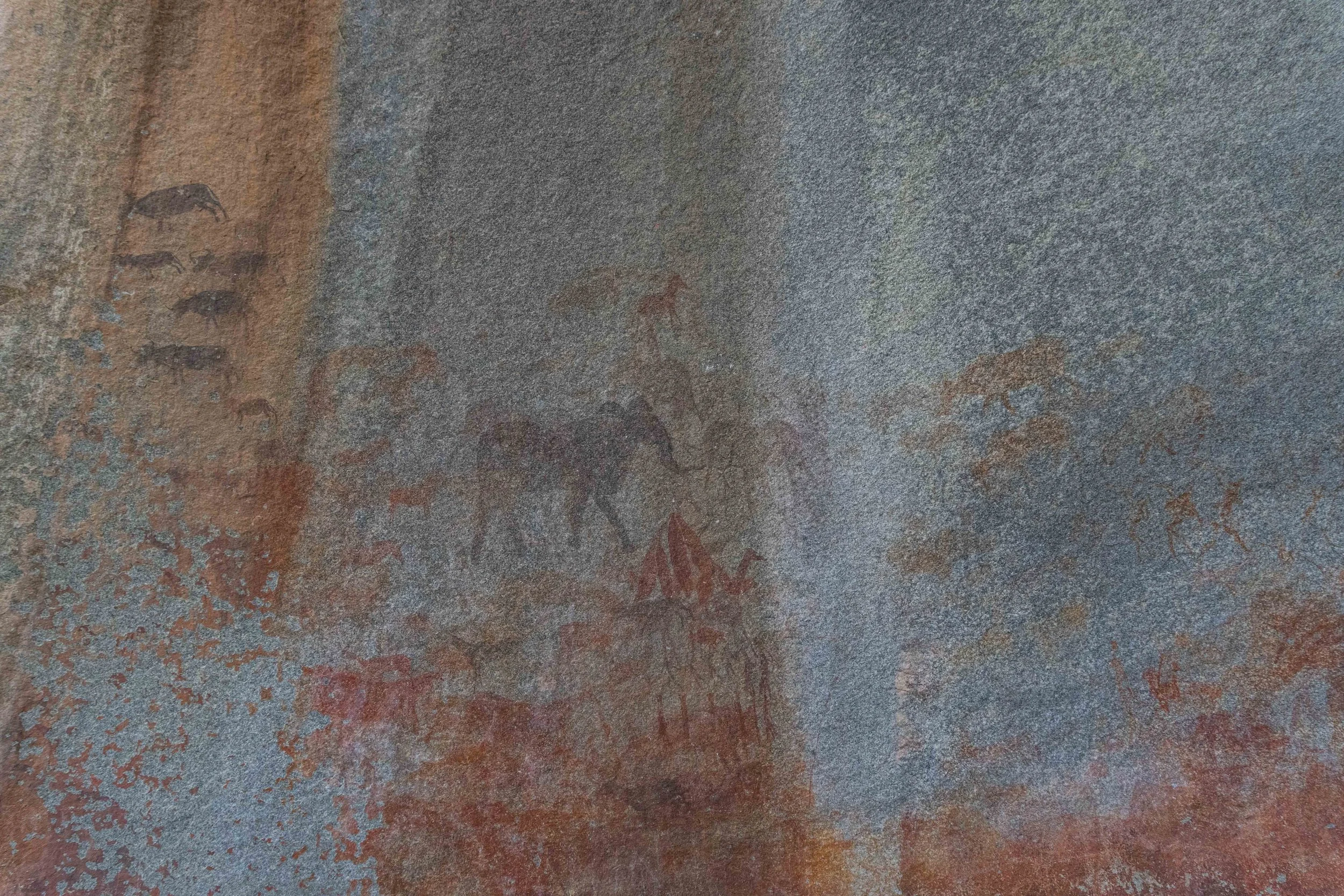
Elephant depiction in black pigment
Animals like elephants do not simply represent prey, they are also linked to totemism in the modern communities. In Zimbabwe, these totems (mitupo) are anchored into family and community identity and though modernization has reshaped their role, totems remain central to many people’s sense of belonging.
The elephant would be the nzou totem which has sophisticated values. These past societies could have been using this concept of totems in their life, maybe, this could have been the beginning of the concept.
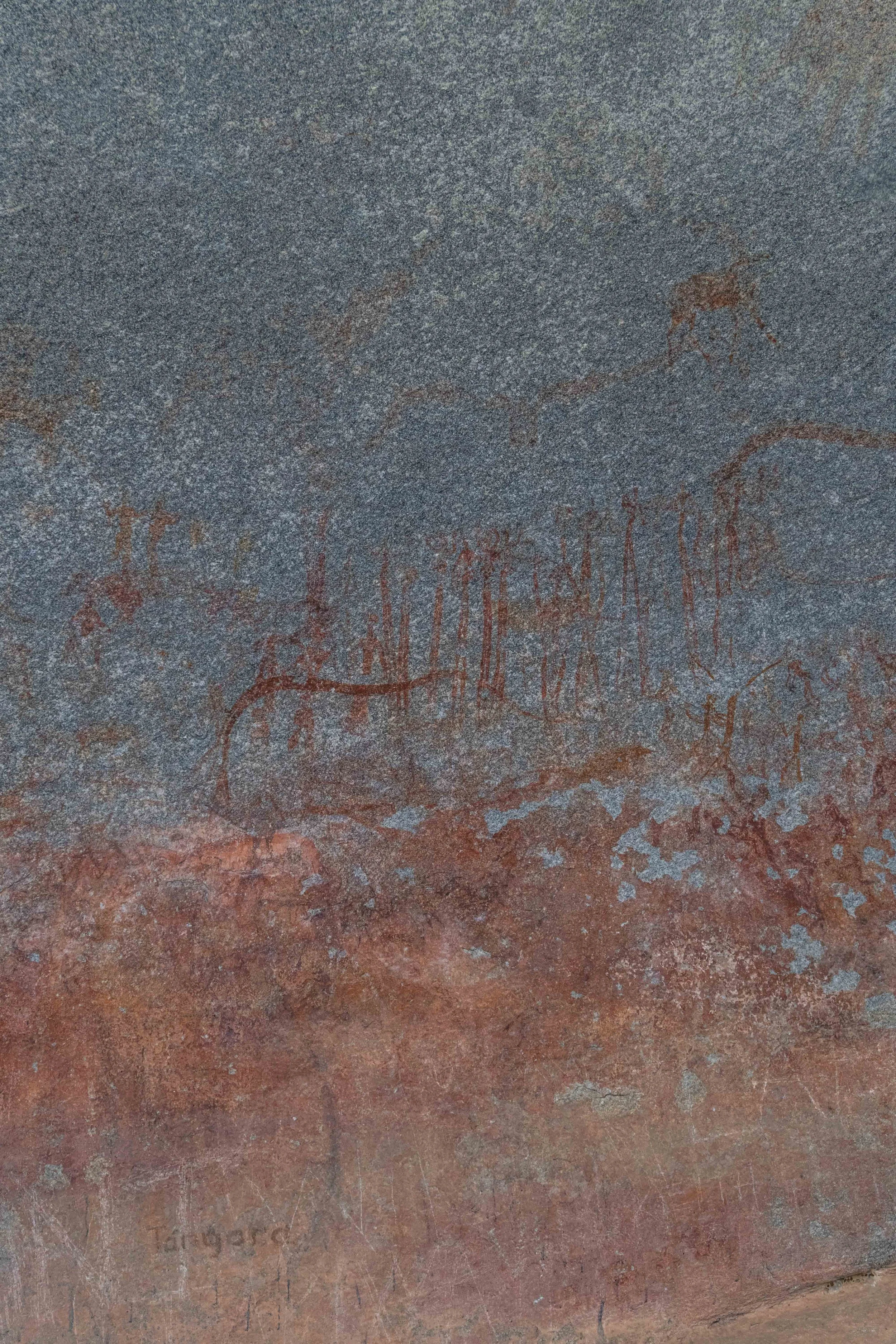
About 20 human figures with elongated legs believed to show trance states
One panel depicts figures with elongated legs, raised hands or adorned with jewelry like markings and theses features are commonly associated with trance states in Southern Africa. Other figures appear in a bending or crouched postures that may represent prayer, worship or ritual exhaustion. At Domboshava such images strongly support interpretations of ritual transformation and shamanistic leadership within the communities
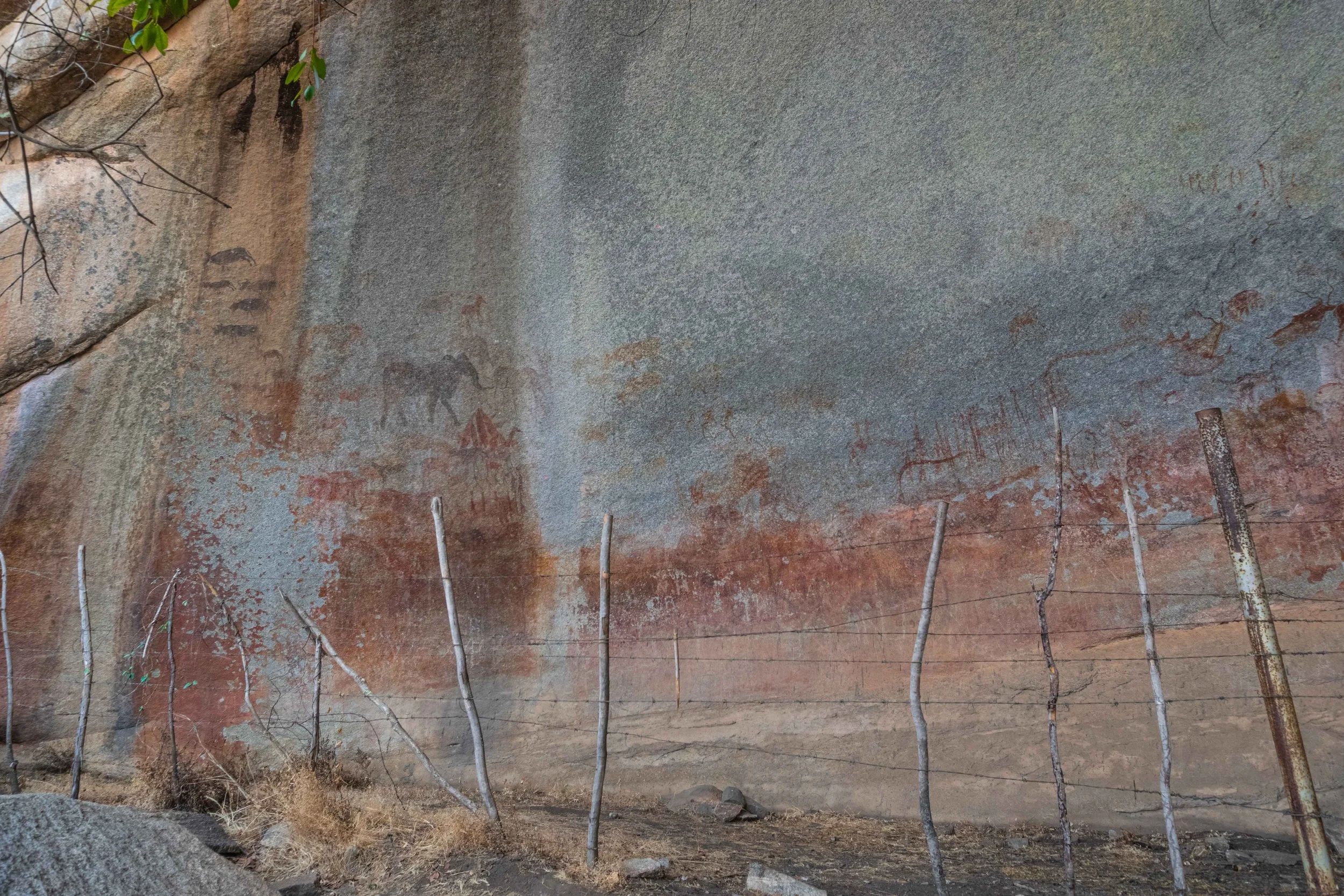
Left side of the Domboshava cave rock art panel showing the art in a bigger scale (how you would see it realistically)
Local communities used to maintain active cultural practices linked to the geological tunnel. Elders and spiritual specialists have considered the site as a rainmaking ceremony cave which also allowed communication with their ancestors. According to Pwiti and Mvenge’s (1996) ethnographic research, local belief is that holes in the cave connect to the spirit world making it a crucial conduit for ritual engagement.
For the rainmaking ceremony, a fire would be started just at the entrance of the tunnel and the ritual starts, once smoke is seen escaping from top of the cave then the ritual is done and the gods would have accepted the ritual. The continuous use of the tunnel, however, has caused the soot and carbon remains to affect the art close to it making it less visible. Now the communities no longer do these rituals at the site itself, but they still do them at their homes with their families.
Conservation
Domboshava is protected by the National Museums and Monuments of Zimbabwe (NMMZ) which oversees both site management and conservation. In 1998, a large portion of the pictographs were vandalized with thick enamel paint covering substantial areas of the panel.
Around 65-75% of the images were affected and up to 90% of the human figures were completely obliterated (Taruvinga, 2001). This highlights the vulnerability of rock art sites with or without robust heritage management. Cleaning efforts took nearly 18 months and conservators successfully removed the enamel making many paintings visible again.
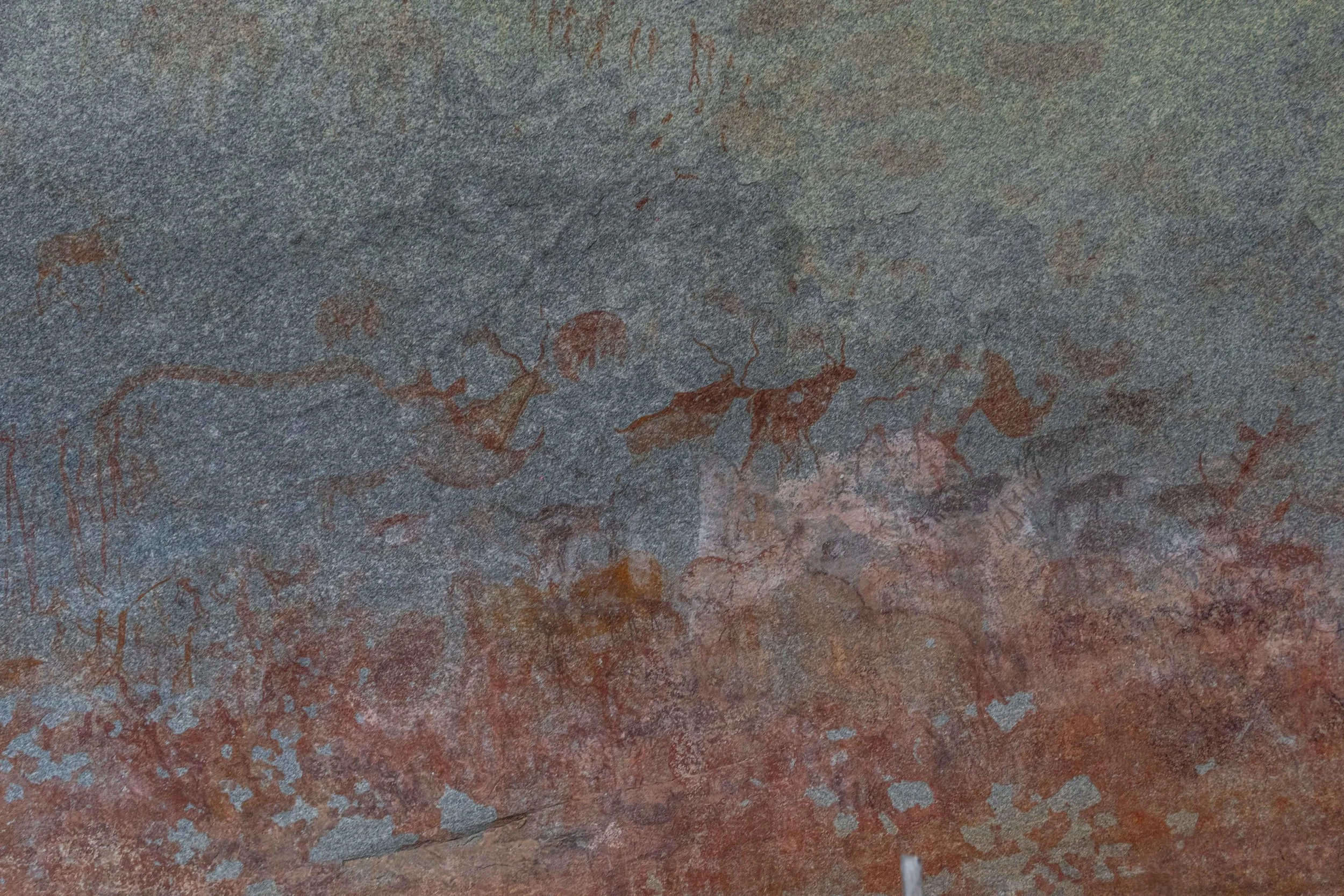
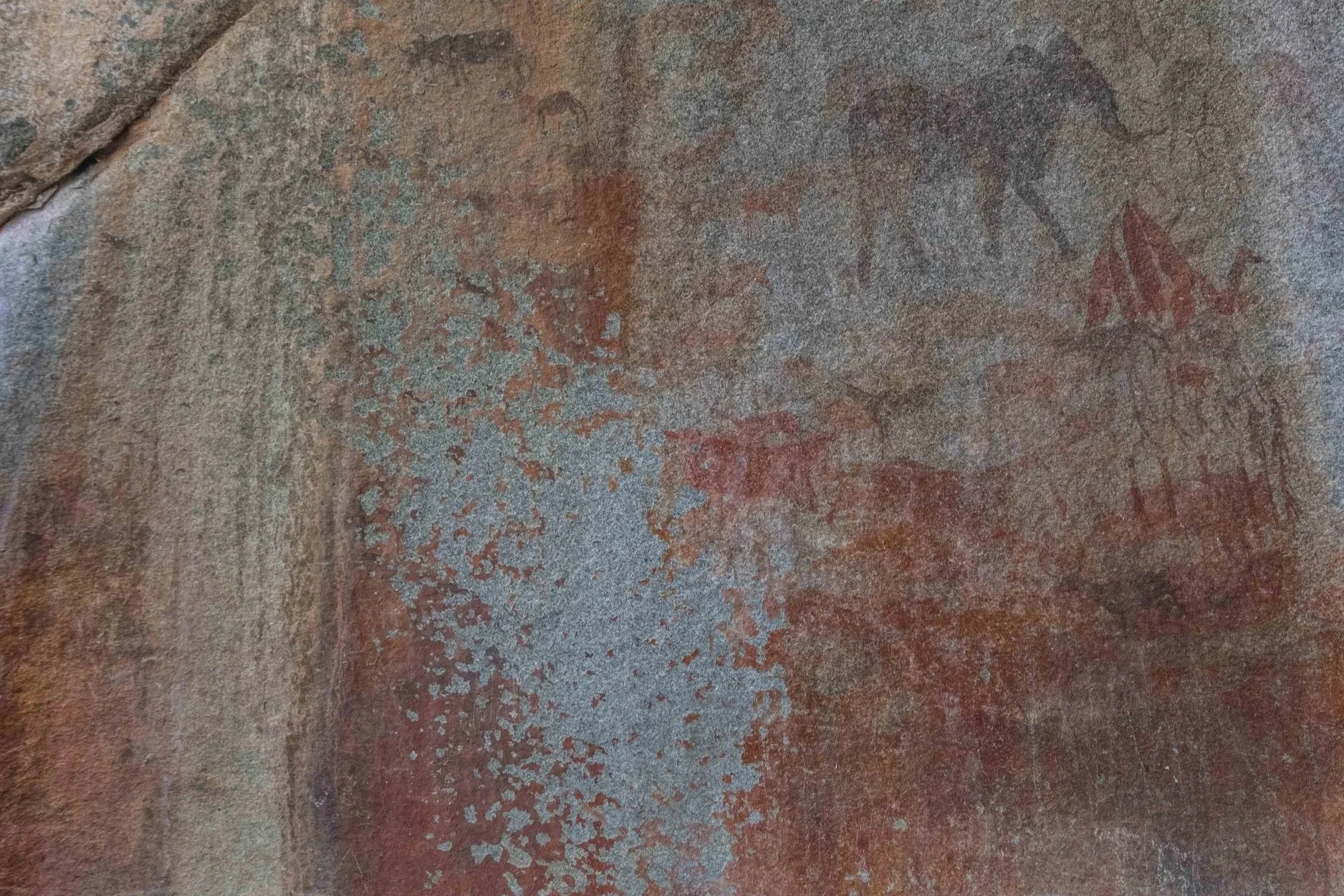
Parts of the panel which have been affected by natural weathering including rain salts
This vandalism incident remains one of the biggest conservation challenges for NMMZ. Although the site is closely monitored now, visitors can still access the cave without a guide which may introduce risks. The panel is protected by a wired wood pole fence but if one wanted to get closer, they could find a way trough. I urge all visitors to approach the site with humility and respect for the cultural, historical and spiritual significance presented by the art. Let us not be agents of destruction.
…here is the report by Taruvinga on how they restored the art at Domboshava (view)