
scan for directions on google maps
Glen Norah Sites
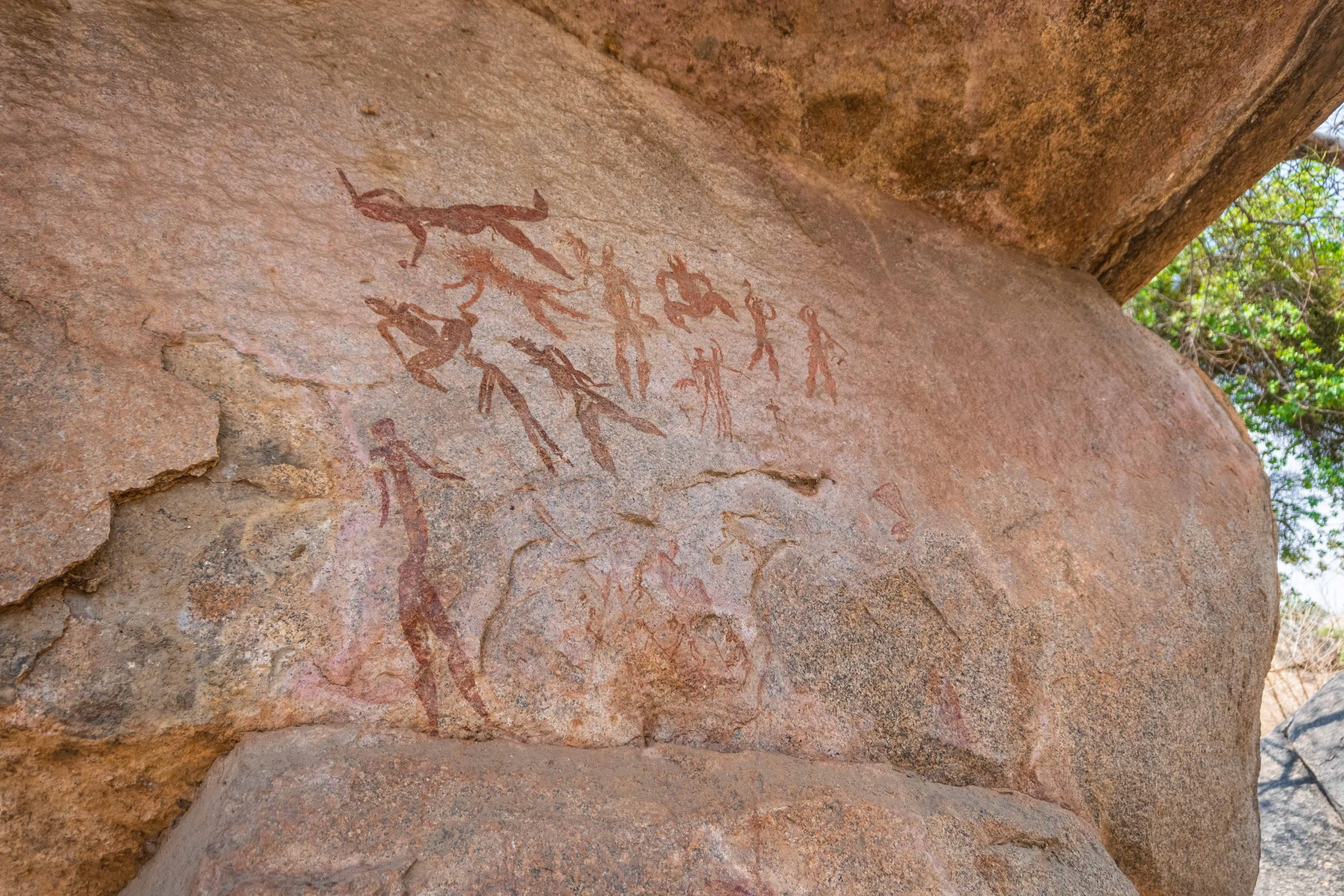
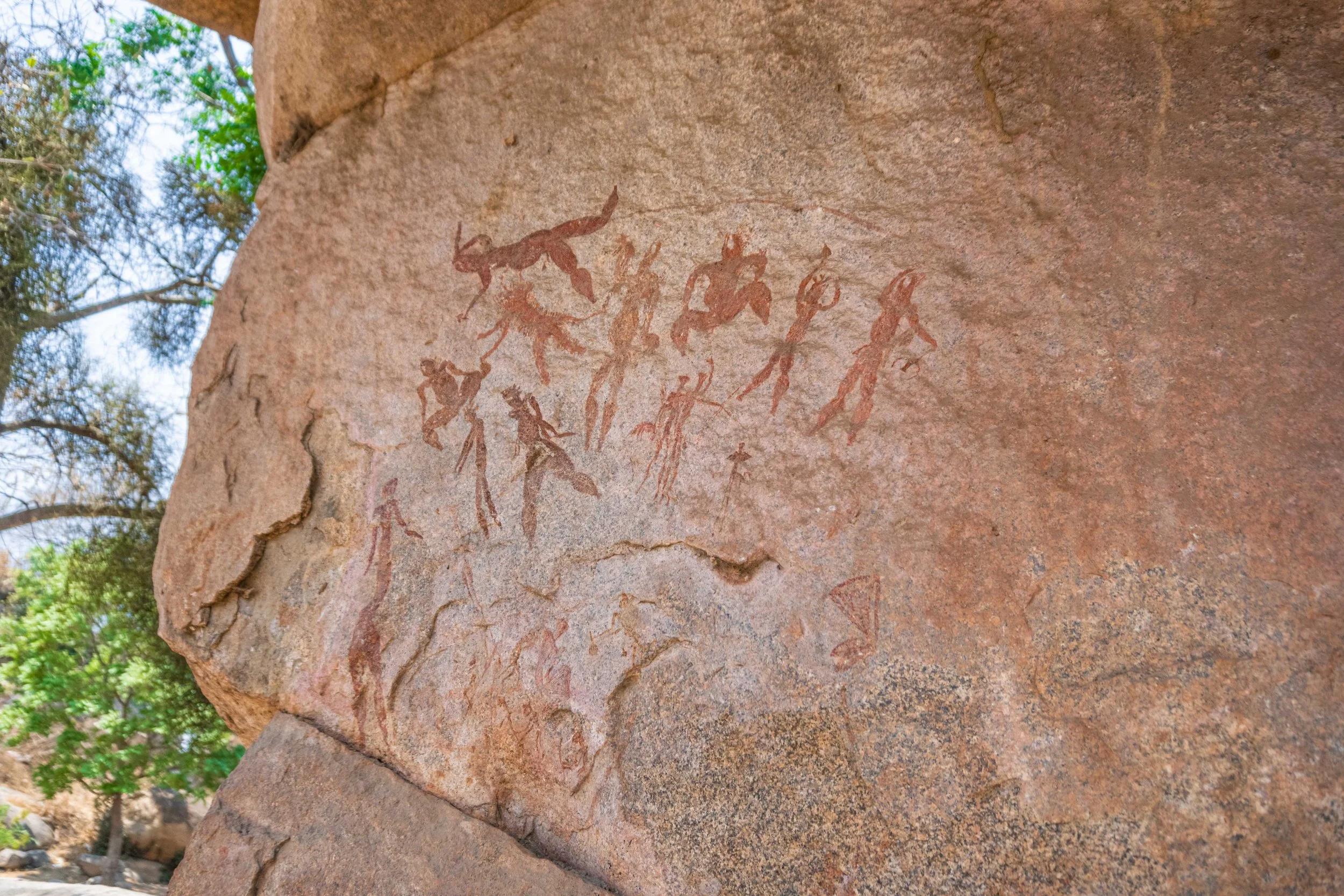
Depictions on the right side of the bouder showing multiple half men half crocodile figures. There are also some holding weapons and one elongated figure
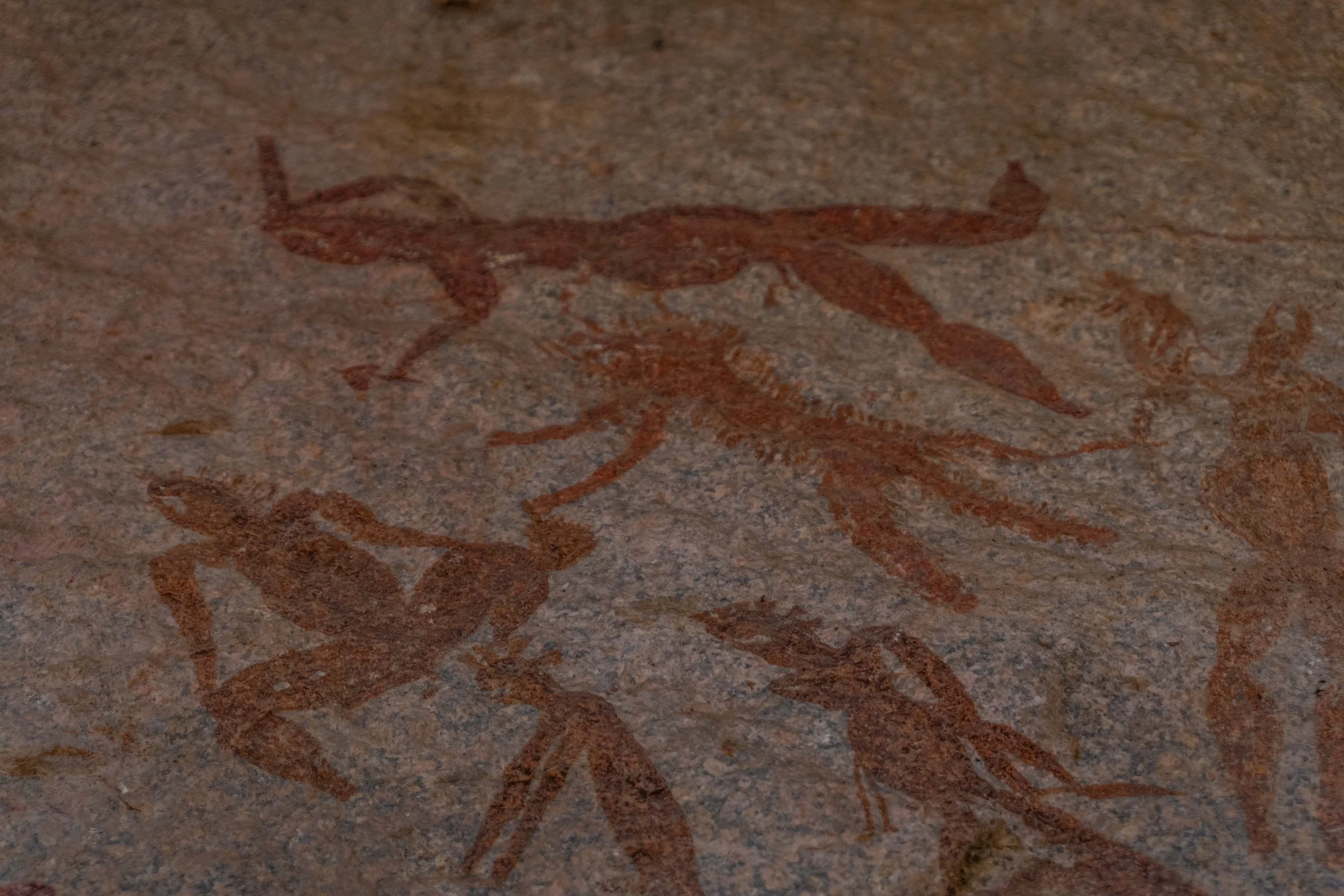
Crouching crocodile man figure, the others are holding some type of instruments and weapons
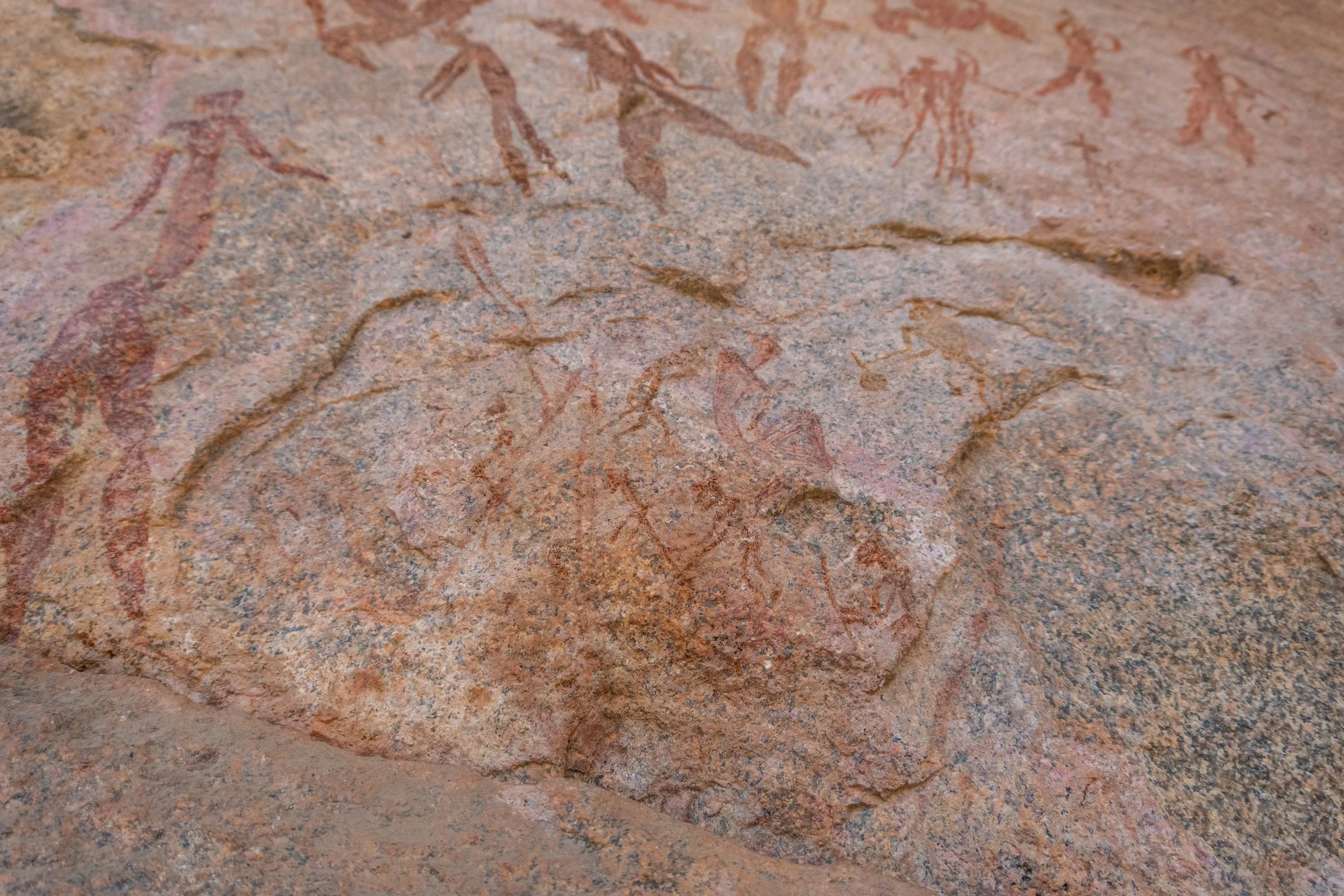
Elonged figure and a couple of sitting figures and another almost faded one holding an instrument
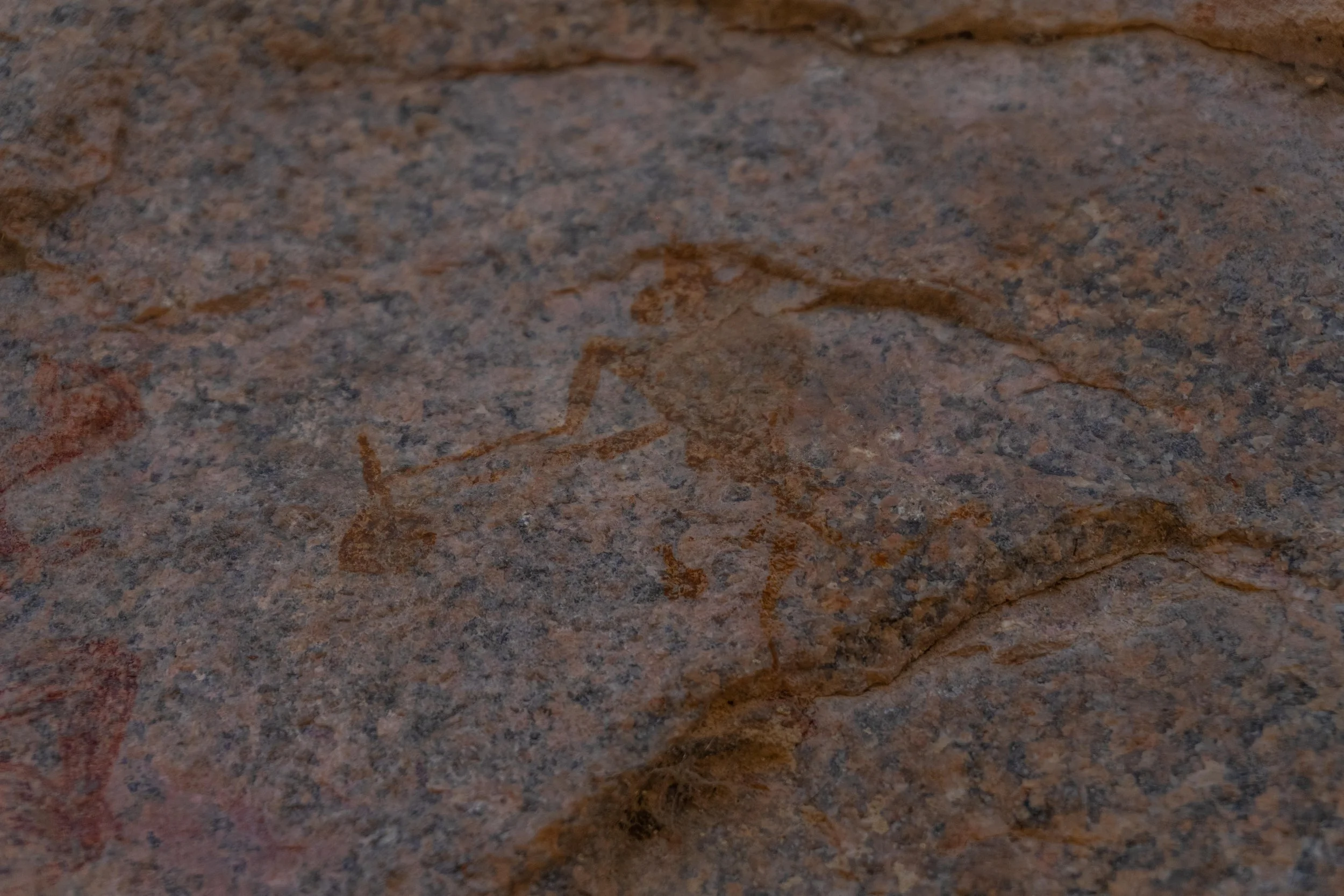
A close up of the almost faded figure holding an object, it also looks like it has a tail
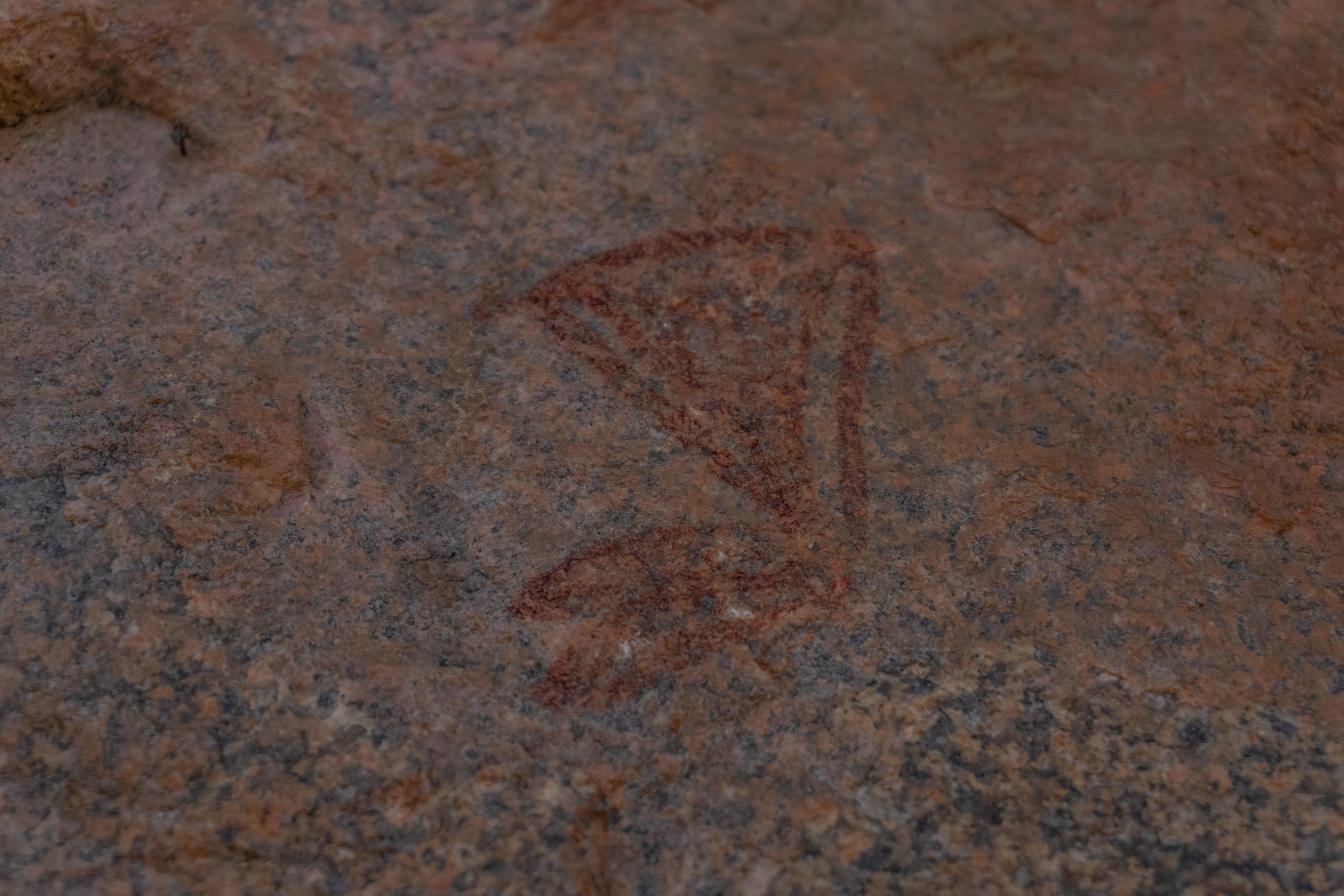
Figure which looks like either a geometric structure or could be an instrument
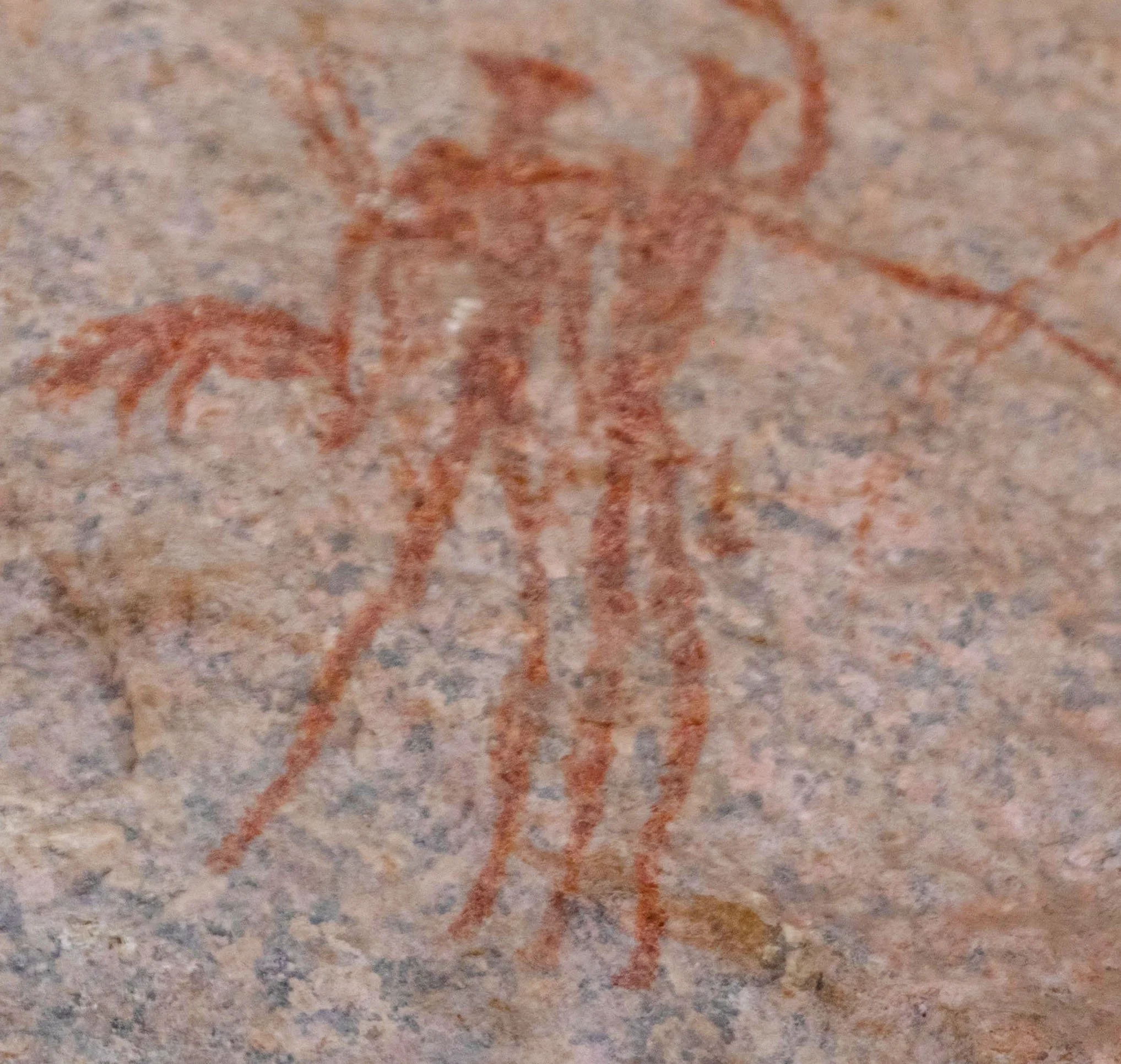
Two hunters holding bow and arrow
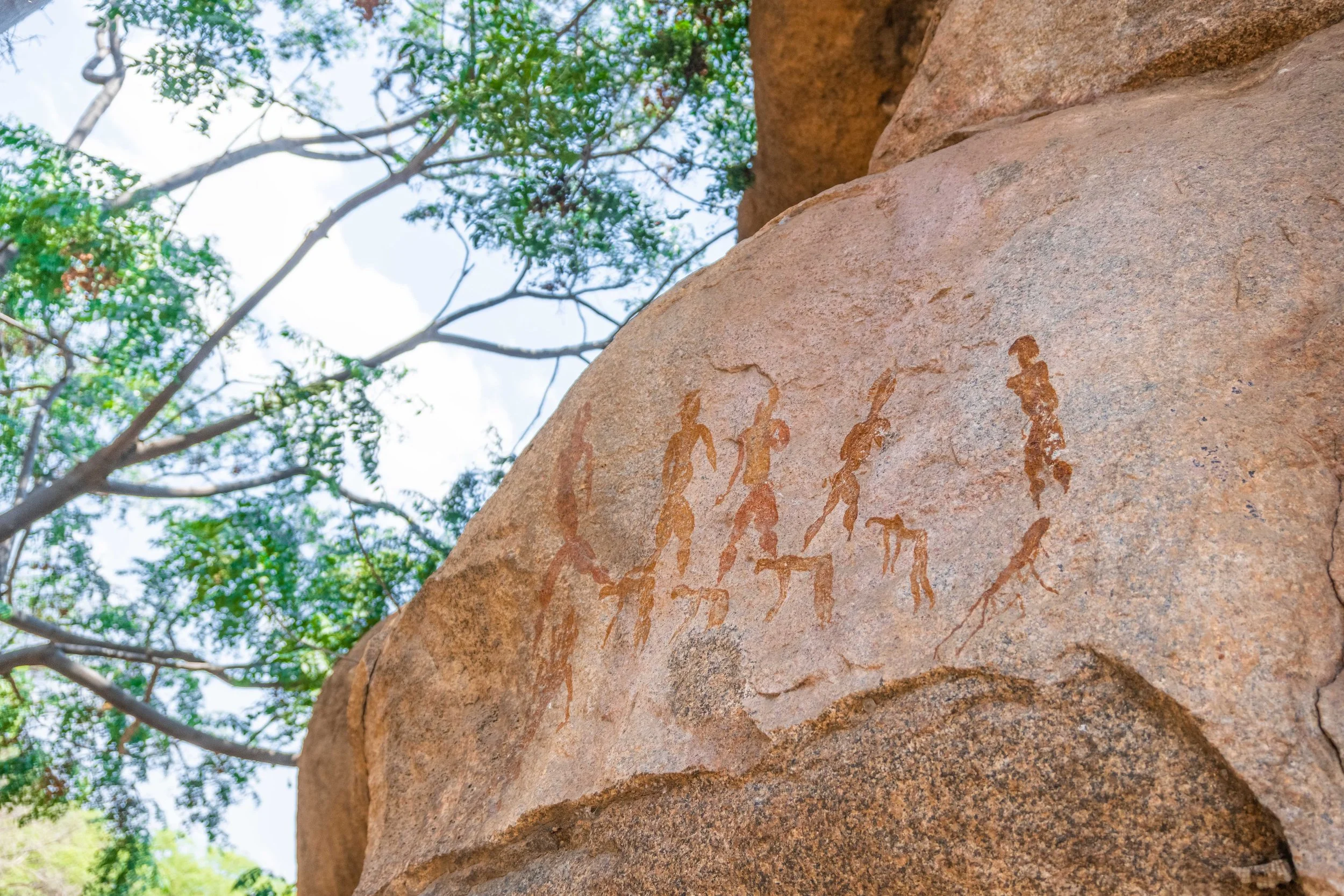
The left side of the boulder with more crocodile men; five are standing while five are in a bending position. One looks as if they are crawling.
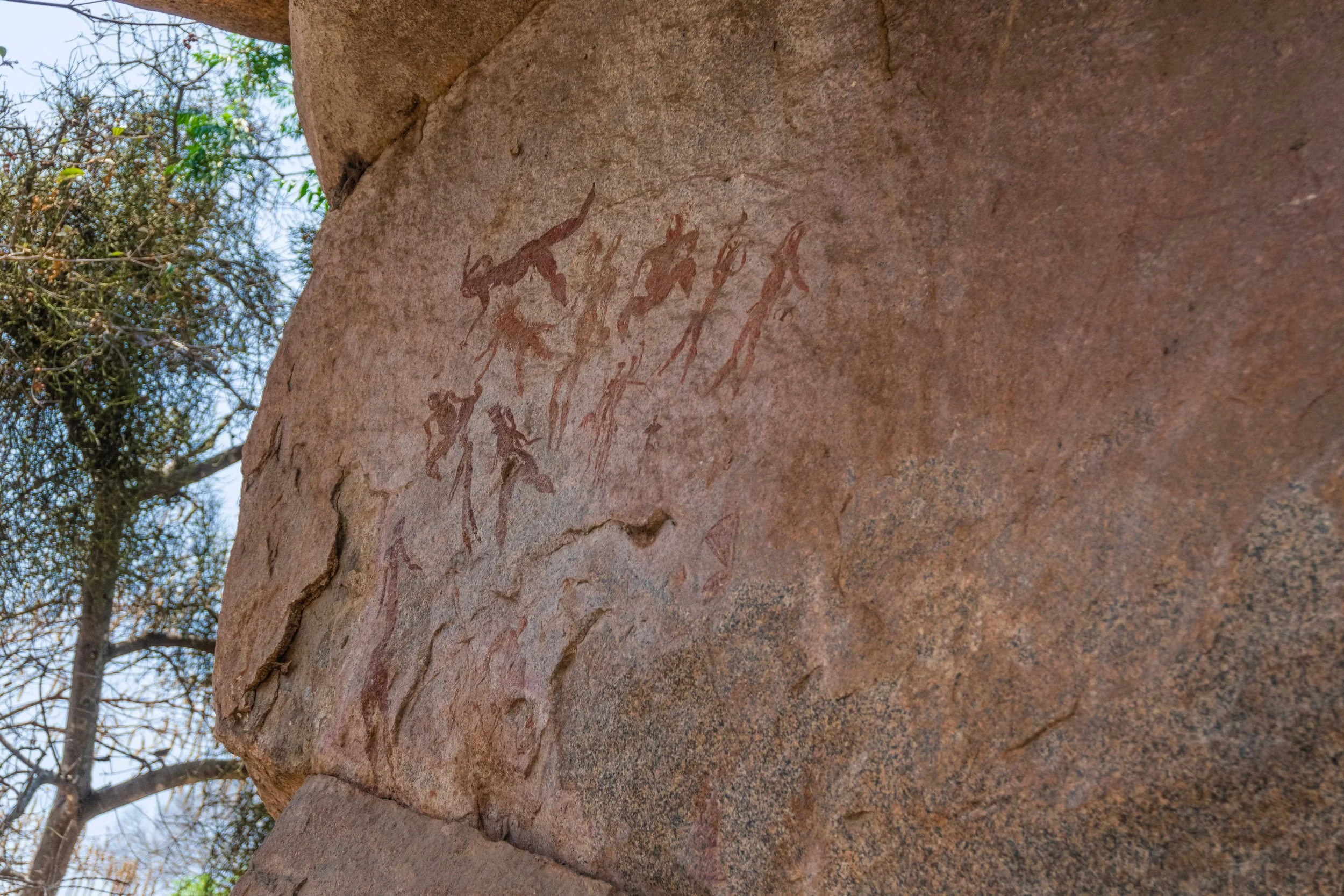
Another angle showing the crocodile men
A section of the art is starting to fade probably due to too much sunlight
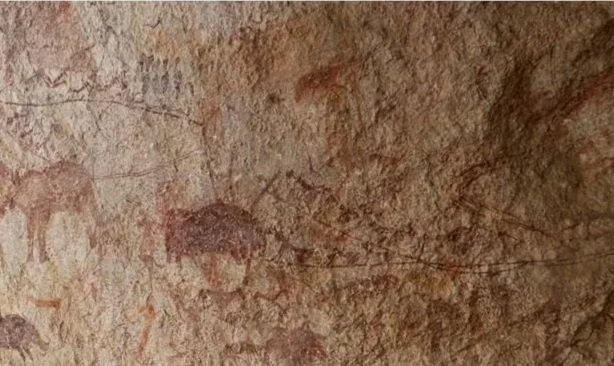
The bridge panel shows some elephants, antelopes and human figures seemingly crossing a bridge some with sticks and spears.
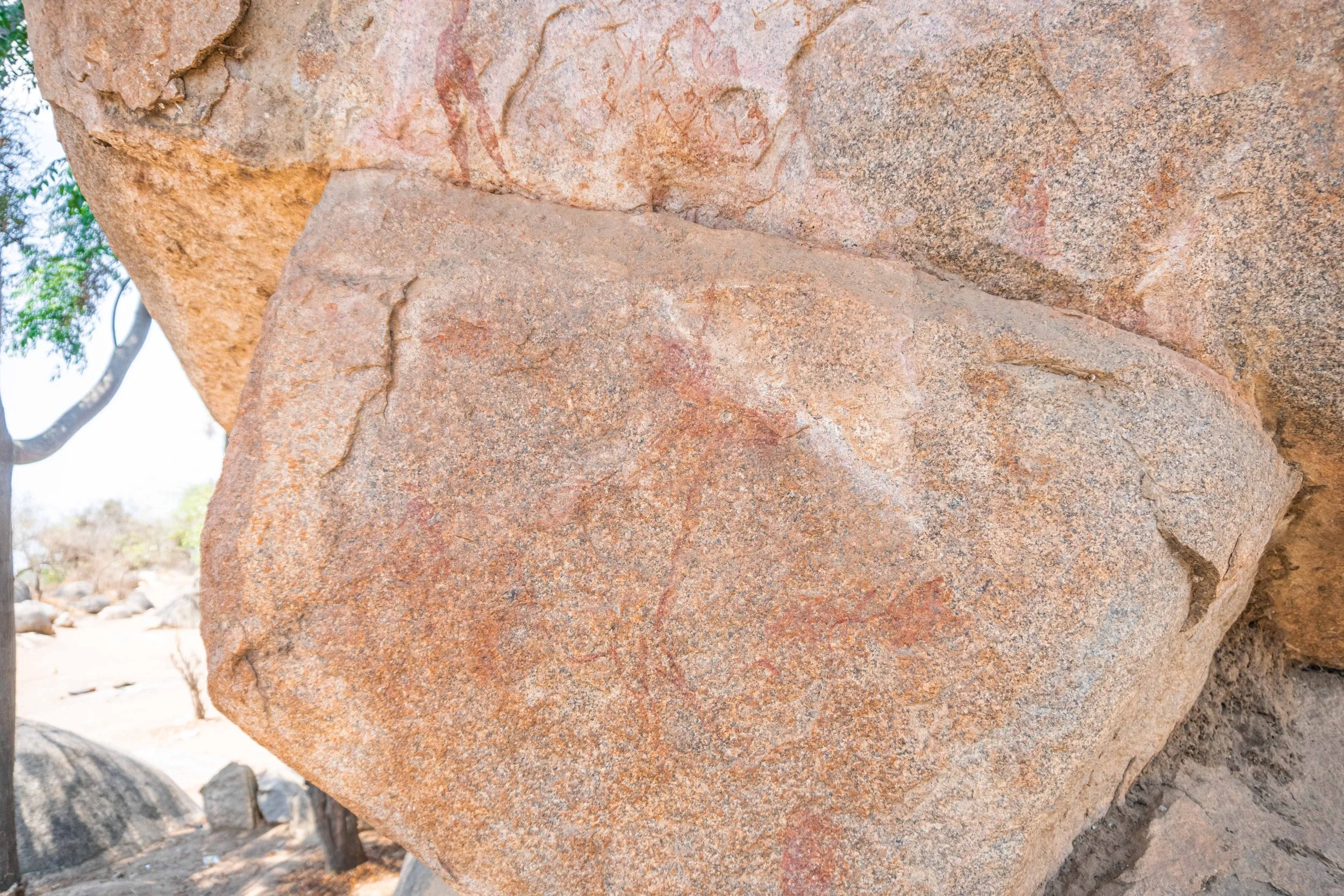
Section of the faded art which you can faintly see
The Glen Norah rock art site is situated on a granite kopje in the Mashonaland East Province. The two distinctive areas of rock art at Glen Norah are the Crocodile Men panel and the Bridge paintings which are just a kilometer apart. The Crocodile Men panel features anthropomorphic figures linked with crocodile symbolism, a motif that stands out for its striking form and potential ritual connotations. The Bridge paintings are situated within and surrounding a natural granite cleft, which forms a distinctive rock “bridge” in the outcrop. A series of human and animal figures have been painted across both this feature and its adjacent surfaces
Directions: by car
Harare CBD → Crocodile Men Site
Head south from Harare CBD toward Highfield / Glen Norah
Follow Simon Mazorodze Road
Turn into Glen Norah A
Continue toward the rock outcrop area (Crocodile Men site)
Crocodile Men Site → Bridge Paintings
By Car
Leave the Crocodile Men site heading deeper into Glen Norah
Drive toward the nearby bridge (local landmark)
Park and walk to the rock paintings under/near the bridge

Kombi Directions
Take a kombi from Mbare Musika to Glen Norah A
Ask to stop near the Crocodile Men rocks
Short walk to the site
Crocodile Men Site → Bridge Paintings
Walking
From Crocodile Men site, walk or take a short local ride
Head toward the bridge area
Paintings are located on the rock surfaces nearby
These sites are located within an urban community—please visit respectfully and consider engaging local residents for guidance.
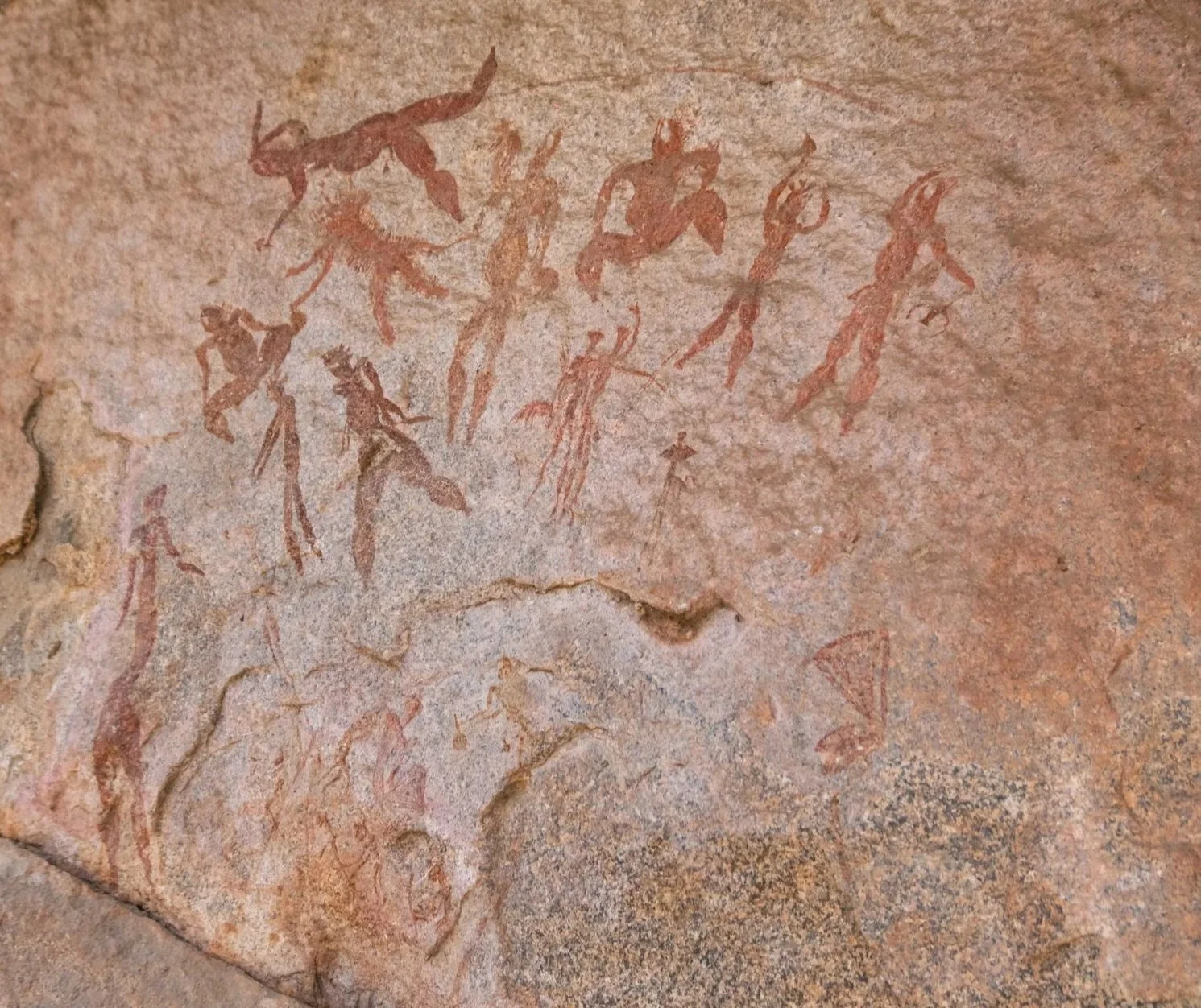
The Art
Crocodile Men Site
Multiple half men half crocodile figures. There are also some holding weapons and one elongated figure
The hybrid figures (crocodile-men) and dancers in bending or contorted postures are frequently read, in southern African rock-art scholarship, as visual traces of altered states. The crocodile man is typically a character with rounded body features, thick neck and gaping reptilian mouth. Most have male genitals but very few are female characteristics are noted with possible breasts (Nhamo, 2008). Shamanistic transformation where humans take on animal power or function as intermediaries with spirit worlds. This is consistent with broader regional models in Zimbabwe that link imagery to ritual power and trance practices. Nhamo (2008) believes that these images show conflations of humans and crocodiles resulting from some belief about the relationship between reptiles and humans within the hunting and gathering communities.
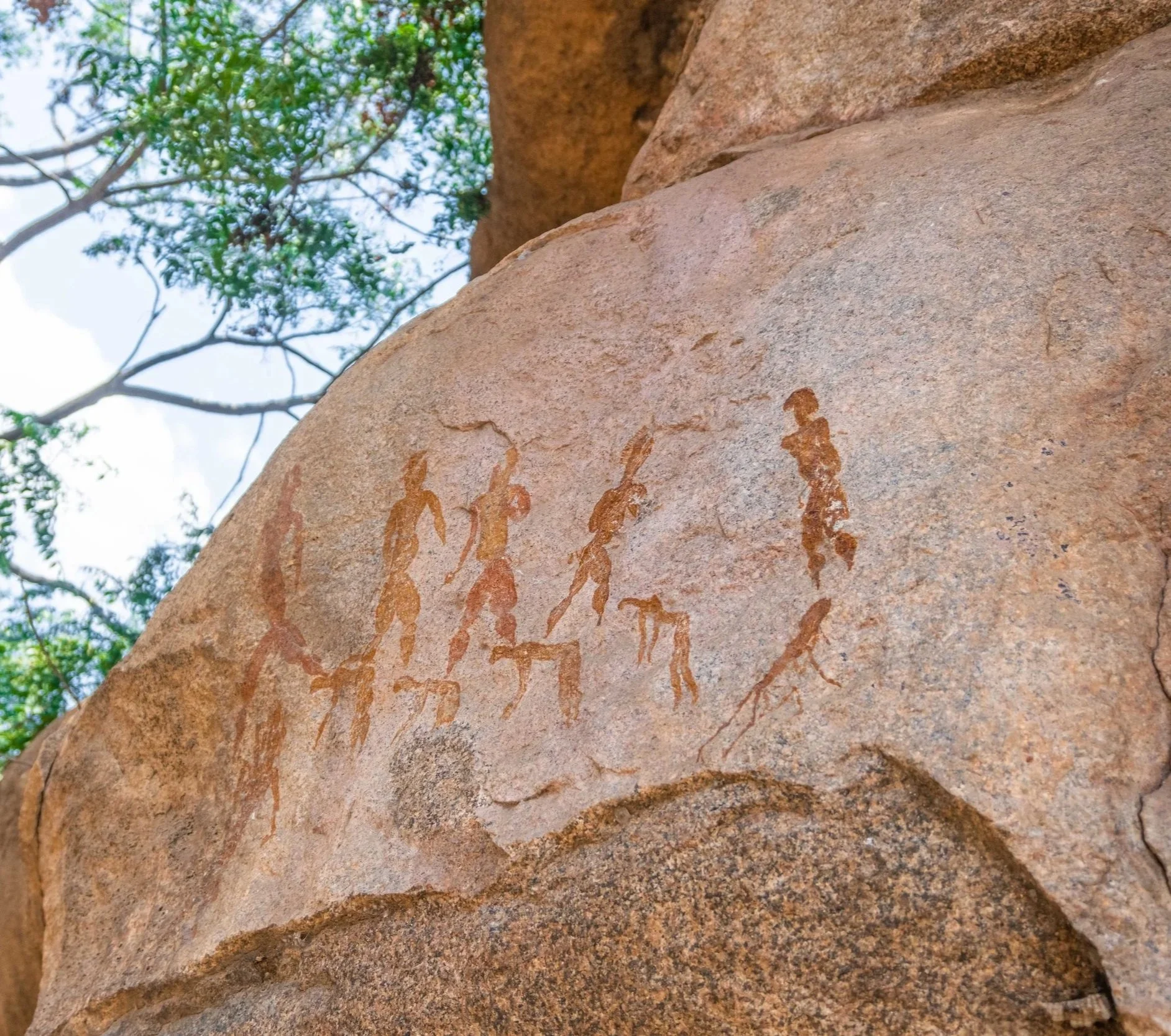
more crocodile men; five are standing while five are in a bending position. One looks as if they are crawling.
The Crocodile Men panel at Glen Norah is characterized by a series of elongated anthropomorphic figures that display features associated with crocodile symbolism. These figures frequently combine human traits (such as upright posture, articulated limbs, and implied movement) with crocodile features. These figures embody spirit helpers or ritual intermediaries during trance or healing ceremonies, moments where practitioners crossed between ordinary and altered states of consciousness.
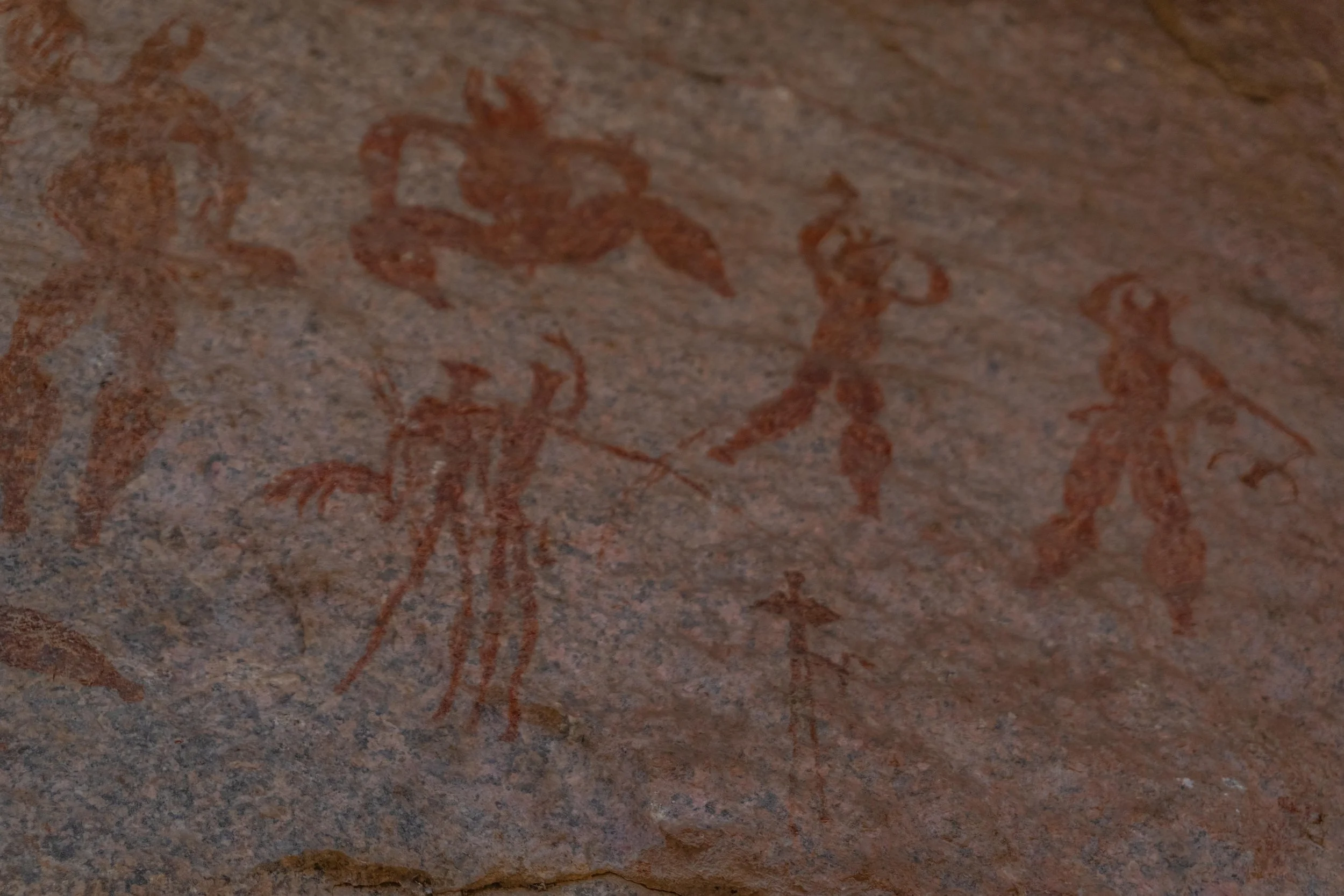
Crouching figure and two hunters holding bow and arrow and other figures in motion
The Bridge Paintings
The Bridge paintings occur on a naturally shaped granite that functions visually and symbolically as a connecting feature within the outcrop. Figures and motifs here are distributed across both the vertical faces and the horizontal surface of the rock bridge, creating a sense of movement across space and form.
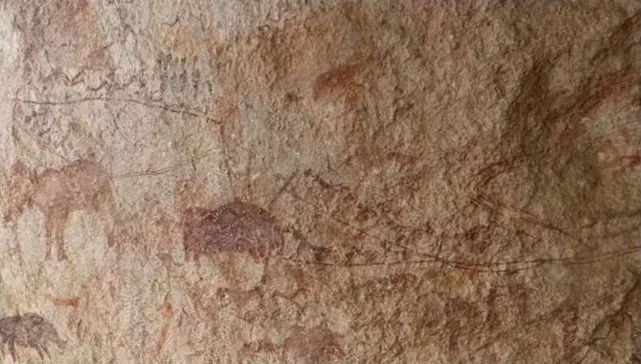
Human figures in the Bridge panel are shown with sticks or spears, and many exhibit dynamic stances suggesting movement or a ritual procession. Animal figures, including antelope‑like forms, appear in proximity to these human figures. While one interpretation might frame such an assemblage as a hunting sequence, a more nuanced reading situates these scenes within a symbolic landscape where the physical topology of the rock enhances meaning. The use of a rock bridge may symbolize boundary crossing, spiritual transition, or cosmological negotiation just like that at Thetford Game Reserve. Rock art scholars like Garlake (1987) and Lewis‑Williams & Dowson (1989) argue that such physical features are not merely passive canvases but active elements in the creation of meaning.
The Bridge panel can be read as narrative of passage, perhaps reflecting stages of ritual movement, social cohesion, or symbolic negotiation with the unseen world. The alignment of figures along and around the natural rock threshold reinforces interpretations that link rock art to ritualized social and cosmological practice, rather than strictly representational depictions of daily life.
Conservation
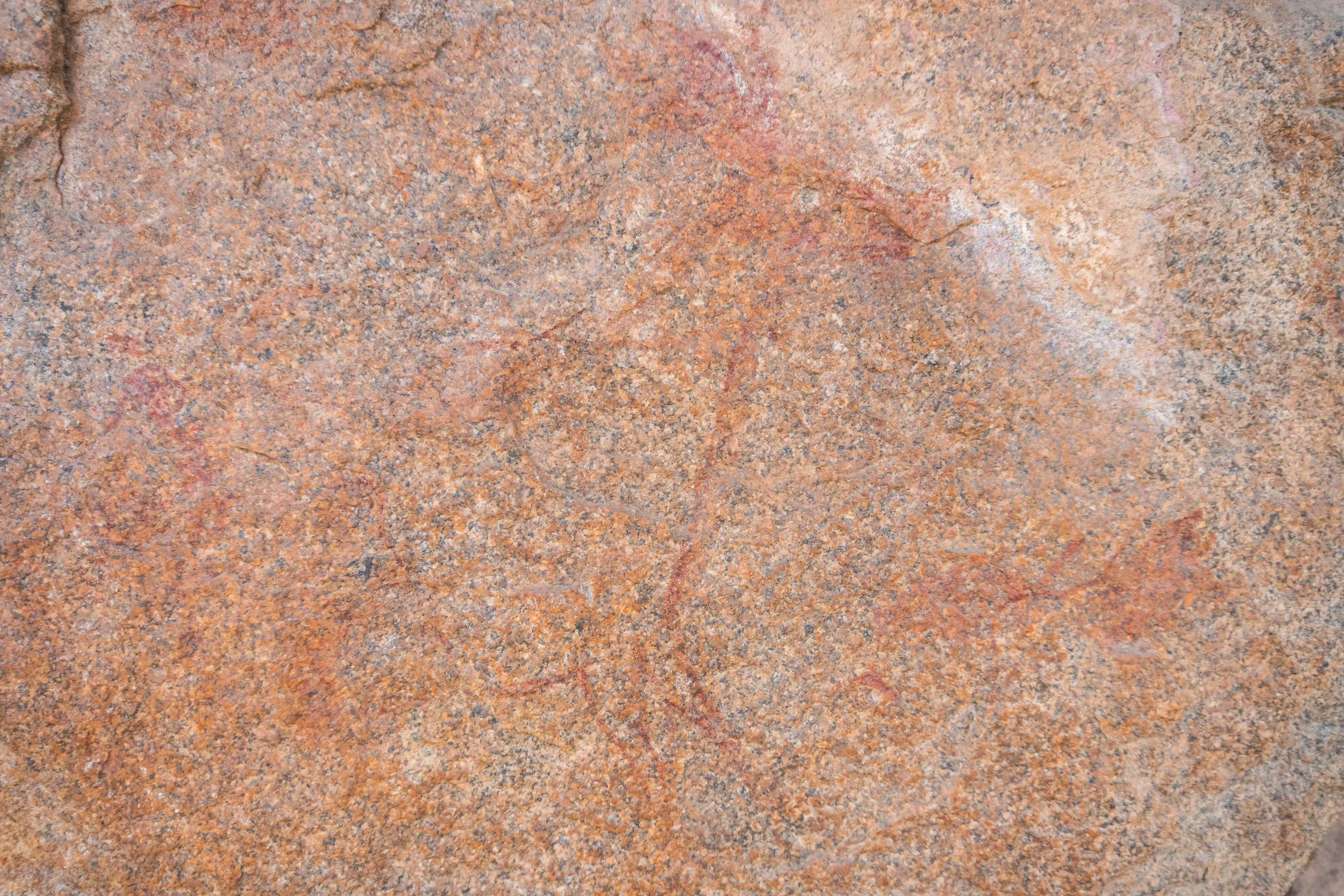
Section of the faded art which you can faintly see
The granite surfaces on which the art is painted are vulnerable to exfoliation, chemical weathering, water infiltration, and biological growth (lichens, moss) all of which contribute to pigment loss and surface destabilization over time (Coulson, Marufu & Nhamo 2017). And because the art is not in caves, these rock features are exposed to more rain and sun rays which affect the pigments.
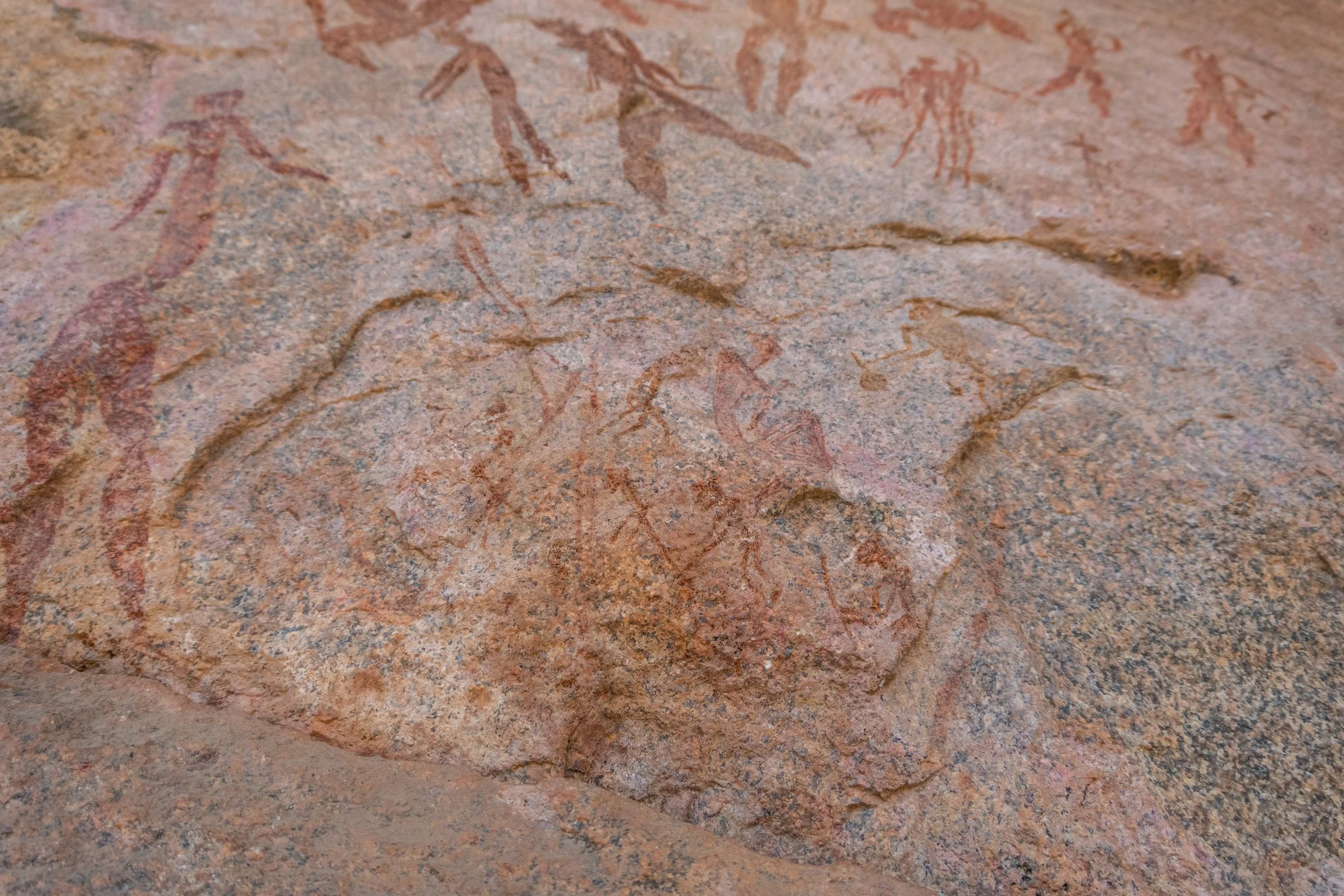
Another section of the art which is starting to be affected
Human impact includes dust accumulation, inadvertent contact, graffiti, and unregulated visitation, all of which accelerate deterioration. In some areas, visitors inadvertently rub against panels while climbing or photographing the rock surfaces, leaving residues or causing physical abrasion. During this work, I could not get clearer pictures for the Bridge Art as the local communities opened that it was vandalized by a certain group of individuals for no reason at all. Like many rock art locations in Zimbabwe the lack of integrated conservation infrastructures such as protective walkways, informative signage, or controlled access points continues to affect these sites