
lower section of the panel showing palimpsest of human figures, buffalo and deer
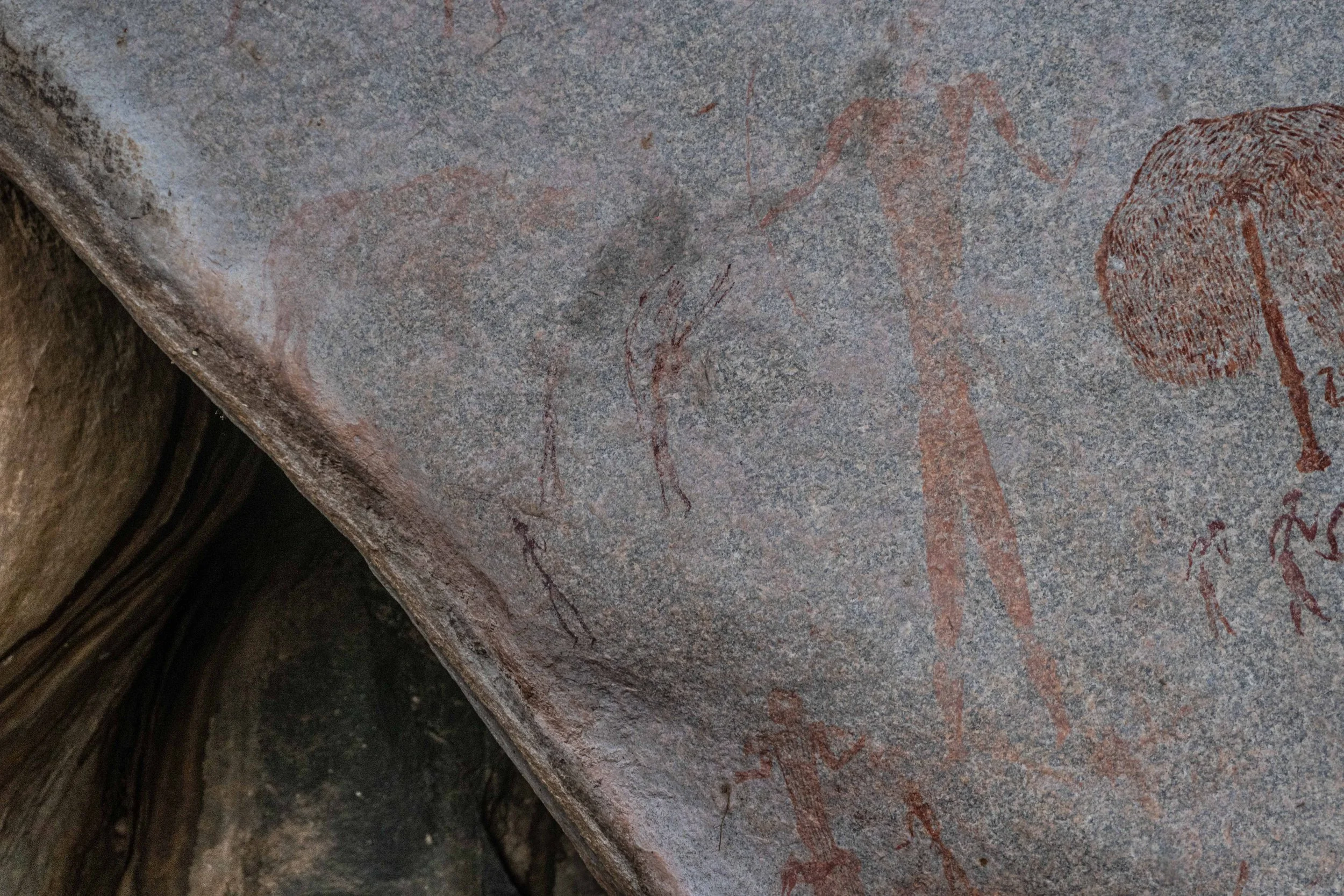
large human figure in orange pigment and smaller ones in a dark red
Scan for directions
on google Maps
trees, deer and dancing human figures
Lake Chivero Rock Art
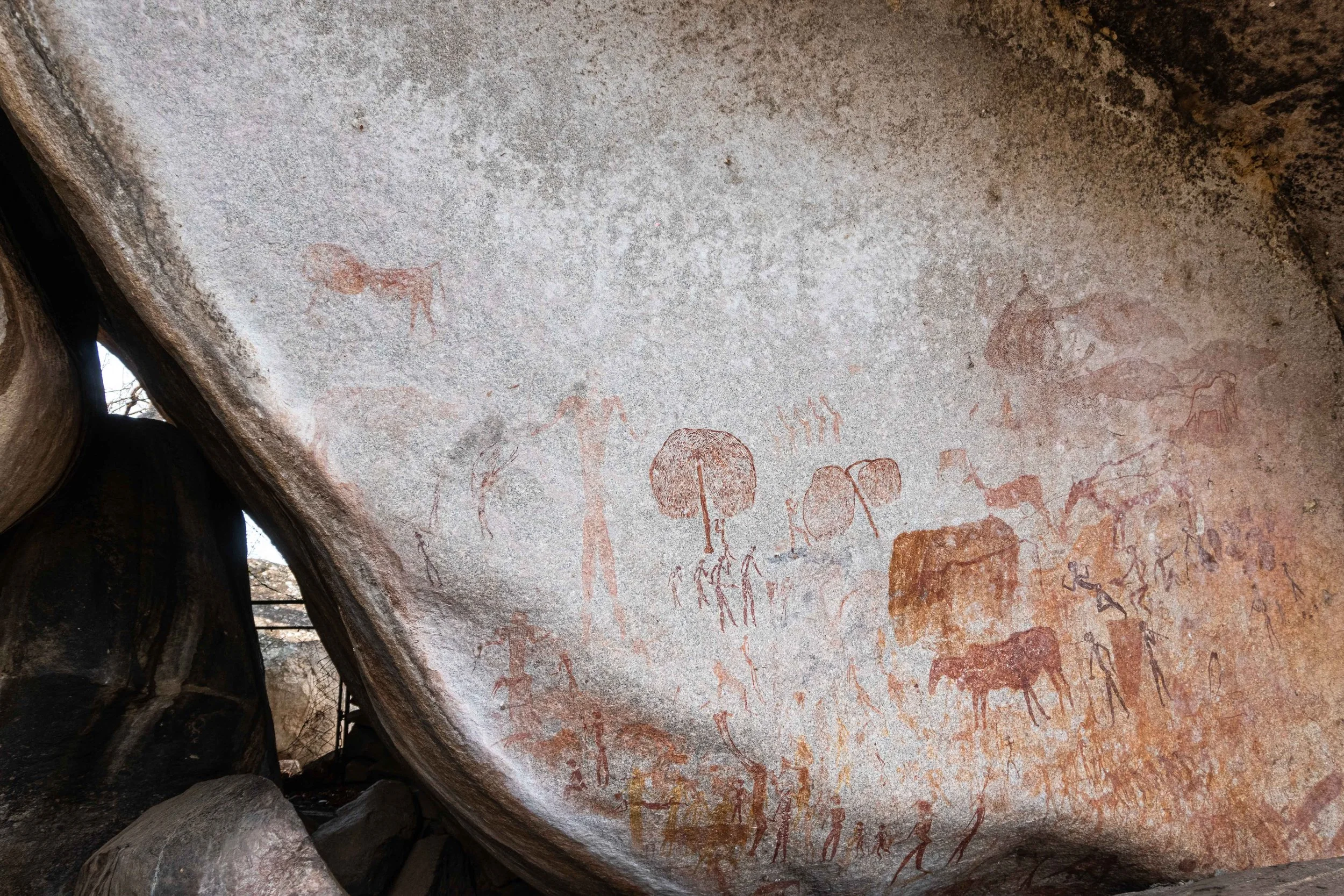
Full rock art panel, Bushman point showing animal, human and botanical depictions
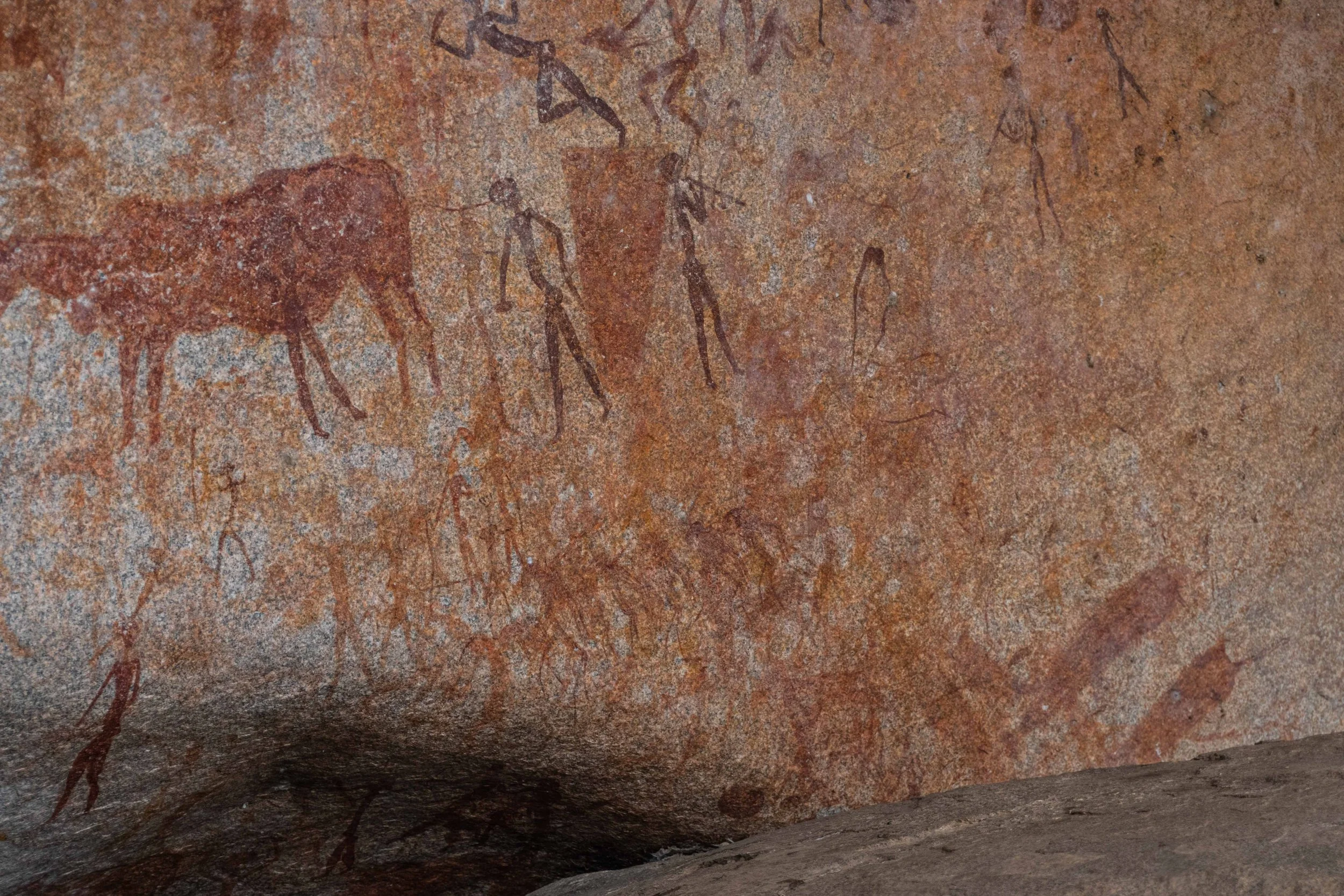
Large section including human figures with musical instruments
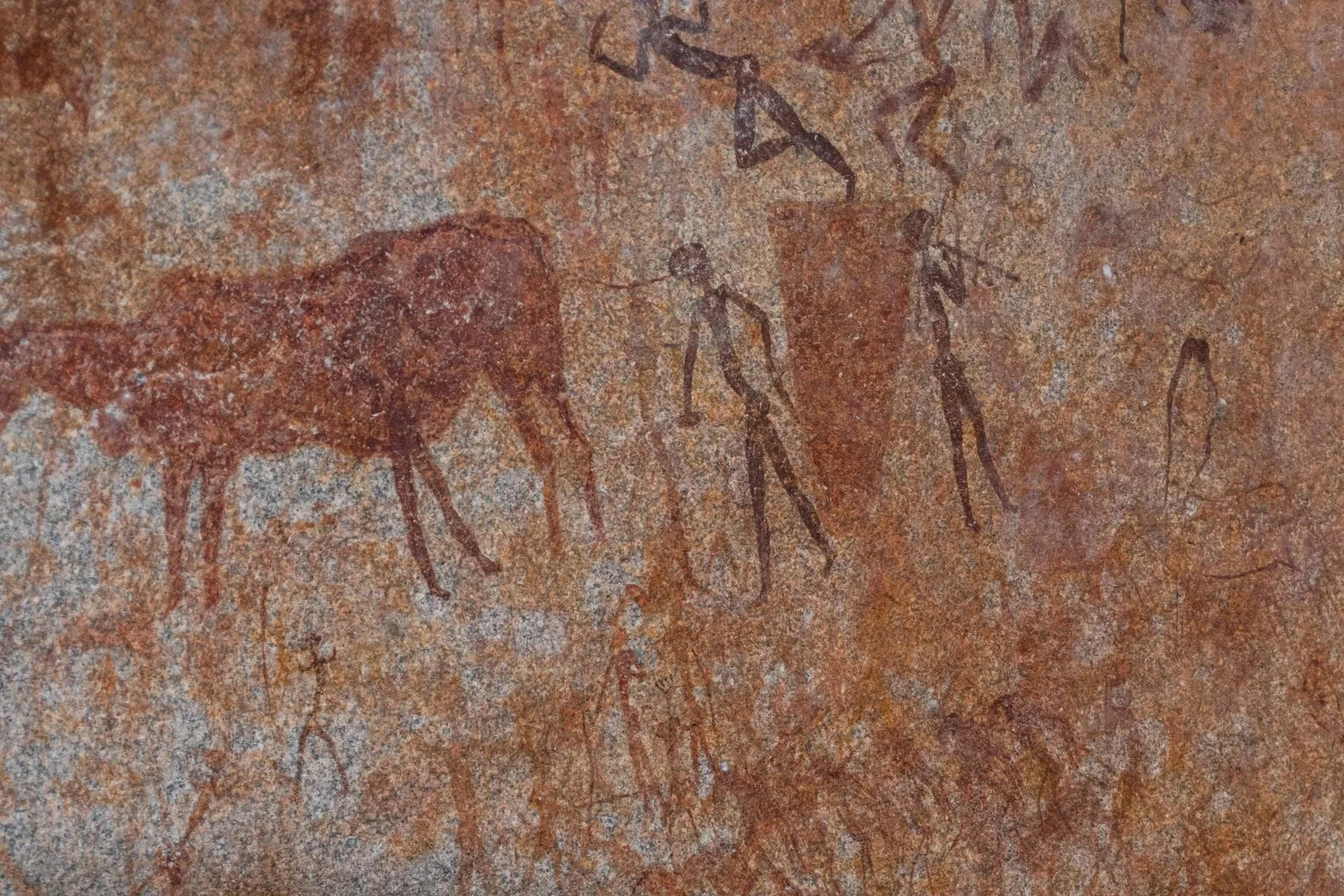
Same human figures with musical instruments, one on the top and bottom left with rattles, the other with what looks like a flute. superimpositined on top of a drum.
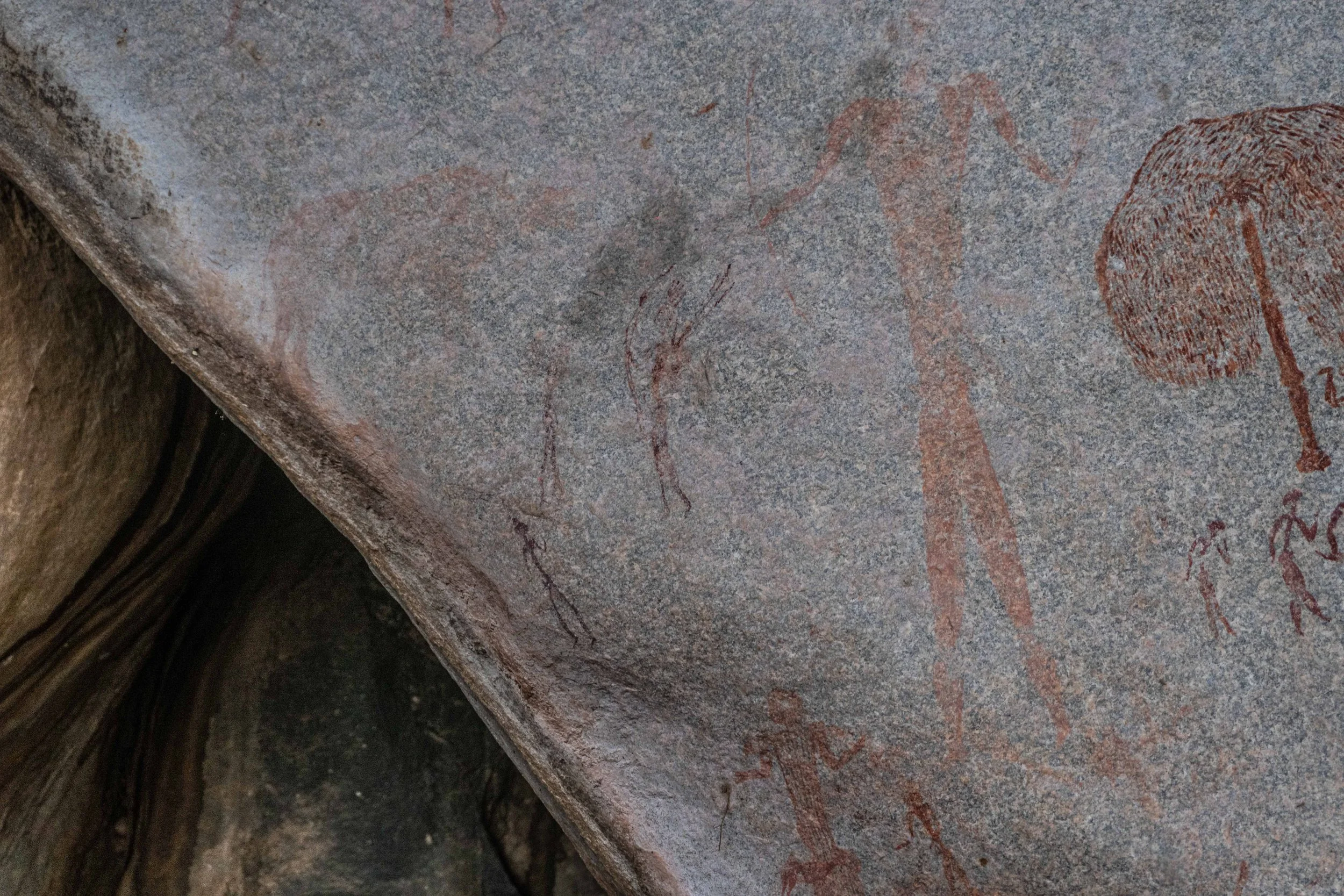
Large human figure and smaller sized ones which are believed to might have been children
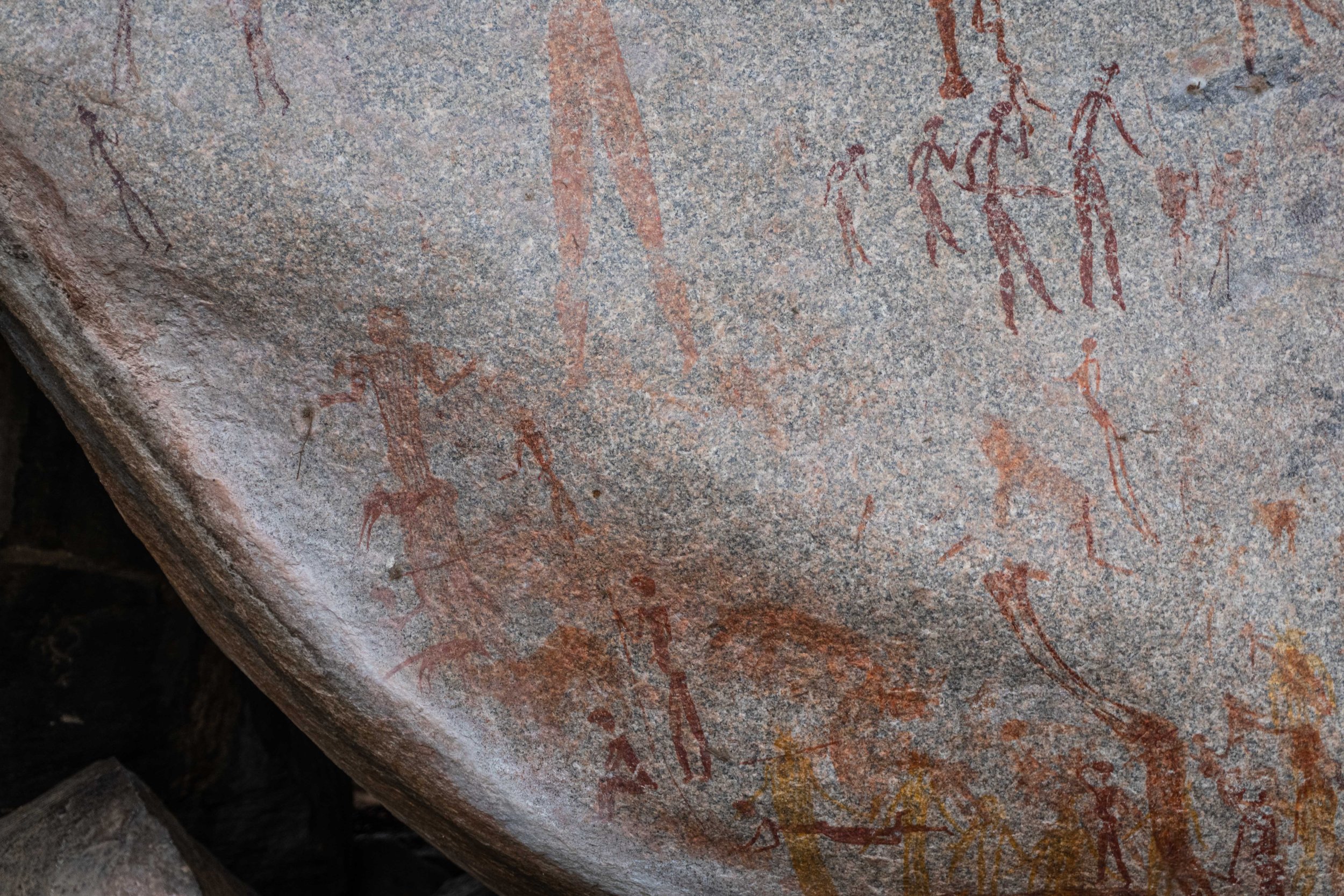
A couple of human figures. One (bottom left) is in a sitting position and another is lying down positioned above elongated figures. In the top right the figures seem to be in some kind of dance while the almost faded ones look like they are carrying weapon bags.
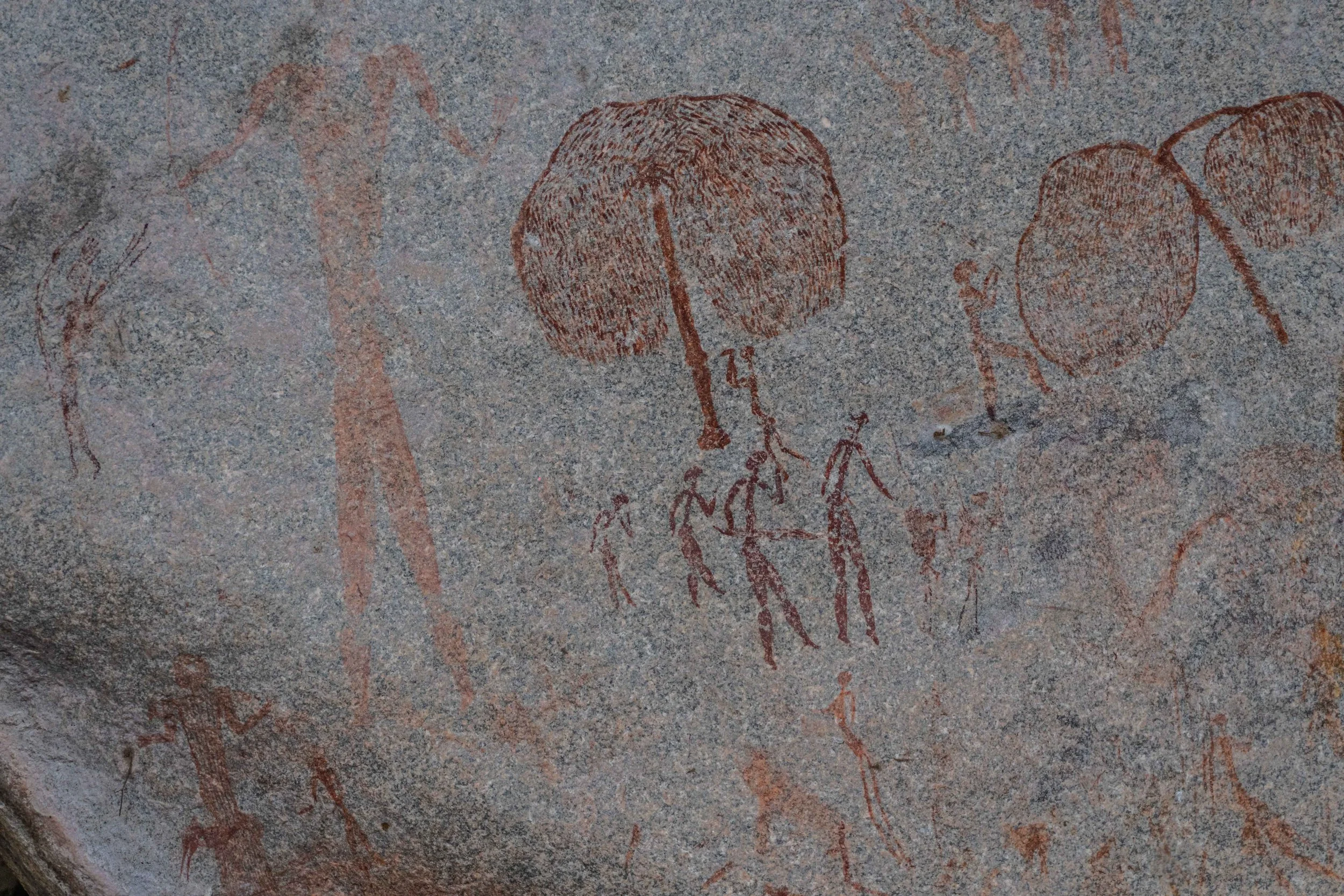
A closer depiction of the human figures with 2 trees depicted with them. One figure looks like they are cutting down the tree
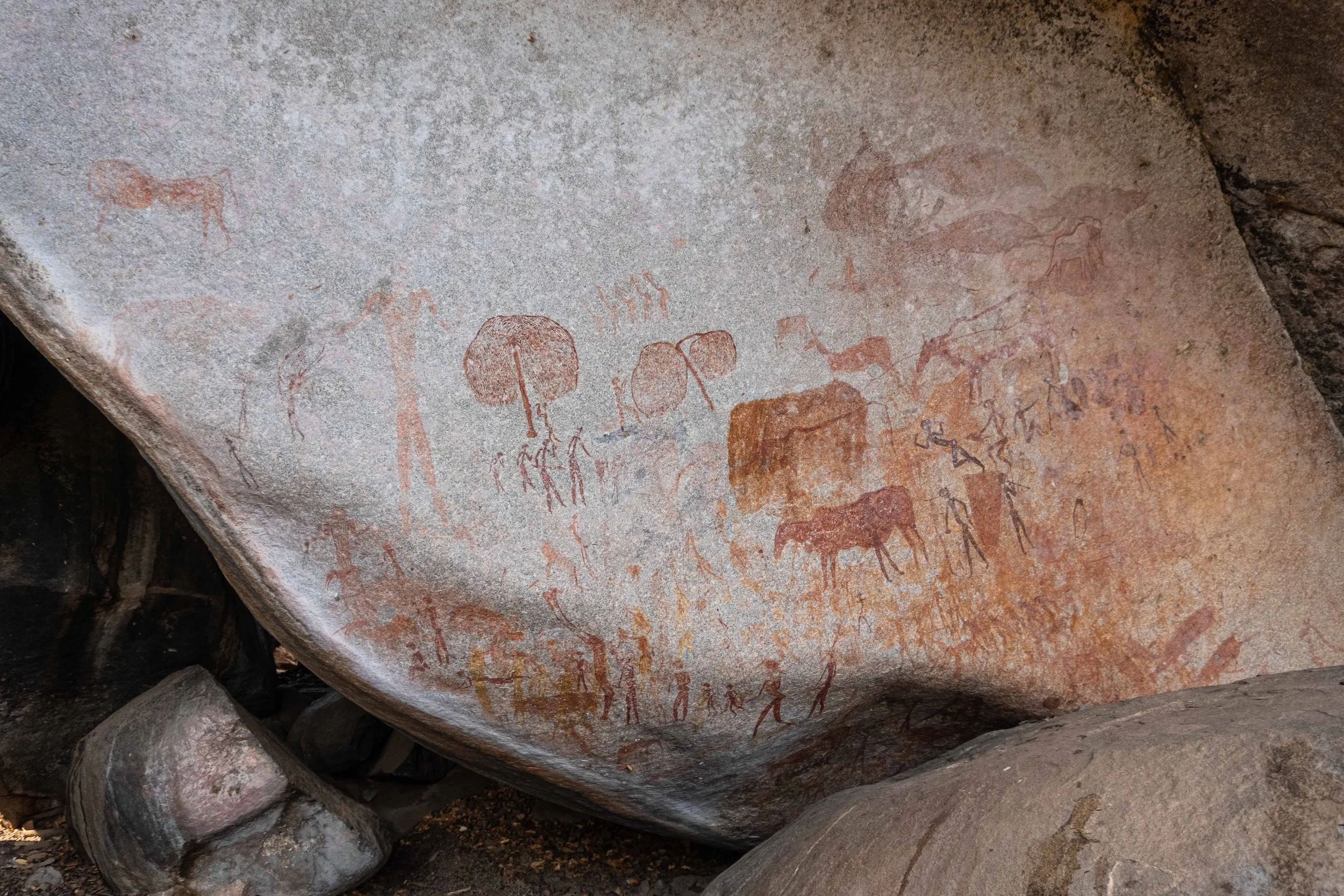
Larger view of the Bushman panel with all the depictions
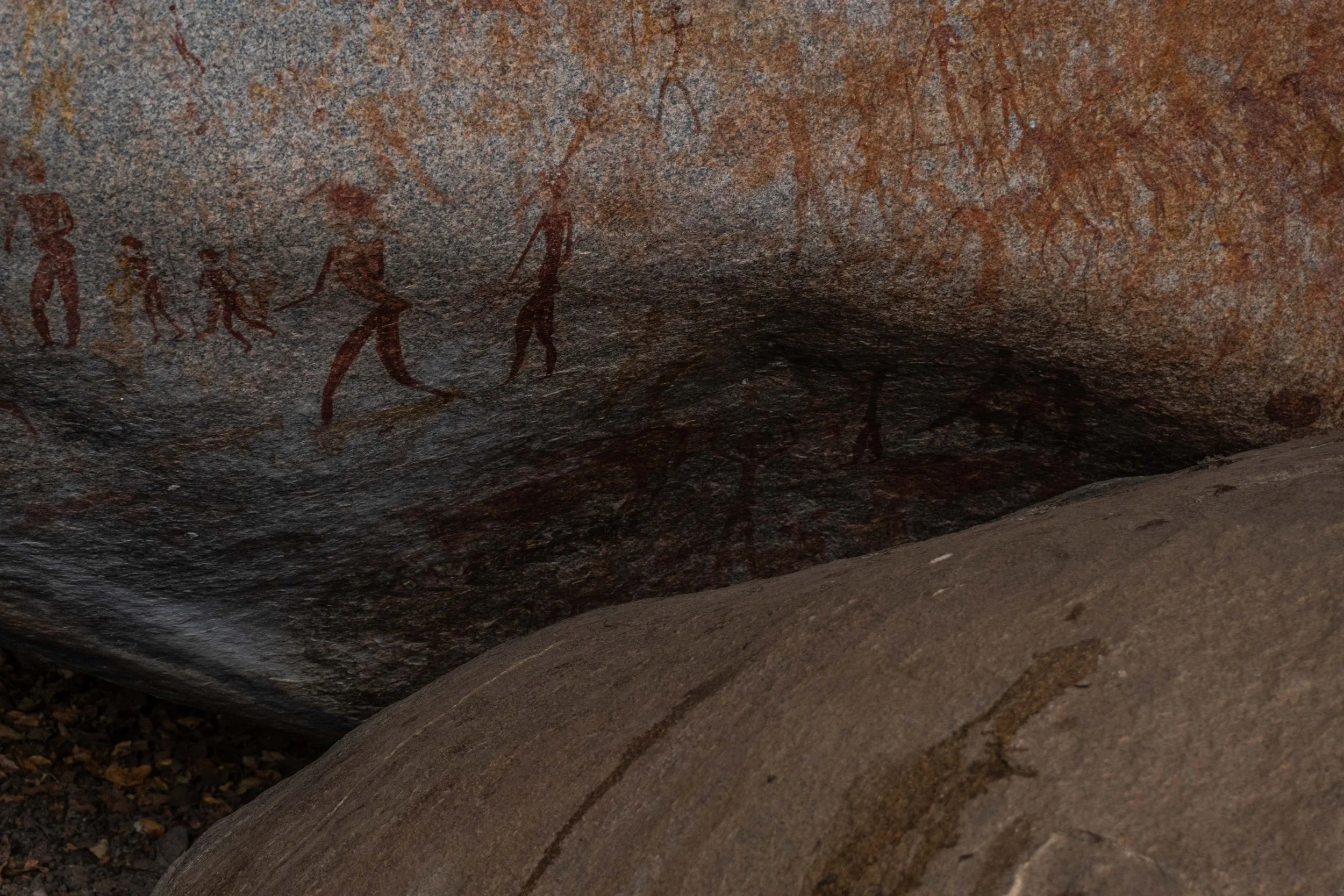
Lower section of the rock which shows other art below it. A couple of human figures
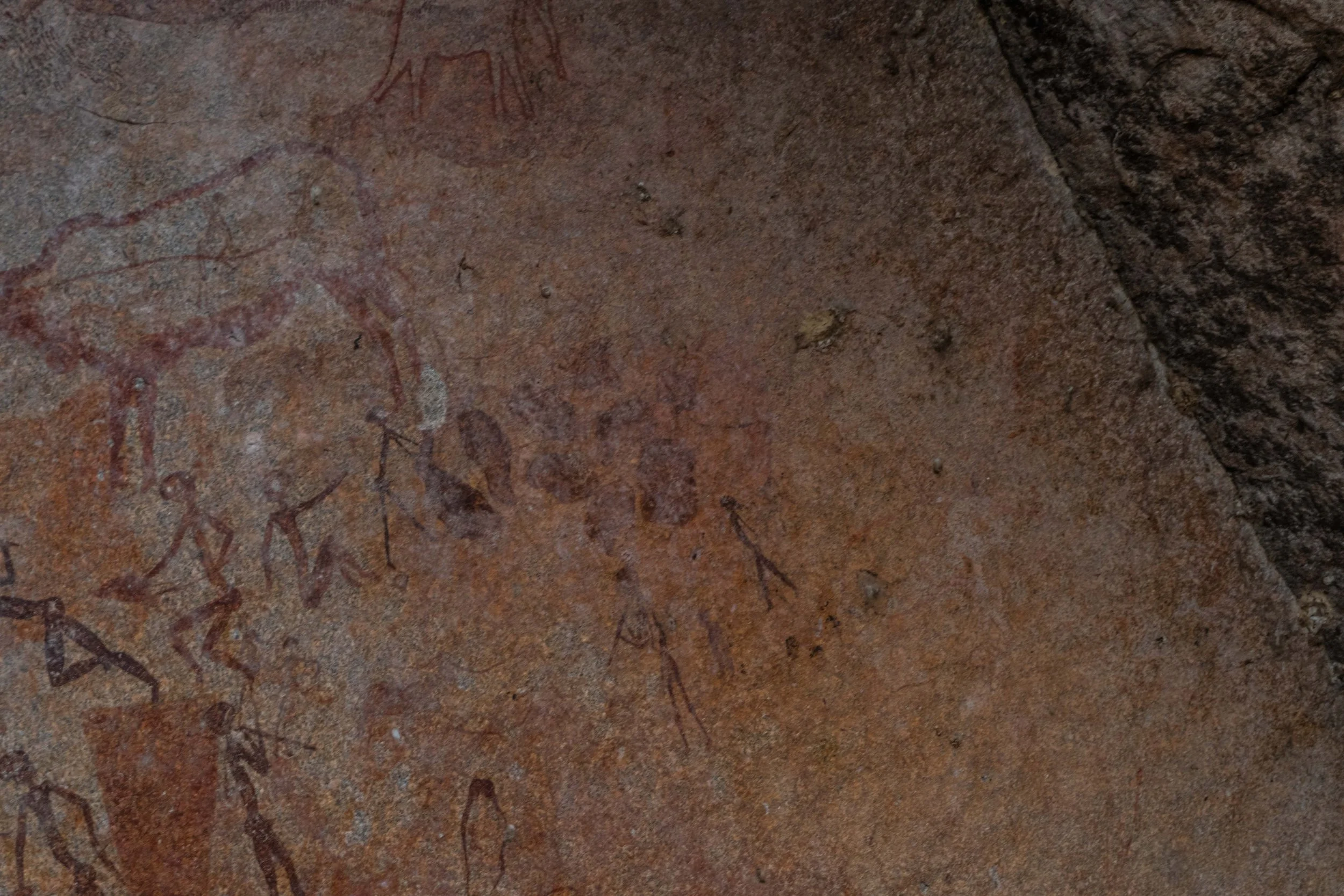
Several human figures holding instruments, two figures are in the sitting position. There is a buffalo drawn just above the human figures
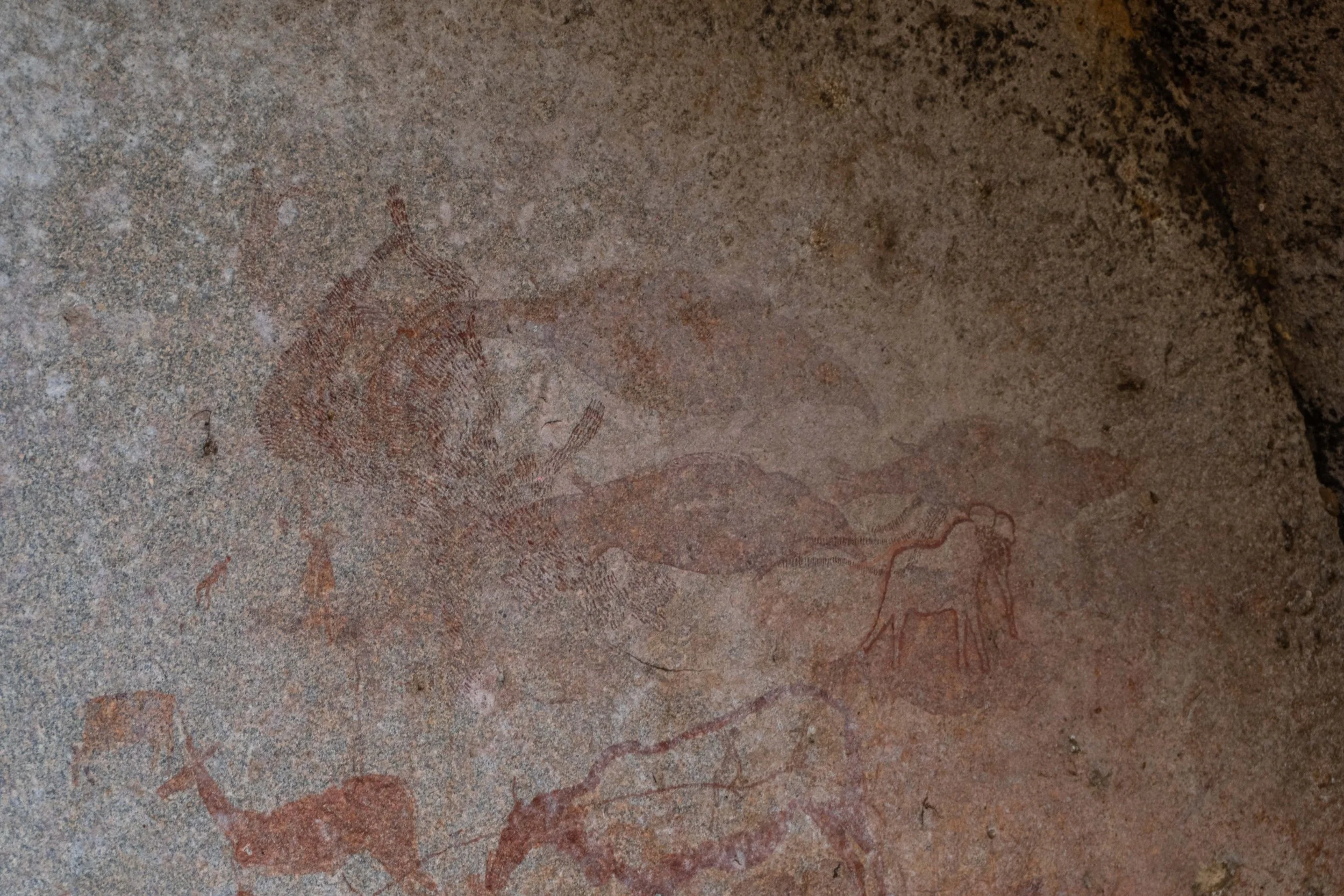
Fish and net
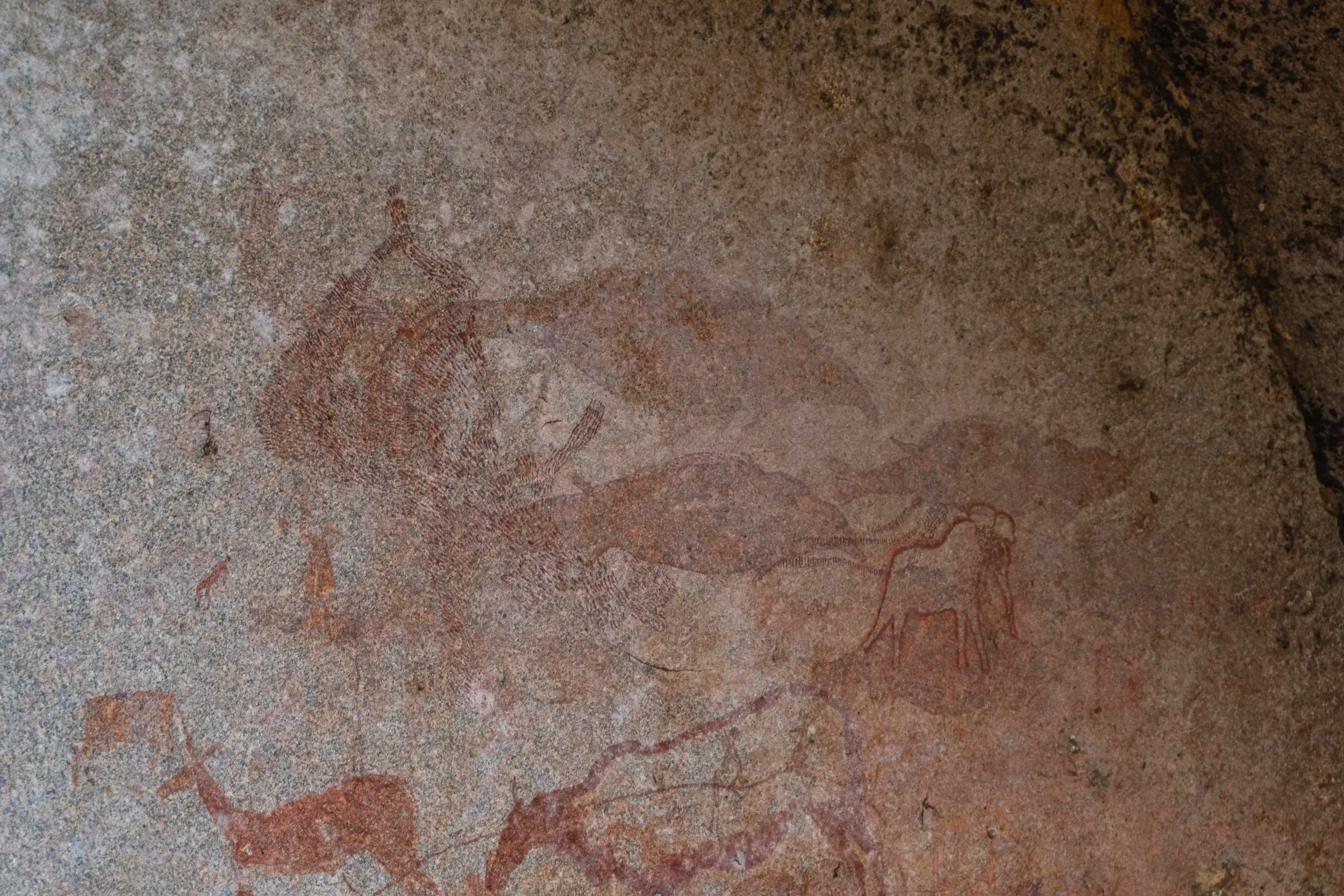
Closer depiction of fish and what looks like a net probably indicating fishing activities
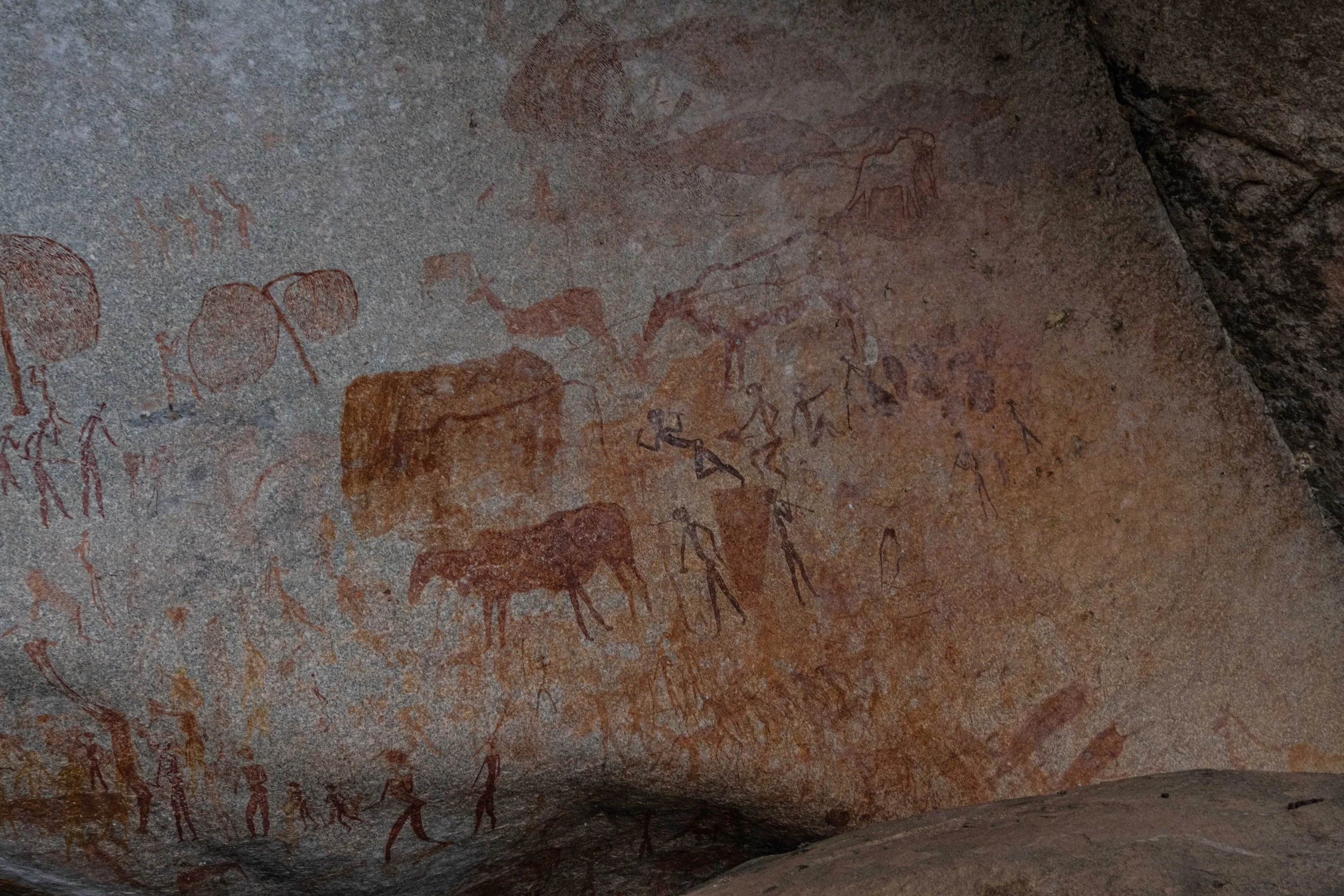
Superimpositioned animal and human figures
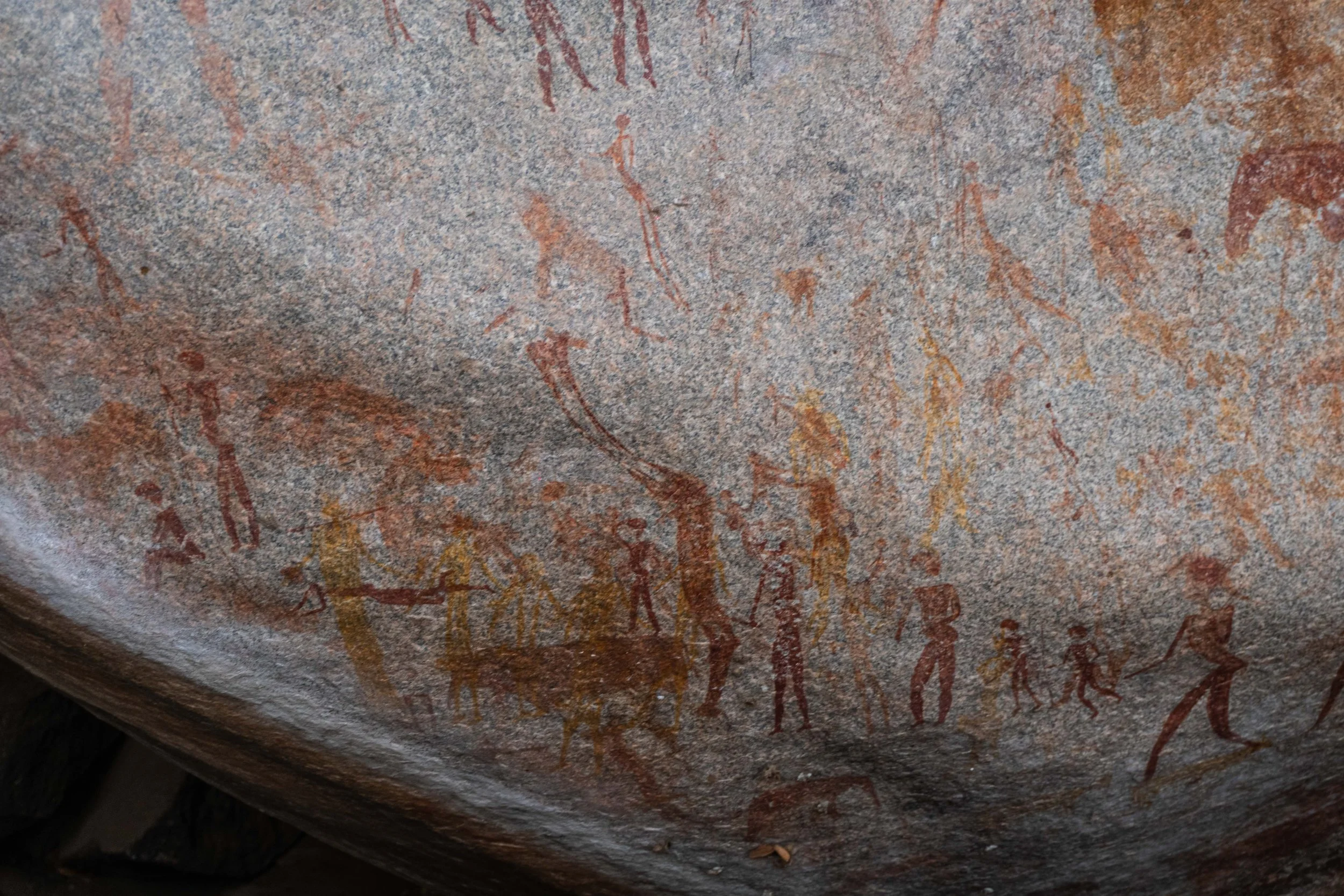
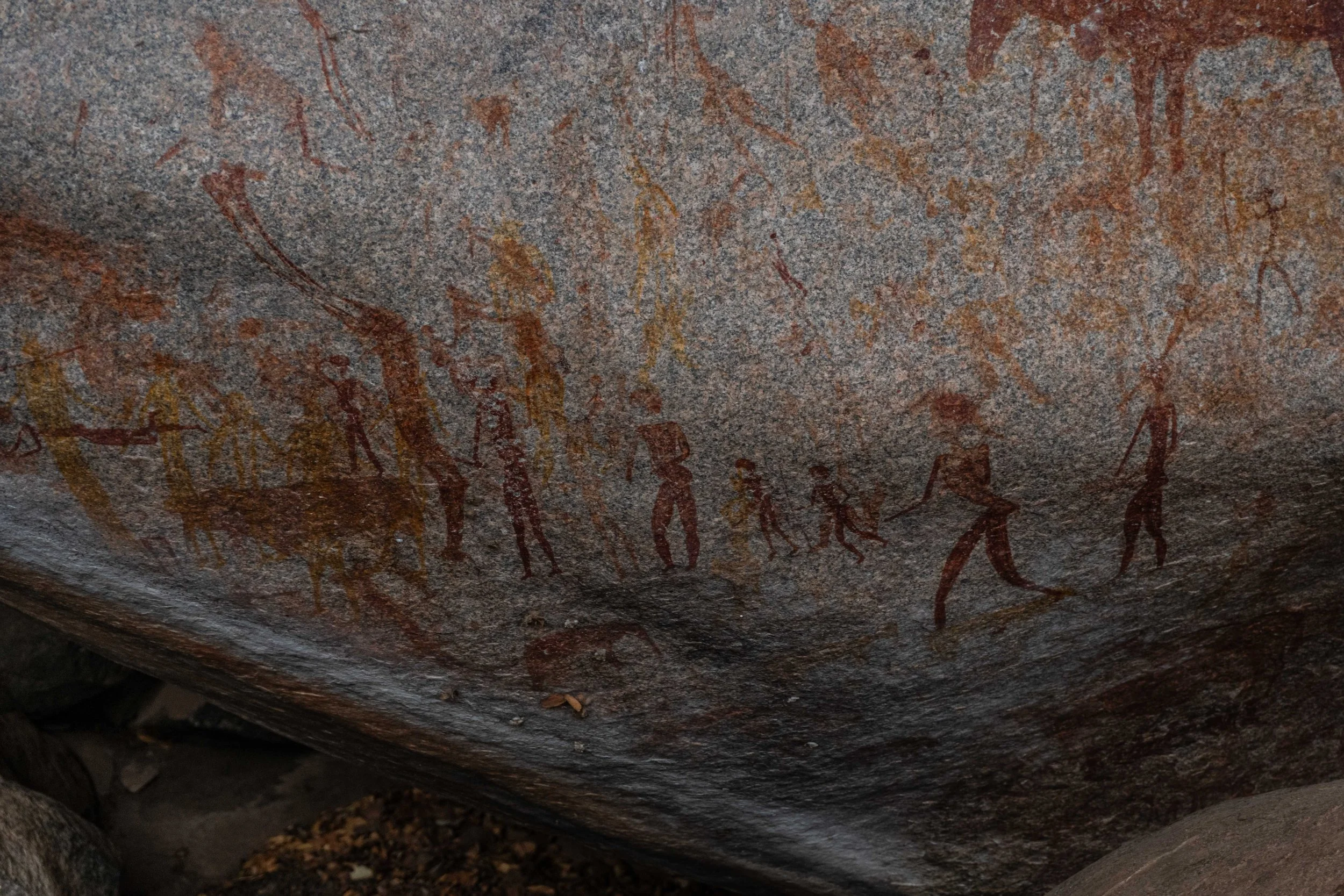
Human figures; one in a seating position, one standing holding an instrument and another in a lying position. Other figures are in motion probably running or dancing
Lake Chivero Recreational Park (formally known as Robert Mcllwaine) national park is located about 30-45 km (an hour by car) from Harare city. It is within the Manyame River reservoir system which is part of the major water provider for the capital city.
The area is publicly accessible and is a protected reserve established in 1952 and designated a Ramsar Wetland of International Importance preserving both wildlife and cultural heritage. It is a recreational area which involves canoe boat rides along the lake and a bird site which houses about 400 different bird species.

Directions (step-by-step) by car…
Start in central Harare (CBD).
Drive west toward Bulawayo Road (A5) — this is the main highway leaving the city.
Pass through Westgate area heading toward Norton.
Continue on the A5 highway until you cross the Manyame River bridge.
Shortly after the bridge, turn left at the signpost for Lake Chivero.
Follow the gravel road for about 3 km to reach the park entrance gate
“what to tell the taxi driver~ Please take me to Lake Chivero Recreational Park”
Most drivers in Harare know it well since it’s a popular weekend spot.
Cheapest Kombi Route (Local Method)
Best places to find kombis going toward Norton in central Harare:
Copacabana Bus Terminus – biggest kombi hub
Market Square Bus Terminus
When you get there, look for kombis shouting: “Norton! Norton! Norton!” Typical fare: $1–$2
The ride takes 30–40 minutes depending on traffic (kombis only leave when full).
Get off at Norton town center then take a local taxi to the Chivero gate. (Distance: about 29 km from Norton, cost: roughly $5–$10 if shared or $10–$15 private.
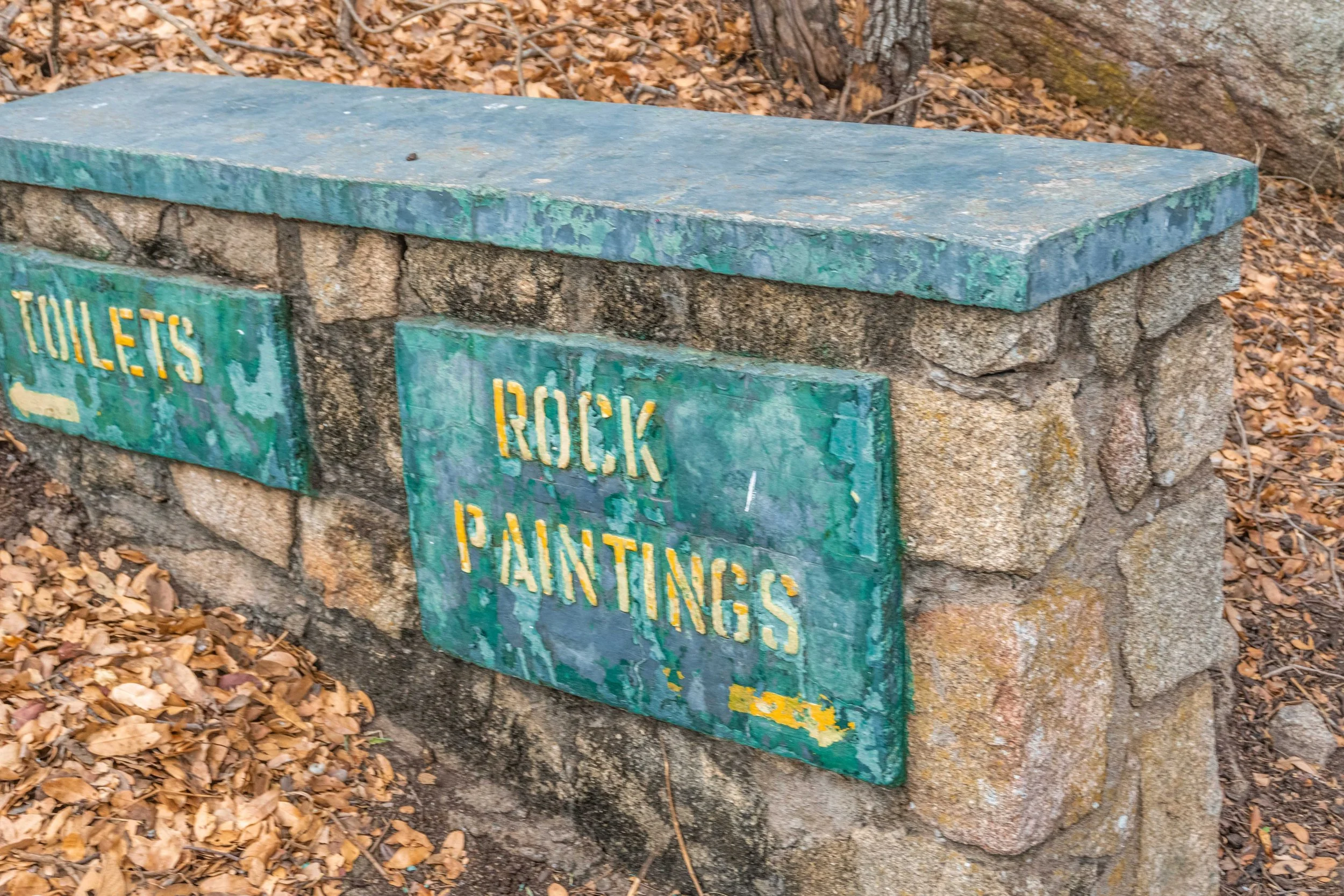
Section showing directions to the rock art
The Art
Rock art at Lake Chivero is identified by researchers as the crocodile panel, kudu panel and the bushman’s point panel. The pictographs show detailed human figures, hunting scenes and distinctive zoomorphic images, most famously crocodile men and a large kudu/antelope figure.
Crocodile Panel: This panel features two large crocodiles facing opposite directions, painted in vivid ochre and outlined with detail. The presence of these crocodile figures may reflect not only the local fauna in the area but symbolic potency. The large animals being presented as powerful cosmological agents linked to water, fertility and ancestral forces. Adjacent scenes include lines of human figures, ten hunters, some wearing headdresses and shoulder bags (ZimfieldGuide, n.d).
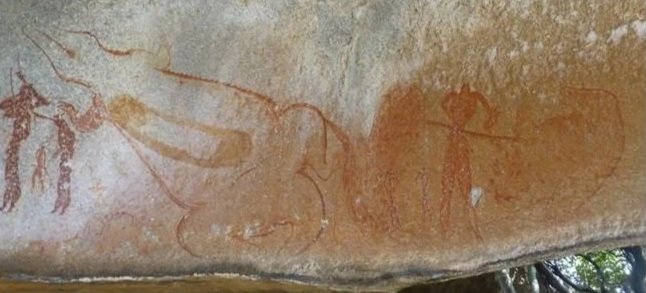
Large depiction of a crocodile and human figures, the figure on the right looks like he is holding a weapon, hunting the large creature. (picture obtained from the ZimFeildGuide)
Kudu Panel: This panel contains multiple kudu bulls alongside a warthog and smaller buck figures, with some human figures carrying objects which look like arrows. The representation of gatherers, hunters and animals together suggests a social narrative where subsistence and identities balance. This also reflects the ecological context of the region: the coexistence of animals such as kudu, warthogs, and crocodiles not only situates the panels in a recognizable landscape but anchors meaning in relationship to animal powers, group identity, and seasonal resource use.
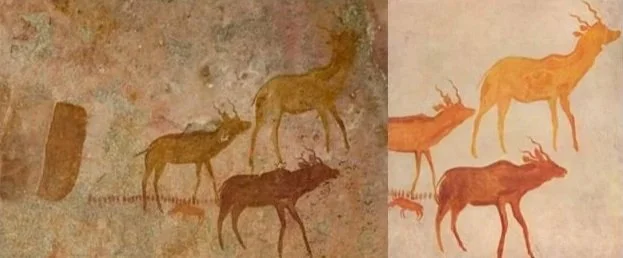
section from the Kudu panel and a recreation by Elizabeth Goodall (picture obtained from ZimfieldGuide)
Bushman point: This includes elongated hunters and human figures, some with arm rattles and what look like flutes which are associated with dancing and music. This has also been linked to ritualistic performance and trance dances. The rhythmic movements of the dance accompanied by the sound of the rattles may serve as conduits for entering altered states of consciousness (Kumani & Diaz-Andreu, 2025).
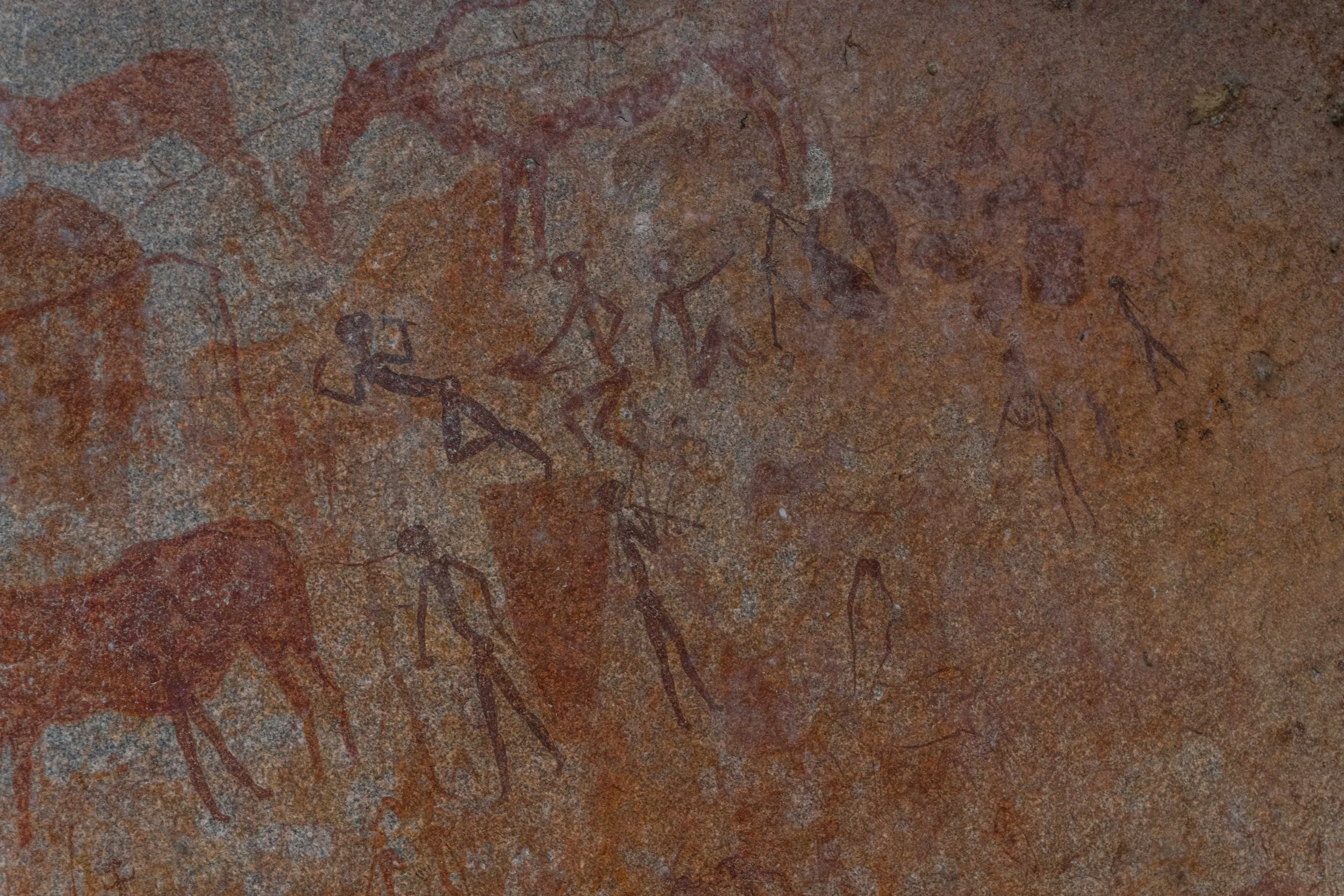
panel showing a couple of human figures holding instruments like flutes and rattles
Lake Chivero is one of the few rock art sites in Zimbabwe with botanical presentation showing trees. These trees were of importance to the community providing shade during social gatherings explainable by the presence of human figures within the same panel. These trees stand out as they break the pattern of just animal-human figures and probably signify place, resource or cosmological context. In this panel, it seems the human figure is cutting the tree which implies the use of landscapes for natural resources, in this case probably for heat during cold seasons.
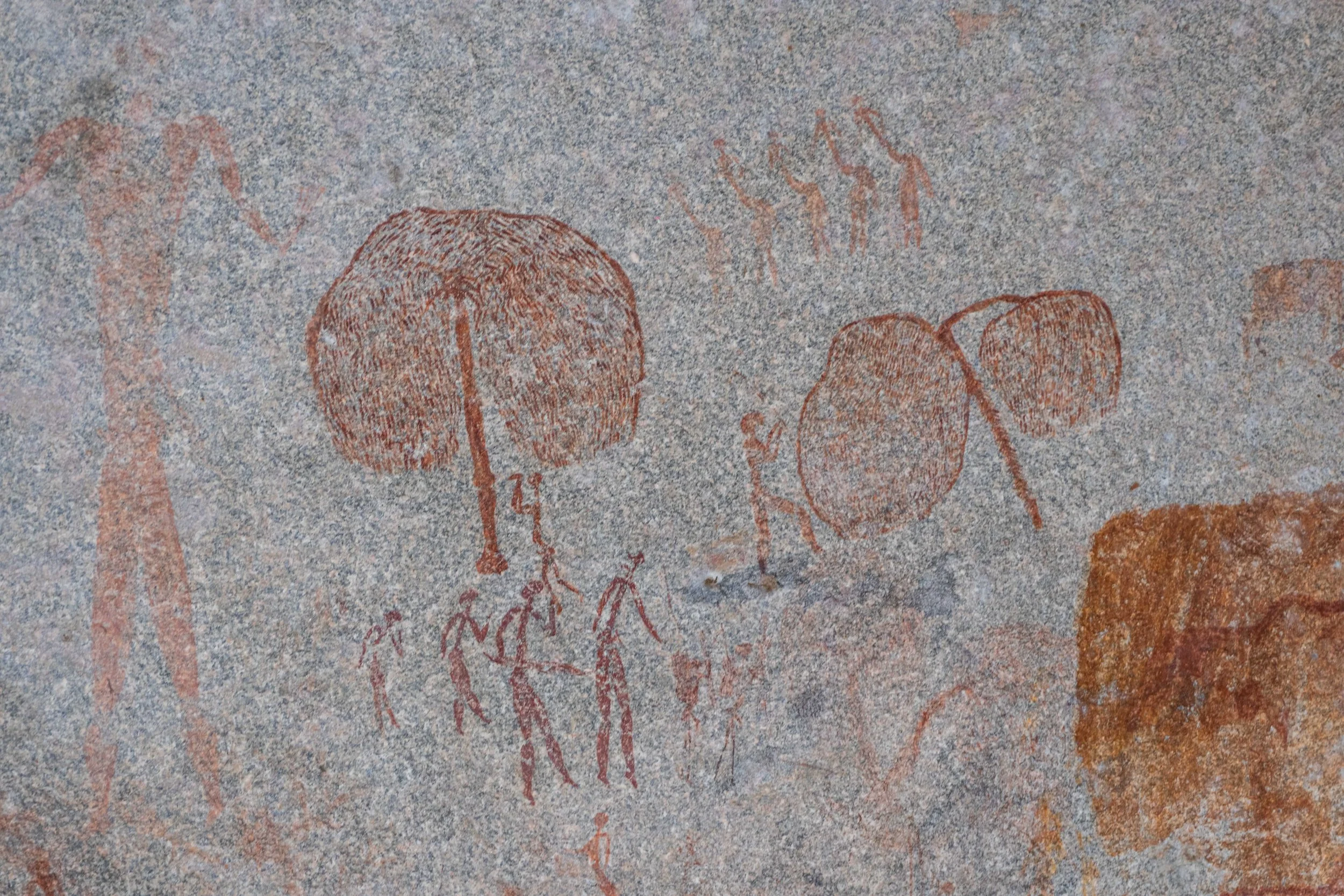
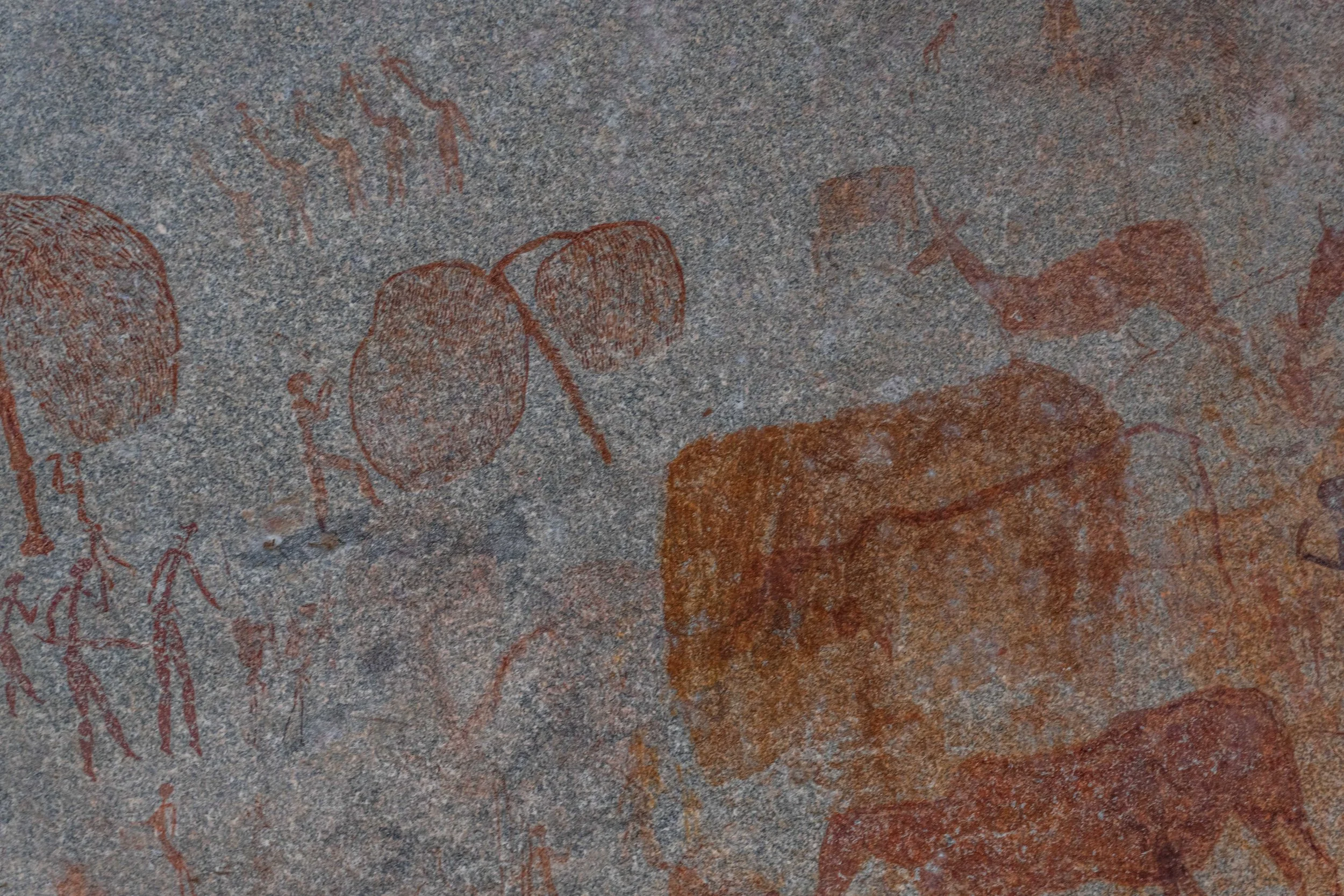
depiction of the trees and one figure who looks like they are cutting down one of the trees
Conservation
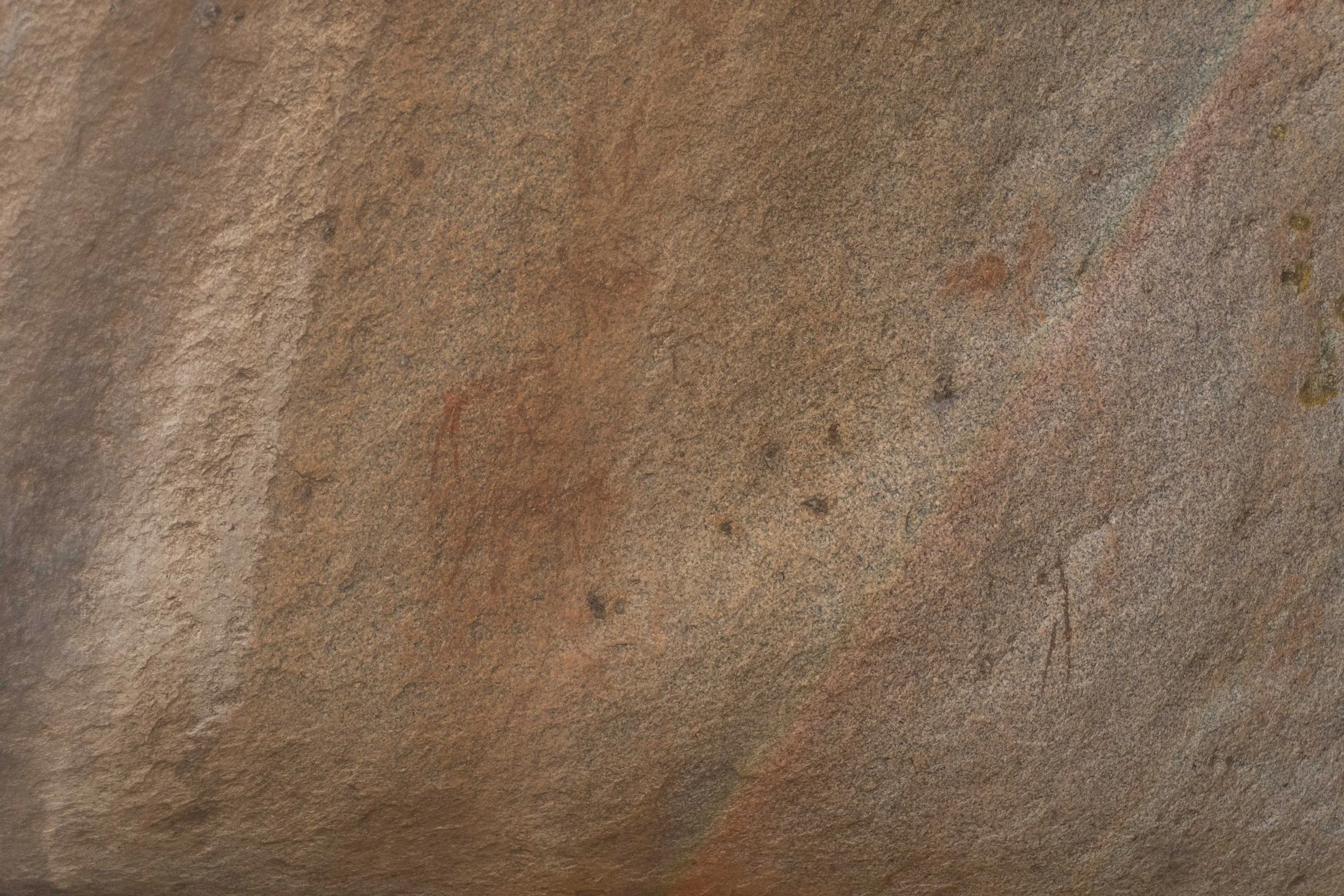
faded sections affected by ever changing environment and humidity
The conservation of rock art at Lake Chivero is closely tied to the broader environmental health of the surrounding landscape. As part of a protected recreational park and a designated Ramsar wetland of international importance, the area holds both ecological and cultural significance (Ramsar Site Information Sheet, 2014. However, increasing environmental degradation poses indirect yet serious risks to rock art preservation. Pollution from sewage effluent, industrial waste, and agricultural runoff has significantly altered the lake’s ecosystem, contributing to siltation, invasive plant growth, and declining biodiversity. These processes not only affect water quality but also influence the micro-environmental conditions—such as humidity, biological growth, and chemical exposure—that can accelerate the deterioration of nearby rock surfaces and painted panels.
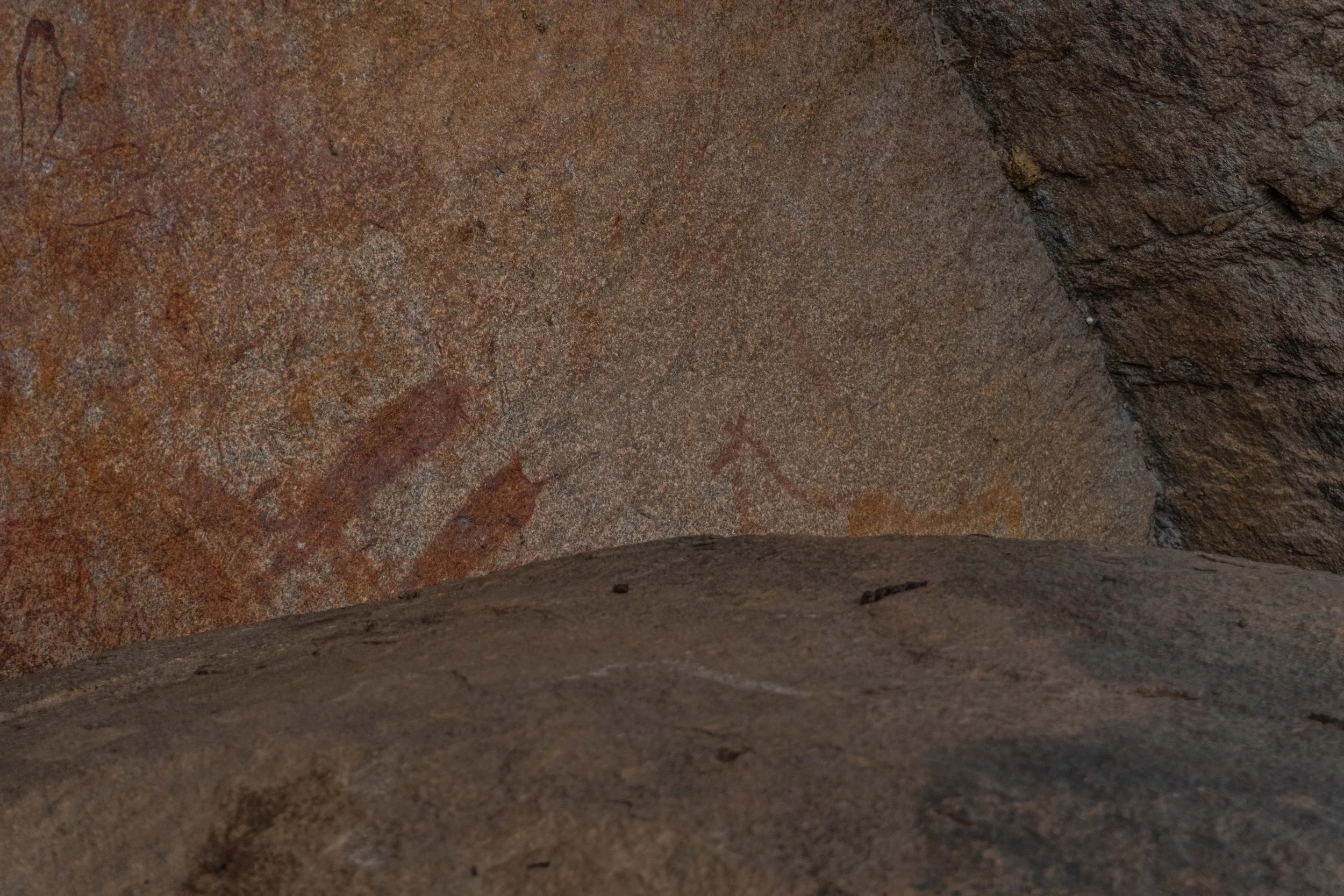
Research emphasizes that successful rock art conservation depends on collaboration between archaeologists, conservation specialists, local communities, and policymakers, alongside the development of clear management strategies and public awareness initiatives. In the context of Lake Chivero, this includes strengthening enforcement of environmental regulations, improving waste and water management systems, and promoting sustainable tourism practices. By addressing both ecological degradation and human impacts, conservation efforts can better safeguard not only the lake’s biodiversity but also the fragile rock art heritage embedded within its landscape for future generations.
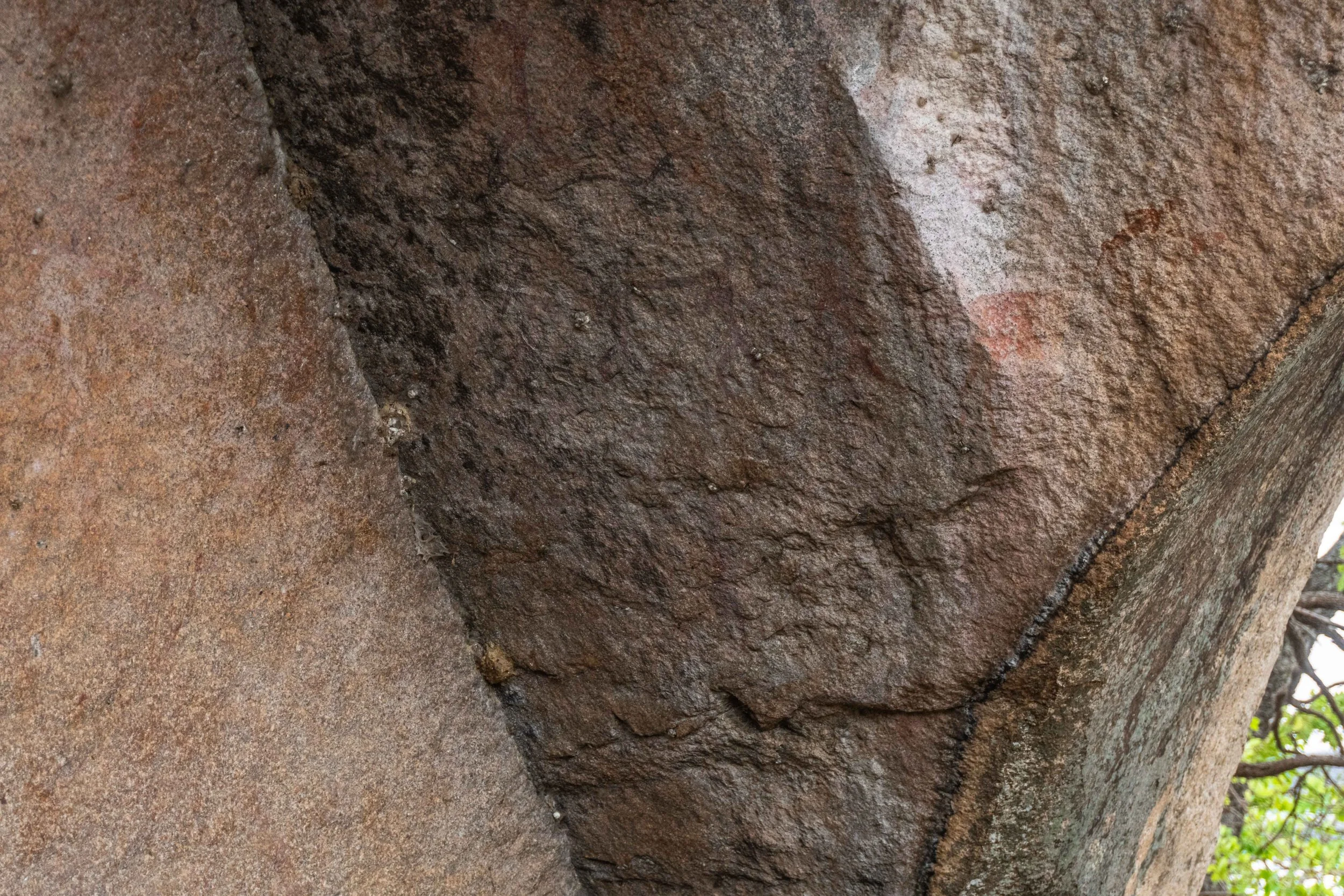
rock surface where the art has faded due to too much exposure to the sunrays